
Reviewed · TOURS IN BEIRUT
PRIVATE Beirut Historical Walking Half Day Tour
Beirut makes the most sense when you see its layers together: ancient objects in the National Museum, war-scarred streets rebuilt as a modern center, and the sea cliffs at Raouche. This private half-day tour gives you that broad view without making you solve Beirut’s traffic and directions on your own. I especially like the mix of museum, walking tour, and coastline, and the chance to hear the city explained by David or Dave, whose own life in Beirut shapes the commentary.
I also like the practical design. Hotel pickup, private transport, and a small-group format leave more time for questions and less time waiting around. The main drawback is pace: several major areas are fitted into roughly three to four hours, so some stops may feel like an introduction rather than a deep visit. Lunch is not included, either.
Key points to know before booking
- The National Museum sets the tone: Begin with Lebanon’s archaeological past before looking at modern Beirut.
- Downtown is best explored on foot: See Martyrs’ Square, the Mohammad Al-Amin Mosque, St. George’s Cathedral, Roman baths, Star Square, and the restored souks.
- Your guide is part of the value: David, also referred to as Dave, explains political events and daily life with personal insight from growing up in Beirut.
- Private transport saves time: Pickup and drop-off within Beirut city are included in an air-conditioned vehicle.
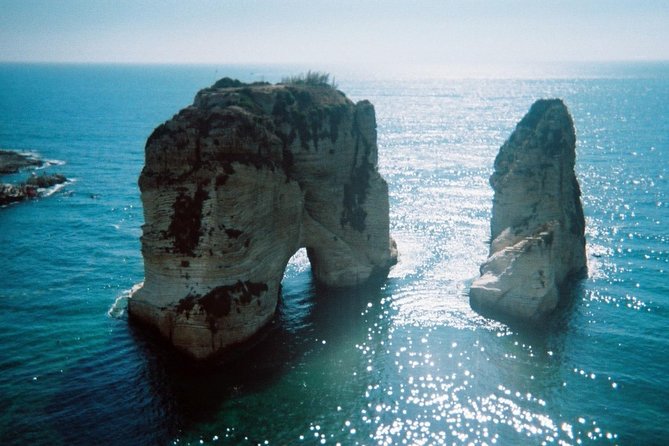
- Raouche adds a strong finish: Pigeon Rocks and the Corniche provide a sharp change from streets and monuments.
- Allow for a brisk schedule: The experience covers a lot, but it is not designed as a long museum study or leisurely shopping day.
Why this half-day tour works as a Beirut introduction
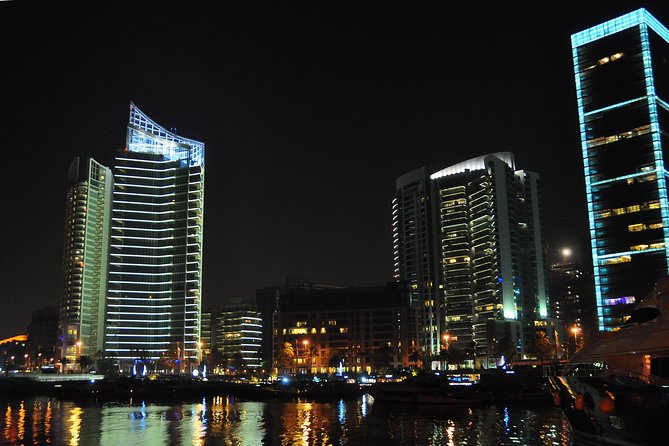
Beirut can be hard to read at first. A Roman bath may sit near a modern office block. A grand religious building can share the same downtown district with reminders of war and reconstruction. This tour gives you a guide to those contrasts instead of presenting isolated sights with no connection.
You begin at 9:00 a.m. with pickup from your Beirut city hotel. That early start matters because the tour uses both a vehicle and your feet. You will ride between separated districts, then walk through the central sights at a closer pace.
The experience is private, so only your group participates. That makes a real difference here. You can ask about Lebanon’s political past, religious communities, rebuilding projects, or a detail that catches your eye without holding up a large group. The tour also has a minimum number required to operate, so confirmation depends on availability.
The strongest part is the guide’s interpretation. David or Dave is repeatedly praised for clear explanations, strong command of Lebanese history, and firsthand memories of Beirut during difficult periods. The tour is not only about naming buildings. It is about helping you understand why the city looks the way it does.
A few more things to do in Beirut worth a look
- Dubai Evening Heritage Safari by Vintage G Class Al Marmoom Oasis
★ 5.0 · 1,500 reviews - Dubai Camel Desert Safari, Traditional Meal & Heritage Activities
★ 5.0 · 937 reviews - Dubai: Heritage Safari in Vintage Land Rover with Dinner
★ 4.8 · 861 reviews
The National Museum: Lebanon’s past before Beirut’s recent scars
The National Museum of Beirut is the logical first stop. Built in the 1940s, it was badly affected during the civil war from 1975 to 1990 and revived in the 1990s. That story gives the museum extra weight before you even enter.
Inside, you can expect archaeological displays that place Lebanon in a long regional story. The visit helps you see that Beirut is not only a modern capital shaped by recent conflict. It also sits in a country with many layers of ancient settlement and culture.
One useful feature is the opening briefing and audio presentation described by people who took the tour. David uses a map and background explanation to give you the basic shape of Beirut and Lebanon before the museum visit. That is a smart move. Without context, museum objects can blur together. With it, you have a better sense of how the exhibits connect to the country around you.
The museum stop is included in the tour price, and admission fees are covered. Still, time is limited. If you are the sort of person who reads every label and studies every display, you may want a separate museum visit on another day. Here, the museum works best as a focused introduction before the city walk.
Downtown Beirut: reconstruction you can read in the streets
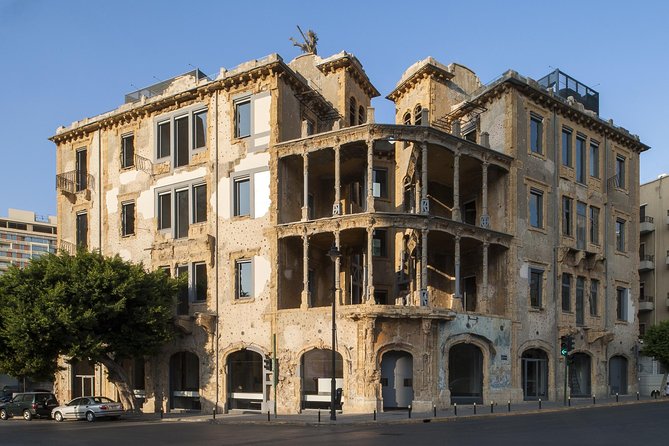
After the museum, the tour moves toward downtown, often referred to as Solidere. This district was heavily damaged during the civil war and later restored and rebuilt in the 1990s. The result is polished in places, solemn in others, and sometimes difficult to read without a guide.
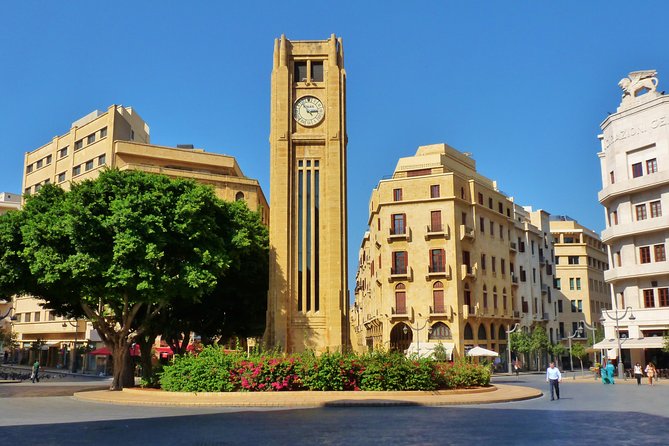
Your walk includes the Parliament House, the Government Palace, the Roman baths, Star Square, Place des Martyrs, the Mohammad Al-Amin Mosque, and St. George Maronite Cathedral. That is a lot for one central area, but the compact setting lets you cover major landmarks without long vehicle transfers.
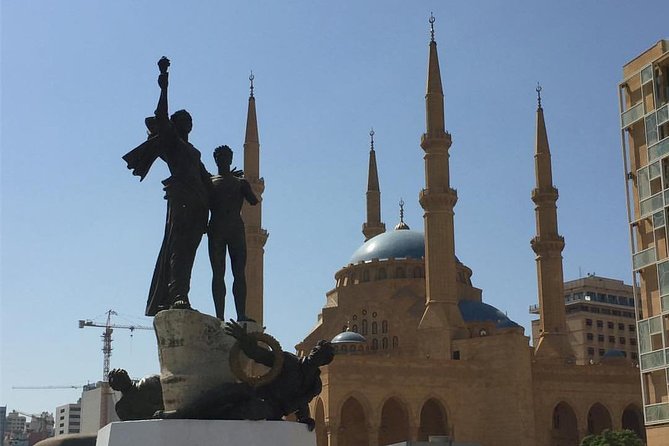
I find the religious buildings especially useful for understanding Beirut’s mix of communities. The blue-domed Mohammad Al-Amin Mosque and St. George’s Cathedral sit close to each other, offering a clear visual lesson in the city’s religious diversity. You are not simply ticking off two buildings. You are seeing how different traditions occupy the same urban center.
The Roman baths add another time layer. Their presence beside government buildings, commercial streets, and religious landmarks makes Beirut’s past feel physical rather than abstract. Your guide can explain what you are seeing and connect the ancient remains with the city’s later development.
The difficult part of downtown is that restoration can make the area feel newly finished rather than old. Some visitors may expect a preserved historic quarter and find a reconstructed commercial center instead. That is not a flaw in the tour, but it is worth knowing. The point here is partly to understand reconstruction and the choices made after destruction.
Place des Martyrs and Star Square: public spaces with political weight
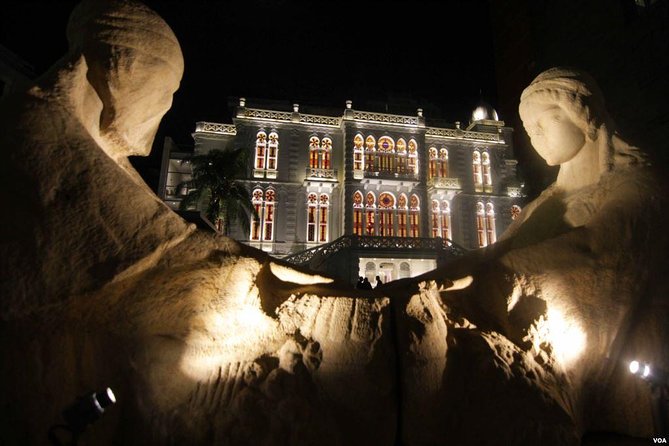
Place des Martyrs is more than a photo stop. Its name and monuments connect to Lebanon’s political past, and its position near major religious and civic buildings makes it a useful place to discuss how Beirut has changed.
The tour also reaches Star Square, another central reference point. This part of the walk is where David’s style seems most useful. The supplied comments describe him using maps, audio material, personal memories, and open discussion to explain political events without making the talk dull.
That matters because Beirut’s past is complex and sensitive. A guide who only lists dates will leave you with fragments. A guide who explains the links between conflict, rebuilding, religion, and public space gives you a more usable understanding of the city.
You should expect discussion rather than a theatrical performance. The appeal is the chance to ask questions and hear local context. If you prefer a tour with very little talking, this is probably not your best match. If you want to understand what you are seeing, the commentary is one of the main reasons to book.
Same base, a different sort of day:
- Guided Small-Group Tour to Baalbek, Anjar and Ksara with Lunch
★ 5.0 · 511 reviews - Guided Small-Group Tour to Jeita, Harissa, Byblos with Lunch
★ 5.0 · 361 reviews - Paragliding Trip Over Lebanon – Jounieh Bay
★ 5.0 · 257 reviews - Jeita Grotto,Harissa&Byblos Full-Day PRIVATE-CAR Trip from Beirut
★ 5.0 · 222 reviews
Beirut Souks: a modern shopping center in an old downtown footprint
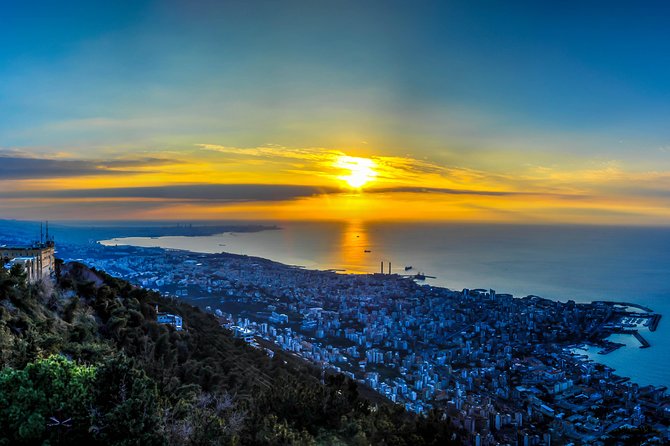
The Beirut Souks were completely demolished during Lebanon’s wars and rebuilt in the 1990s as an open-air shopping center in the central district. That contrast makes the stop interesting, even if you are not planning to shop.
I like this part because it shows how rebuilding can change the purpose of a place. You are walking through an area tied to Beirut’s commercial life, but the current setting is modern and carefully planned. The souks are not presented as an untouched old market. They are part of the city’s attempt to recover and function again.
The stop is listed as about an hour, though the overall tour length is roughly three to four hours. That means the exact balance may depend on traffic, walking speed, museum time, and your group’s interests. You might have time to look around, but I would not book this tour mainly for shopping.
There is no separate admission fee for the souks. The practical advantage is location: the stop fits naturally into the downtown walk instead of requiring another drive. It also gives you a change of pace after the museum and political landmarks.
Raouche and Pigeon Rocks: Beirut’s open horizon
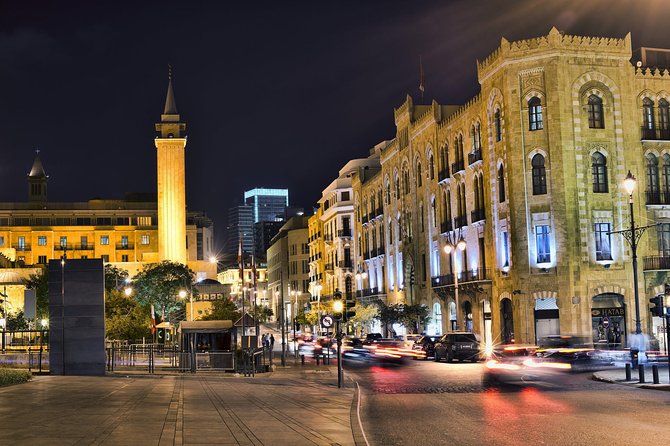
The final major sight is Pigeon Rocks in Raouche, one of Beirut’s best-known symbols. After the dense downtown sequence, the sea provides a welcome visual reset.
The scheduled stop is short, about 15 minutes, followed by another 15 minutes at the Corniche. That is enough for photographs and a quick look, but not enough for a long waterfront stroll. If you want a slow sunset walk or time at a café, plan to return separately.
The Corniche stop is described as a chance to see the sunset. Since the tour begins at 9:00 a.m. and lasts only three to four hours, the exact timing may vary, so you should not assume a sunset visit is guaranteed on every departure. The important point is that the route includes Beirut’s waterfront and a view of the famous offshore rock formations.
Pigeon Rocks are a strong finish because they show Beirut beyond monuments and conflict. The coast reminds you that this is also a Mediterranean city, with daily life shaped by the sea. I would keep your camera ready, but avoid treating this as a long scenic excursion. It is a brief stop within a history-focused tour.
What the private format and transport are worth
The price is $93.34 per person. That is not the cheapest way to see Beirut, but the value depends on what you need. You are paying for a private experience, an air-conditioned vehicle, Beirut city pickup and drop-off, a driver-guide, museum admission, and the ability to shape the conversation around your interests.
For one person, the cost may feel high for a half-day outing. For a couple or small private group, it becomes easier to justify because you are not joining a large coach tour and you avoid arranging separate rides between the museum, downtown, and Raouche.
The door-to-door setup is particularly useful if you are unfamiliar with Beirut. You do not need to work out how to connect distant parts of the city during a short morning. The vehicle handles the transfers, while the central district is explored on foot.
Group discounts are available, though the exact saving is not provided. Ask about the final price for your party before booking. Lunch is not included, so plan to eat before or after the tour, or ask the guide whether the timing allows a food stop at an additional cost.
Who will get the most from this experience
I would choose this tour if you have only half a day in Beirut and want a clear orientation. It is also a good fit if you care more about context than shopping, and if you want to ask questions about Lebanon’s political and social past.
History-focused visitors will get the most from the National Museum, Roman baths, religious buildings, and the guide’s explanations. First-time visitors also benefit from seeing downtown and Raouche in one outing.
The tour may be less suitable if you want a slow museum visit, extensive shopping time, or a long walk by the sea. The schedule is broad by design. You get a strong first look at several parts of Beirut, but some stops are necessarily brief.
It also suits people who value a personal guide. The strongest praise centers on David or Dave’s ability to explain Beirut clearly, share firsthand memories, and answer questions. That human element is more important here than a long list of attractions.
Timing, clothing, and small practical points
Wear comfortable shoes. The downtown section is a walking tour, and you will get more from it if you are ready to move between several landmarks rather than treating each as a quick vehicle stop.
Bring water and keep some flexibility in your schedule. The stated duration is approximately three to four hours, but city traffic and discussion can affect the pace. Since the experience includes both transport and walking, a little breathing room afterward is sensible.
The tour starts at 9:00 a.m. Pickup and drop-off are offered within Beirut city. Confirmation is normally sent at booking, though reservations made within 12 hours of departure are confirmed as soon as possible and depend on availability.
Most people can participate, and the activity is private. Free cancellation is available up to 24 hours before the start time. Changes or cancellations made less than 24 hours ahead are not accepted for a refund.
Should you book the Beirut Historical Walking Half Day Tour?
I would book it if you want a compact, guided explanation of Beirut rather than a collection of disconnected photo stops. The combination of the National Museum, reconstructed downtown, Roman remains, religious landmarks, Beirut Souks, and Pigeon Rocks gives you a useful first map of the city.
The best reason to choose it is David or Dave’s personal, clear commentary. The best practical reason is private pickup and transport. The main caution is pace: you will see many places, but you will not have unlimited time at any one of them.
For a first morning in Beirut, the tour offers good value if you want orientation, context, and ease. If you already know the city or prefer unhurried visits, use it as a starting point and return to the museum, souks, or Corniche on your own.
FAQ
How long does the tour last?
The experience lasts approximately three to four hours.
What time does the tour start?
The stated start time is 9:00 a.m.
Is hotel pickup included?
Yes. Pickup and drop-off are offered from hotels within Beirut city.
What sights are included?
The route includes the National Museum of Beirut, downtown Beirut, Place des Martyrs, the Mohammad Al-Amin Mosque, St. George’s Cathedral, Roman baths, Star Square, Beirut Souks, Pigeon Rocks in Raouche, and the Corniche.
Is lunch included?
No. Lunch is not included in the tour price.
Is this a private tour?
Yes. Only your group participates in the private activity. A minimum number of guests is required for the tour to operate.
Just added in Beirut
- Semi-Private Tour to Jeita Grotto, Harissa & Byblos with Lunch★ 5.0 · 52 reviews
- Guided Small-Group Tour to Qadisha, Bcharee & Cedars with Lunch★ 5.0 · 39 reviews
- Small Group Tours to Baalbek, Anjar & Chateau Ksara with lunch and Tickets★ 5.0 · 29 reviews
- Sidon, Tyre & Maghdouche Day Trip – With Lunch (4G on Board)★ 4.5 · 44 reviews
- Paragliding activity in Lebanon★ 5.0 · 33 reviews
- Jeita Grotto, Byblos and Harissa Full-Day Tour from Beirut★ 5.0 · 23 reviews
- PRIVATE city Tour of authentic Tripoli and vibrant Batroun★ 5.0 · 51 reviews
- Paragliding Trip Over Lebanon – Jounieh Bay★ 5.0 · 257 reviews
Tours in Beirut, compared.

Guided Small-Group Tour to Baalbek, Anjar and Ksara with Lunch
Read our review →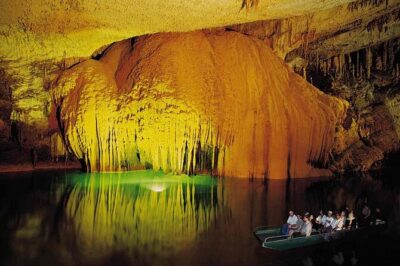
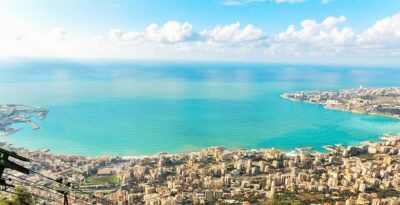
Guided Small-Group Tour to Jeita, Harissa, Byblos with Lunch
Read our review →
Jeita Grotto,Harissa&Byblos Full-Day PRIVATE-CAR Trip from Beirut
Read our review →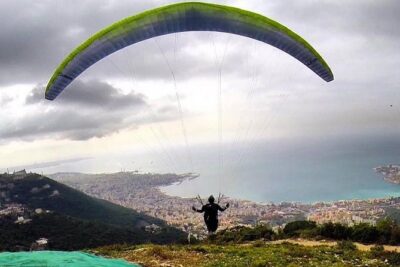
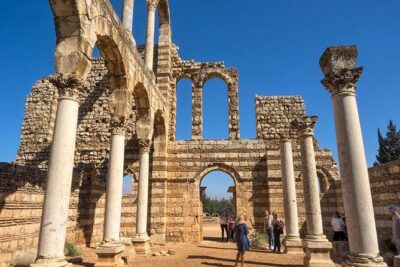
Anjar, Baalbek & Ksara Day Trip – With Lunch (4G on Board)
Read our review →
Byblos, Jeita Grotto & Harissa Day Trip -With Lunch (4G on Board)
Read our review →Browse the lists this tour appears in