
Reviewed · LEBANON DAY TRIPS
Guided Private Full Day Tour to Baalbek, Anjar and Chateau Ksara
Baalbek is the star here: its enormous Roman columns and temples make ordinary ancient ruins feel small. You’ll also see the lesser-known Umayyad city of Anjar and finish with Lebanese wine in a cave at Chateau Ksara. It is a long but rewarding day from Beirut.
I like the private vehicle and hotel pickup, since you avoid the work of arranging transport across the Beqaa Valley. I also like the mix of Roman, Islamic, religious, and wine-making sites, with guides such as Albert and Georgette bringing useful context and flexibility to the day.
The main catch is cost control. The $100 price covers the private ride, guide, and hotel transfer, but site entry, the wine tasting, and lunch are extra, so your final bill will be higher.
Key points to know before booking
- Baalbek gets the most time: Plan on roughly three and a half hours around the Roman sanctuary, including the main temples.
- Anjar adds a different era: The Umayyad ruins show a planned eighth-century city rather than another Roman temple site.
- Chateau Ksara ends the day on a relaxed note: Wine tasting takes place in the winery’s cave setting, but it is not included.
- Private touring makes the schedule flexible: Only your group takes part, and guides such as Albert have adjusted the pace during the day.
- The Stone of the Pregnant Woman is a quick, unusual stop: You get a close look at one of the largest ancient quarried stones.
- Budget for extras: Lunch, entrance fees, and wine tasting are outside the advertised $100 price.
Why this Beqaa Valley day trip works so well
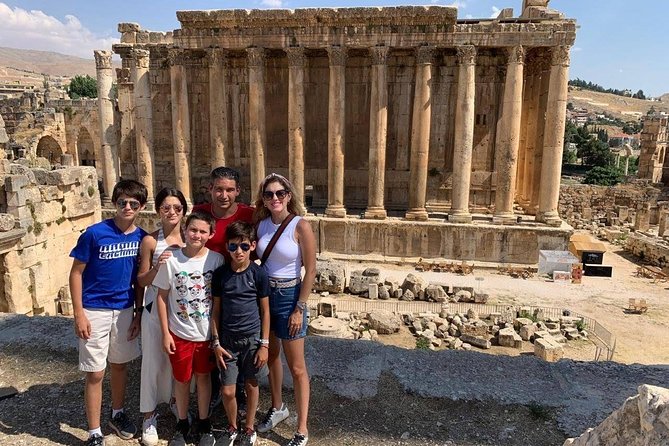
This is not just a trip to one famous ruin. In about eight hours, you move through several chapters of Lebanon’s past, from Phoenician worship and Roman imperial power to Umayyad rule and modern wine production.
That variety gives the day a good rhythm. Baalbek supplies the grand scale. Anjar is quieter and more orderly, with walls, arcades, baths, and palace remains. Chateau Ksara gives you an hour to sit, taste, and shift gears before returning to Beirut.
I especially like the private format for this route. You are not tied to the pace of a large group, and the driver and guide can help shape the day. Albert is described as flexible and reflective, while Georgette is praised for her enthusiasm and clear explanations. The exact guide is not guaranteed, but the experience is designed for one private party only.
The vehicle is air-conditioned, an important detail for a full day that includes outdoor ruins. Hotel pickup and drop-off from Beirut also remove the hardest part of the plan: figuring out how to link three separate destinations in the Beqaa Valley.
More Lebanese day trips from Beirut:
- Guided Small-Group Tour to Baalbek, Anjar and Ksara with Lunch
★ 5.0 · 511 reviews - Guided Small-Group Tour to Jeita, Harissa, Byblos with Lunch
★ 5.0 · 361 reviews - Jeita Grotto,Harissa&Byblos Full-Day PRIVATE-CAR Trip from Beirut
★ 5.0 · 222 reviews
Leaving Beirut for the Beqaa Valley
The tour begins with pickup at your Beirut hotel. From there, you travel in a private vehicle toward the Beqaa Valley, with a professional guide and driver handling the route.
The tour lasts about eight hours, so expect a full day rather than a quick outing. The timing allows substantial time at Baalbek, a shorter visit to Anjar, and a final stop at Chateau Ksara. Lunch is not included, and the supplied details do not specify where the lunch stop occurs, so it is sensible to confirm the plan when booking.
The private setup is valuable if your group has different interests. You can spend longer looking at temple details, ask more questions about religious history, or keep moving if you have had enough of one site. The day still has a fixed structure, but it is less rigid than a large shared excursion.
Baalbek and the Roman sanctuary
Baalbek is the centerpiece of the outing. The city was known as Heliopolis during the Hellenistic period and later became a major Roman sanctuary. Worship centered on a Romanized version of a Phoenician triad: Jupiter, Venus, and Bacchus.
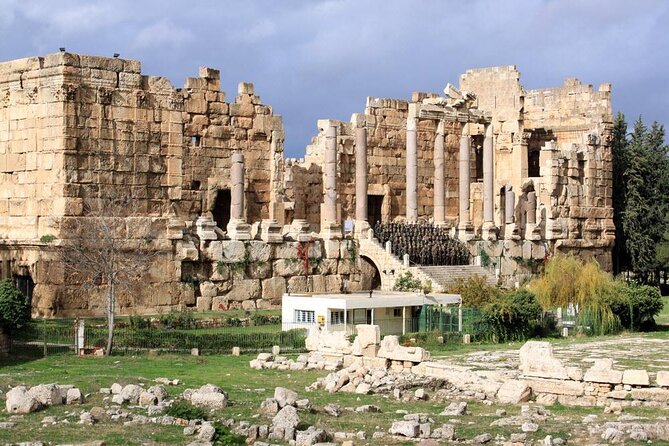
The scale is the first thing you notice. Baalbek’s sanctuary was built over more than two centuries, and its great stones and columns show the ambition of Imperial Roman architecture at its peak. The Temple of Jupiter and Temple of Bacchus are the key monuments, with the latter particularly important as one of the best-preserved Roman temples in the complex.
You have about two hours listed for Baalbek, followed by another hour and a half for the temples. In practice, treat this as one connected visit to the archaeological site rather than two entirely separate stops. Your guide can help explain how the sanctuary worked and why pilgrims came here in large numbers.
Baalbek was not simply a collection of pretty ruins. It was a working religious center that drew worshippers from across the Roman world. That context makes the enormous construction more understandable. These buildings were meant to impress, support ritual, and show the reach of the empire.
Baalbek became a UNESCO World Heritage site in 1984. The designation matters less than what you can see on the ground, but it confirms the site’s importance and helps explain why it is one of Lebanon’s essential historic stops.
Entry is not included in the tour price. The information lists the first Baalbek stop as having no admission charge, while the temple visit specifically lists admission as extra. To avoid confusion, ask exactly which site tickets you will need and how they are handled on the day.
The Temples of Baalbek and the Heliopolitan Triad
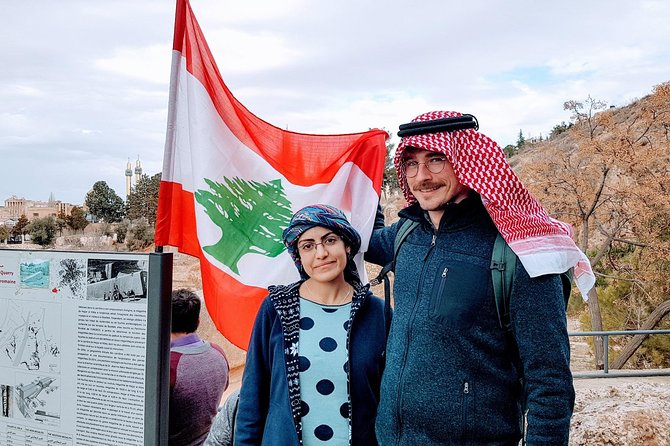
The main temple complex sits at the foot of the Anti-Lebanon range, at about 1,150 meters above sea level. Its location at the edge of the fertile Beqaa Valley adds a dramatic setting, but the stones remain the main attraction.
The Temple of Jupiter represents the sanctuary’s monumental scale. The Temple of Bacchus is more intact and offers a closer look at Roman decoration and design. You may also hear about Venus, the third member of the local triad, even though her temple is less dominant in the usual visit.
This is where a guide earns the fee. Without explanation, you see columns, platforms, stairways, and fallen blocks. With a guide, you can connect the buildings to the older Phoenician cult, the Hellenistic name Heliopolis, and the later Roman religious program.
Give yourself time to look up as well as down. The site is easy to treat as a photo stop, but the scale becomes clearer when you study the height of the columns, the size of the foundation stones, and the way the sanctuary was arranged for processions and worship.
Same base, a different sort of day:
- Paragliding Trip Over Lebanon – Jounieh Bay
★ 5.0 · 257 reviews - First Paragliding Club in Lebanon – Since 1992
★ 5.0 · 193 reviews - Anjar, Baalbek & Ksara Day Trip – With Lunch (4G on Board)
★ 4.5 · 181 reviews - Jeita Grotto – Harissa – Byblos Trip
★ 5.0 · 169 reviews
The Mosque of Sayyida Khawla
The stop at the Mosque of Sayyida Khawla adds a religious dimension that is different from the Roman sanctuary. It marks the place believed by people in Baalbek to be the burial site of Sayyida Khawla, the daughter of Imam al-Hussein and granddaughter of the Prophet Muhammad.
The story connects the site with the caravan of captives from Karbala. According to local belief, Khawla died when the caravan passed through Baalbek and was buried there.
The supplied timing does not give a separate duration for this stop, so expect it to fit into the Baalbek portion of the day. It is a useful reminder that Baalbek is not only an archaeological site. It remains part of a living religious setting with meaning for local communities.
The Stone of the Pregnant Woman
The Stone of the Pregnant Woman is a short stop, listed at about 15 minutes. It is a worked Roman monolith near Baalbek, associated with another huge ancient stone block.
The nickname is memorable, but the important point is its size. These blocks are among the largest stones ever quarried, and they were likely intended for the nearby Roman temple complex. Their presence raises practical questions about quarrying, transport, and construction in antiquity.
Do not expect a long visit here. The stop is brief, but it breaks up the temple tour and gives you a close look at the raw material behind Baalbek’s monumental buildings.
Anjar’s Umayyad streets and palace remains
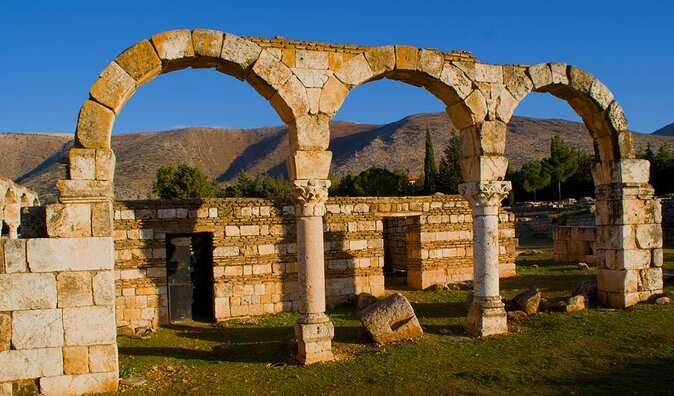
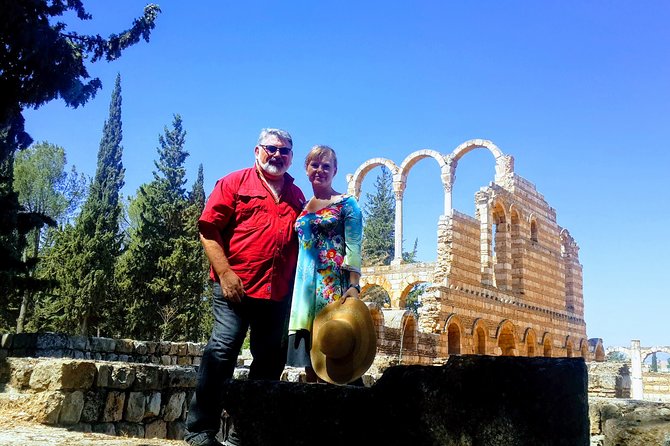
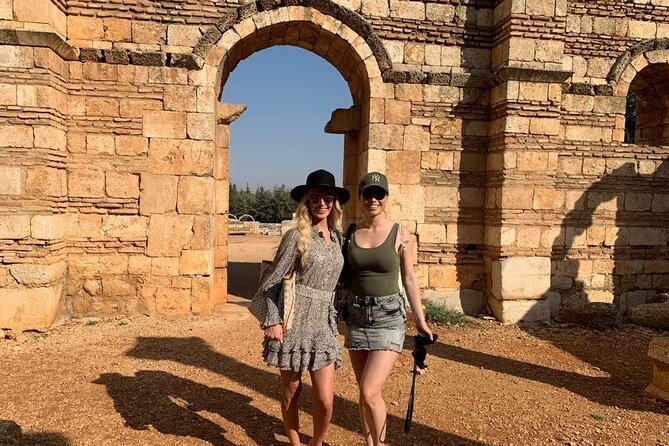
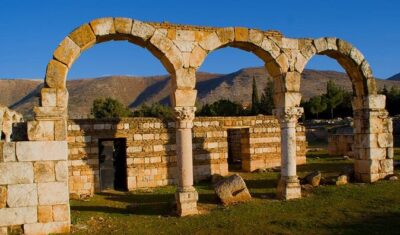
Anjar, also called Aanjar, changes the mood of the day. Instead of a grand Roman sanctuary, you see the remains of an Umayyad city built as an inland commercial center at the meeting point of important routes.
One route linked Beirut with Damascus. Another crossed the Beqaa Valley toward Homs and Tiberiade. That location helps explain why Anjar was established here and why its layout feels tied to trade, movement, and administration.
The ruins include the walls of the Umayyad palace, harems, a mosque, the great palace of the Caliph, thermal baths, and many columns. Some architectural elements show Roman influence, so the site is not completely separate from what you saw at Baalbek. Still, the Umayyad purpose and period give it a distinct character.
Anjar was only found by archaeologists in the late 1940s. That relatively recent discovery adds interest, since the city had been buried and overlooked for centuries.
The visit is listed at about 45 minutes, with admission extra. That is enough for an introduction and a guided walk, but not a slow archaeological study. If you prefer Roman monuments to city plans and Islamic-era ruins, Anjar may feel less immediately dramatic than Baalbek. I think the contrast improves the day, since you are not looking at three versions of the same kind of ruin.
Chateau Ksara and Lebanese wine in a cave
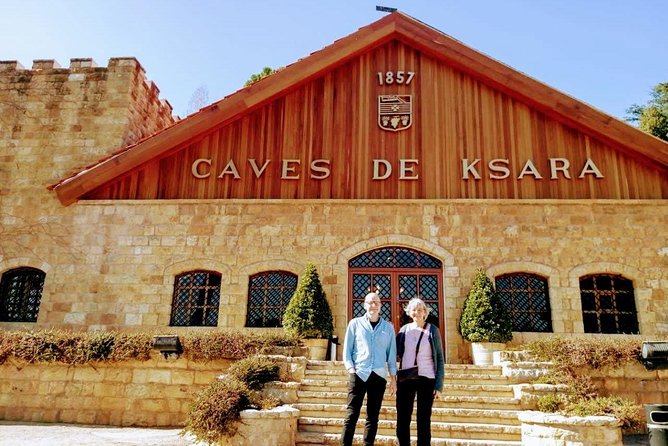
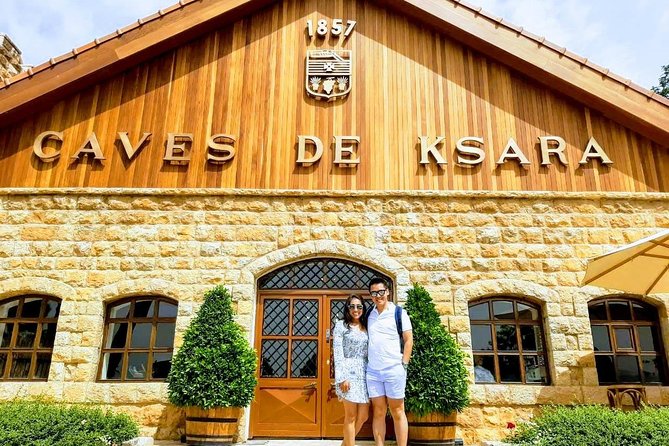
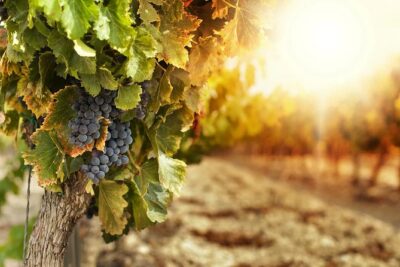
Chateau Ksara provides the most relaxed stop. The winery was founded in 1857 by Jesuit priests and developed Lebanon’s first dry wine. It now produces about three million bottles a year and exports to more than 40 countries.
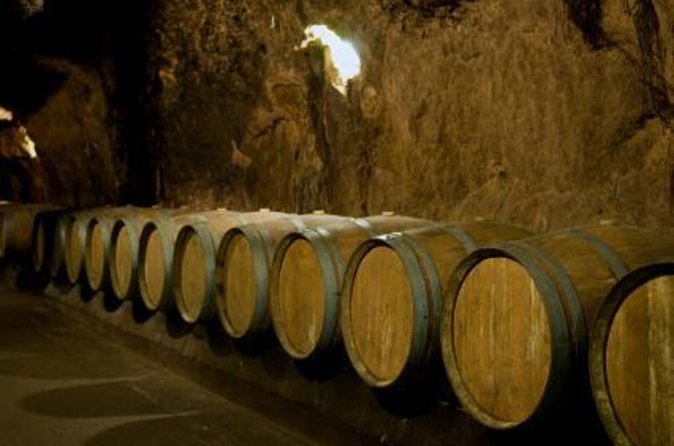
The visit lasts about an hour. You can sample local wines while sitting in a cave, which gives the final part of the tour a setting unlike the archaeological stops. The cave visit also offers a clear link between the Beqaa Valley’s agricultural setting and its modern wine industry.
Wine tasting is not included in the $100 price. Neither is admission, so ask what the tasting package covers before ordering. If you do not drink wine, the tour description does not explain whether an alternative tasting is offered.
Ksara is a good final stop because it slows the pace. After several hours among large ruins and historical explanations, an hour with local wine gives you time to talk with your guide, compare notes, and enjoy a less demanding setting.
What the $100 price really covers
At $100 per person, this tour is best judged as a private transport and guiding package rather than an all-inclusive day trip. The price includes an air-conditioned private vehicle, hotel pickup and drop-off, a tour leader, and a professional guide.
That can be good value for a small group. You avoid paying for separate transport to three sites, and you gain the convenience of returning to the same hotel without arranging a taxi or rental car. The private format also gives your group more control over questions and pace.
The price does not include lunch, entry fees, or the Chateau Ksara wine tasting. Those additions can change the day’s final cost, so I would not compare the advertised figure directly with a tour that includes meals and admissions.
The experience has a 4.9 rating from 60 reviews, with 100 percent recommending it. The strongest praise centers on the guides. Albert is described as flexible and thoughtful, while Georgette is noted for her enthusiasm and detailed explanations. Those comments suggest that the human side of the tour is a major part of its value, though your assigned guide may be different.
Who should book this private tour?
I would choose this tour if you are staying in Beirut and want to see Baalbek without building a complicated independent route. It suits couples, families, and small groups who value a private vehicle and direct access to a guide.
It is also a strong choice if you want more than Roman ruins. The combination of Baalbek, Sayyida Khawla, Anjar, and Chateau Ksara gives you religious, architectural, political, and agricultural context in one day.
You should think twice if you want a slow visit at every site. Eight hours is enough for a strong overview, but Baalbek alone can fill a day for anyone who studies architecture or ancient history closely. Anjar receives about 45 minutes, and Ksara about an hour, so the schedule favors variety over long, unhurried exploration.
Wear practical clothing and shoes suitable for outdoor archaeological sites. The tour details do not specify walking distances or conditions, so ask the provider if you have mobility concerns. The booking information says most people can participate, but it does not provide a detailed accessibility assessment.
Free cancellation is available if you cancel at least 24 hours before the start time. Changes or cancellations made less than 24 hours ahead are not accepted for a refund.
Should you book it?
Book this tour if you want the easiest private route from Beirut to the Beqaa Valley and you value a guide who can connect very different sites. Baalbek is the main reason to go, but Anjar and Chateau Ksara keep the day from becoming a single-purpose ruins visit.
The $100 price is reasonable for private transport, hotel transfers, and guiding, especially when split among a small group. Just add room in your budget for lunch, admission fees, and the wine tasting.
I would skip it only if you prefer to spend an entire day at Baalbek, or if you want every expense included upfront. For most visitors with limited time in Lebanon, this is a practical and varied way to see three of the Beqaa Valley’s most important stops.
FAQ
How long is the tour?
The tour lasts approximately eight hours.
Where does the tour begin?
Pickup is offered from your hotel in Beirut.
Is transportation private?
Yes. The tour includes comfortable private transportation in an air-conditioned vehicle, and only your group participates.
Is hotel drop-off included?
Yes. Hotel pickup and drop-off are included.
Is a guide included?
Yes. The tour includes a tour leader and a professional guide.
Are Baalbek entry fees included?
No. Entry fees are not included in the tour price.
Is the Chateau Ksara wine tasting included?
No. The wine tasting is not included.
Is lunch included?
No. Lunch is not included.
How many people can join the tour?
The experience is private, so only your group participates. The supplied information does not state a maximum group size.
Can I cancel for a full refund?
Yes, if you cancel at least 24 hours before the experience start time. Cancellations made less than 24 hours ahead are not refundable.
Just added in Beirut
- Semi-Private Tour to Jeita Grotto, Harissa & Byblos with Lunch★ 5.0 · 52 reviews
- Guided Small-Group Tour to Qadisha, Bcharee & Cedars with Lunch★ 5.0 · 39 reviews
- Small Group Tours to Baalbek, Anjar & Chateau Ksara with lunch and Tickets★ 5.0 · 29 reviews
- Sidon, Tyre & Maghdouche Day Trip – With Lunch (4G on Board)★ 4.5 · 44 reviews
- Paragliding activity in Lebanon★ 5.0 · 33 reviews
- Jeita Grotto, Byblos and Harissa Full-Day Tour from Beirut★ 5.0 · 23 reviews
- PRIVATE city Tour of authentic Tripoli and vibrant Batroun★ 5.0 · 51 reviews
- Paragliding Trip Over Lebanon – Jounieh Bay★ 5.0 · 257 reviews
Lebanon Day Trips, compared.
Guided Small-Group Tour to Baalbek, Anjar and Ksara with Lunch
Read our review →
Guided Small-Group Tour to Jeita, Harissa, Byblos with Lunch
Read our review →
Jeita Grotto,Harissa&Byblos Full-Day PRIVATE-CAR Trip from Beirut
Read our review →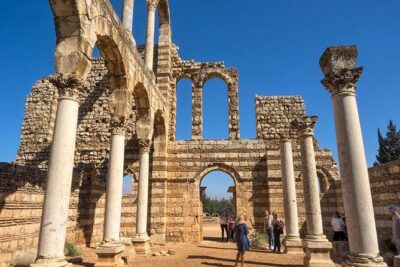
Anjar, Baalbek & Ksara Day Trip – With Lunch (4G on Board)
Read our review →
Byblos, Jeita Grotto & Harissa Day Trip -With Lunch (4G on Board)
Read our review →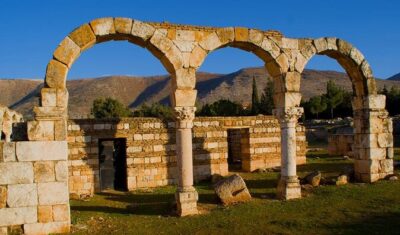
Private Anjar and Baalbek Tour from Beirut with Departure Ticket
Read our review →Browse the lists this tour appears in