
Reviewed · TOURS IN BEIRUT
Guided Small-Group Tour to Sidon, Tyre & Maghdouche with Lunch
Southern Lebanon packs an astonishing amount into one day: Phoenician ports, a Crusader fortress, a traditional soap workshop, a Marian shrine, and one of the Roman world’s largest hippodromes. This 9-hour small-group outing gives you a practical way to see it all without arranging taxis or navigating unfamiliar roads.
I like the excellent range of sights, from Sidon’s narrow souks to Tyre’s broad archaeological fields. I also like the included lunch, bottled water, hotel transfers, and air-conditioned vehicle, which make the $65 price easier to justify. Guides such as Alain have earned praise for clear organization, while driver Naaser has been singled out for a smooth, helpful day on the road.
The main caution is time. You cover three cities and several historic sites in one long day, so stops are purposeful rather than leisurely. Some planned places may receive less time than expected, and outdoor seating at lunch may not offer full shade, so bring sunscreen.
Key points to know before booking
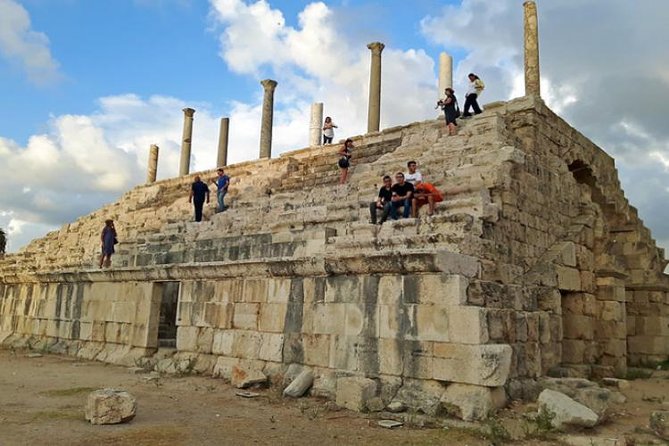
- Tyre’s Roman hippodrome is the day’s major archaeological sight, with a monumental arch, aqueduct, necropolis, and ancient road.
- Sidon gives you the most varied city experience, combining a Crusader sea castle, khan, soap museum, and working souks.
- Maghdouché adds a religious and local dimension, with a cave linked by tradition to Mary’s wait for Jesus.
- Lunch, water, hotel pickup, and drop-off are included, a useful saving in both money and planning time.
- The group can reach 20 people, so this is small compared with a coach tour but not necessarily intimate.
- Some admission fees are extra, including the Sea Castle, Soap Museum, and Al-Bass Archaeological Site.
Why this day trip works from Beirut
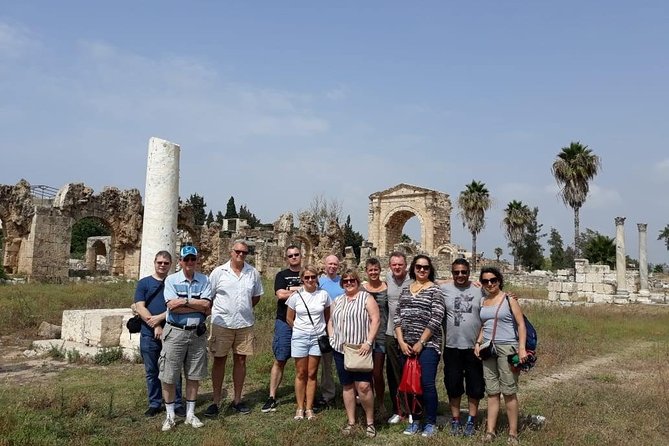
The great strength of this outing is its route. Sidon lies south of Beirut, Tyre lies farther down the coast, and Maghdouché sits inland near Sidon. Instead of treating each place as a separate transport problem, you move through them in one organized loop with a guide explaining the connections.
That matters in Lebanon, where a day of independent sightseeing can involve several taxis, uncertain fares, and time spent figuring out where to go next. Here, your hotel transfer and air-conditioned vehicle take care of the basic logistics. The cost is $65 per person, and that includes lunch, bottled water, guide service, and transportation.
I see the price as good value if you want a broad introduction to southern Lebanon. It is less ideal if you prefer to spend half a day in one archaeological site or linger over every alley. The schedule favors variety.
The departure time is 8:30 am, and the total duration is about nine hours. Expect a full day, not a gentle afternoon excursion. Wear shoes suitable for uneven historic surfaces, carry sun protection, and keep some flexibility in your expectations about exact stop lengths.
Other trips people book in Beirut:
- Guided Small-Group Tour to Baalbek, Anjar and Ksara with Lunch
★ 5.0 · 511 reviews - Guided Small-Group Tour to Jeita, Harissa, Byblos with Lunch
★ 5.0 · 361 reviews - Paragliding Trip Over Lebanon – Jounieh Bay
★ 5.0 · 257 reviews
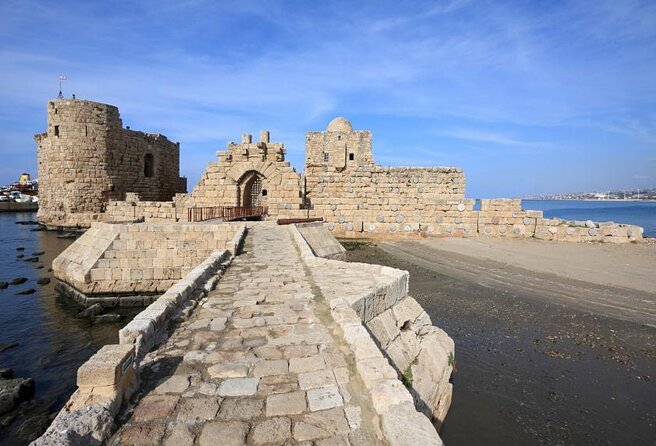
Sidon’s sea castle opens the story
Sidon, also called Saida, is one of the oldest Phoenician cities. Its roots reach back to the third millennium BC, and its power grew through trade, purple dye, glassware, and its position on the Mediterranean coast. Jesus is also associated with a visit to the area, adding another layer to the city’s long religious story.
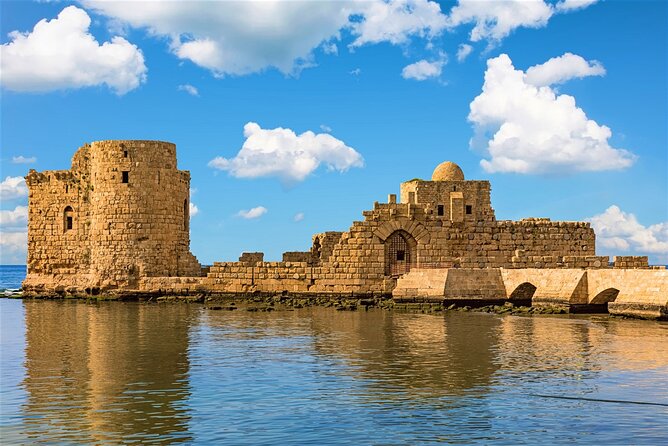
Your first city stop lasts about an hour, followed by roughly 30 minutes at the Crusaders Sea Castle. The castle sits on a small island joined to the mainland by a causeway. The location is easy to understand at a glance: control the harbor, and you control access to the city.
The fortress was built in the 13th century during the Crusades. The Mamluks destroyed much of it in 1291, and Fakhr el-Dine Maan II later restored it in the early 17th century. Do not expect an intact palace. What remains is a rugged coastal fortification, with exposed stone and open views across the port.
Admission to the castle is not included, so allow for a separate fee. The stop is short, which suits the site if you want a strong impression rather than a detailed architectural study. I would pay attention to the setting as much as the masonry. The causeway, sea, harbor, and broken walls explain the castle’s purpose better than a long list of dates.
Khan al-Franj and Sidon’s old trade world
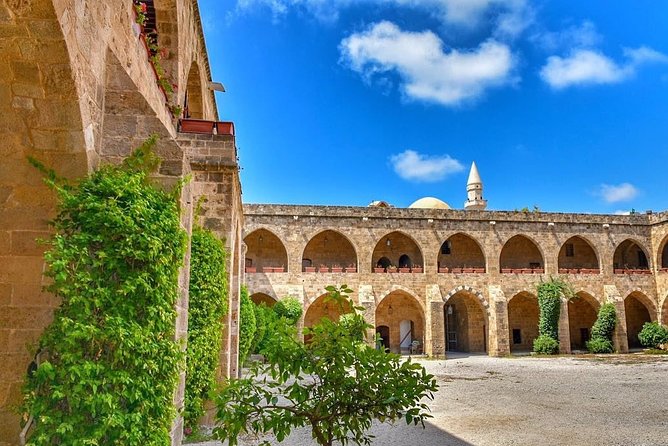
From the waterfront, the route moves into Khan al-Franj, one of Sidon’s notable historic buildings. Emir Fakhreddine II built it at the beginning of the 17th century as a place for ambassadors and a center of trade between Lebanon and France.
The design is classic khan architecture: a large rectangular courtyard, a central fountain, and covered galleries around the edges. It once served far more than merchants. Diplomacy, religion, literature, industry, and commercial exchange all passed through its rooms.
You have about 15 minutes here, so this is a quick architectural pause. Look at the courtyard layout and imagine the building as a working hub rather than a silent monument. The short visit also keeps the day moving toward the more atmospheric parts of Sidon.
The building helps connect the Phoenician city of antiquity with the Ottoman-era trading city that followed. Sidon was not simply a place of ruins. It continued to function as a port and commercial center, and the khan gives you a clear sense of that later chapter.
The Soap Museum adds a hands-on local detail
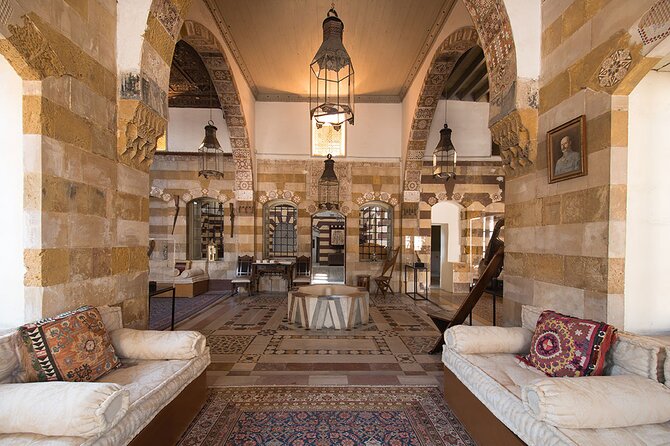
The Soap Museum occupies a former soap factory built by the Hammoud family in the 17th century. Parts of the building may date to the 13th century, and excavation has uncovered items such as pottery fragments and clay pipe heads from the 17th to 19th centuries.
Inside, you learn how traditional olive oil soap was made and how soap production connected with hammam, or bath, customs in the Levant. A demonstration shows the basic process, giving the stop more substance than a display of old tools.
This is one of the more distinctive stops because it deals with ordinary life and local craft rather than kings and conquerors. The museum also gives you a break from outdoor walking. Admission is not included, so budget for it separately.
The stop lasts about 30 minutes. You might find it especially worthwhile if you enjoy food, crafts, household traditions, and working methods. If your main interest is ancient architecture, it may feel less essential than Tyre’s ruins. Still, it makes the day more human.
A useful point: the museum does not have to function as a forced shopping stop. The tour has been praised for avoiding the usual tourist-shop detour and for allowing you to look around without pressure to buy. That makes the visit more comfortable for anyone who wants context without a sales pitch.
Same base, a different sort of day:
- Jeita Grotto,Harissa&Byblos Full-Day PRIVATE-CAR Trip from Beirut
★ 5.0 · 222 reviews - First Paragliding Club in Lebanon – Since 1992
★ 5.0 · 193 reviews - Anjar, Baalbek & Ksara Day Trip – With Lunch (4G on Board)
★ 4.5 · 181 reviews - Jeita Grotto – Harissa – Byblos Trip
★ 5.0 · 169 reviews
Sidon’s souks bring you into the present
Sidon’s souks are the city’s retail and craft center. Their narrow lanes hold small kiosks, cafés, food shops, butchers, grocers, shoe-makers, tailors, jewelers, and street sellers.
You have about 15 minutes here, which is enough to get your bearings but not enough for a serious shopping session. The tight lanes can feel like a sharp change after the open seafront and formal courtyard of Khan al-Franj.
I like this brief stop because it keeps Sidon from becoming an outdoor museum. You see that the city’s old commercial core still serves daily needs. At the same time, the limited time means you should not expect a relaxed coffee, a long browse, or careful shopping.
If something catches your eye, note where it is and return later only if your wider Lebanon plans allow it. On this organized day, the group must stay on schedule.
Maghdouché and the cave of Our Lady of Mantara
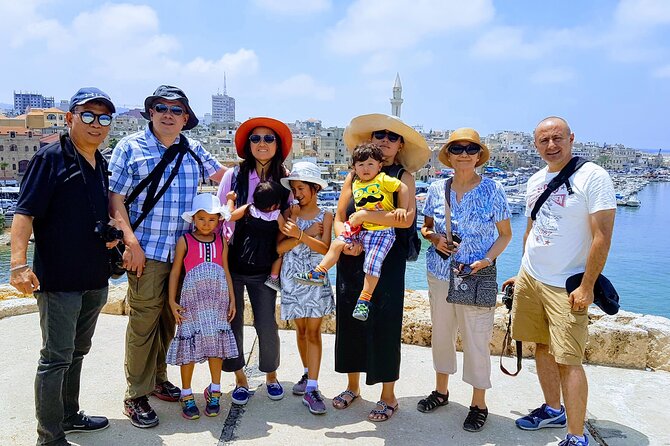
After Sidon, the route turns to Maghdouché, home of the Basilica of Our Lady of Mantara. The Melkite Greek Catholic shrine is also called Our Lady of Awaiting.
According to local Christian tradition, Mary waited here for Jesus while he traveled through the area. The shrine includes a sacred cave believed to be the place where she rested, a cathedral, a cemetery, and a tower topped by a statue of the Virgin and Child.
A young shepherd discovered the shrine on September 8, 1721. The visit lasts about 15 minutes, so you will not have a long religious tour. Instead, you get a short stop with a strong sense of place and a chance to see an important site for local Christian devotion.
This part of the day may matter most to visitors interested in biblical tradition, Marian sites, or Lebanon’s Christian communities. If your focus is strictly Roman or Phoenician archaeology, it may feel like a change of subject. That contrast is actually useful: the tour shows that southern Lebanon’s story is not confined to ancient empires.
The shrine also breaks up the coastal ruins with an inland setting. Keep the visit respectful, especially around the church and cemetery.
Tyre links Phoenician power to Roman scale
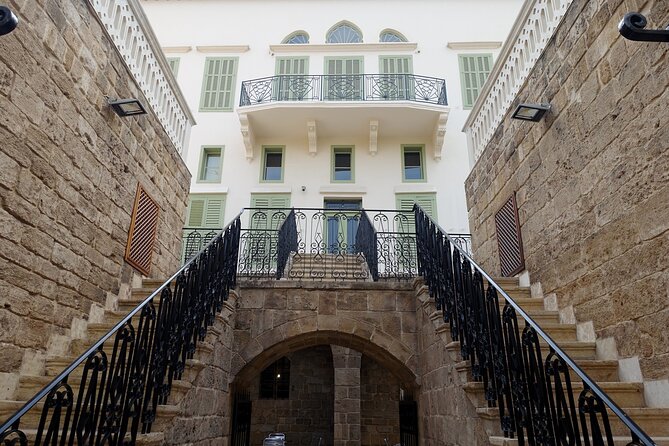
Tyre is the largest chapter of the day. The city’s foundations date to about 2750 BC, and it became famous for purple dye made from murex sea snails. Phoenician Tyre also connects to the story of Elissar, the princess traditionally credited with founding Carthage.
The city was ruled at different times by Egyptians, King Hiram, Assyrians, Neo-Babylonians, Greeks, Seleucids, Romans, Byzantines, Arabs, Crusaders, Mamluks, and Ottomans. That list can sound like a roll call, but the sites make the succession easier to grasp.
Tyre has two main archaeological zones, Al-Bass and Al-Mina. The tour specifically gives you about an hour at Al-Bass, with additional time in Tyre itself. The city stop is listed at about two hours, making Tyre the day’s main historical focus.
The coastal setting and beaches are part of Tyre’s appeal, but this schedule centers on the ancient remains. If you want a long beach break or an unhurried walk through every quarter, this outing will not provide it. Its purpose is to show you the city’s major historical pieces efficiently.
Some planned city areas may not receive the same attention as the main sites. One practical lesson is to ask your guide early which parts of Tyre will be covered that day, especially if the old souk is a priority for you.
Al-Bass reveals Tyre’s Roman showpiece
Al-Bass Archaeological Site is where the scale of Roman Tyre becomes clear. The site includes a necropolis with hundreds of well-preserved sarcophagi, a straight Roman road, a monumental triumphal arch dating from the second century AD, an aqueduct, and a hippodrome.
The hippodrome is the headline attraction. It is among the largest Roman examples known and is described as one of the best-preserved ancient hippodromes. Picture a venue built for public spectacle, with the long racing course designed to hold large crowds.
The monumental causeway once formed the principal entrance to the ancient town. The triumphal arch would have announced the city’s power before you even reached its center. The necropolis, meanwhile, shows how much attention Tyre gave to the dead, with sarcophagi lining the approach.
The tour allows about an hour here. That is enough to walk through the major features and hear the story, but not enough for a slow archaeological study. Admission is not included, so check the separate entry cost when planning your budget.
I recommend saving some attention for the less famous pieces. The aqueduct and Roman road explain how the city functioned, while the hippodrome shows how it entertained itself. Together, they make Al-Bass more than a collection of broken columns.
Lunch, transport, and the small-group tradeoff
Lunch is included, along with bottled water. The meal has been described as a fresh Lebanese lunch, and a fish meal at a restaurant in Tyre has been particularly praised. That makes sense for a coastal route, though the precise menu can vary.
One practical warning: the restaurant has outdoor seating that may not be fully covered from the sun. Bring sunscreen, and consider a hat if you are sensitive to heat. The meal is meant to refuel you, not become a long culinary event.
The vehicle is air-conditioned and transportation is included from Beirut hotels, with drop-off afterward. This is a major benefit on a nine-hour route. You can spend the day looking out the window or listening to the guide instead of negotiating each transfer.
The group size can reach 20 people. That is smaller than a large coach, but do not picture a private outing. The advantage is usually easier movement and a more personal feel than a mass tour. The tradeoff is that timing still follows the group, and a stop may not stretch because one person wants extra photographs.
Several people have praised the organization, guide service, driver, and absence of pressure to purchase items. Alain and Naaser were specifically named for making one day especially pleasant. Names can change, but the useful point is that the experience depends heavily on the guide and driver working well together.
Who should book this $65 outing?
I would choose this tour if you are based in Beirut, have one free day, and want to see southern Lebanon without driving. It suits first-time visitors who want a clear introduction to Phoenician, Roman, Crusader, Ottoman, and Christian sites in one route.
It is also a good fit if you value convenience. Hotel transfers, air-conditioning, water, lunch, and a guide remove many small costs and decisions. Once you add those services to the $65 price, the package is strong value.
You should think twice if you need long, quiet visits at archaeological sites. The day moves quickly, and some stops are only 15 minutes. You should also check the separate admission charges for the Sea Castle, Soap Museum, and Al-Bass site.
Free cancellation is available if you cancel at least 24 hours before the start time. Changes or cancellations made later are not refunded. The tour begins at 8:30 am, and confirmation is provided at booking.
My booking verdict
I would book this tour for a broad, well-organized look at southern Lebanon from Beirut. Its best feature is the mix: Sidon’s working old city, Maghdouché’s religious tradition, and Tyre’s grand Roman remains each show a different side of the region.
Choose it for variety, value, and simple transport. Skip it only if you want a slow archaeological day or a long beach and souk visit. Bring sunscreen, comfortable shoes, and modest expectations about time at each stop, and the $65 cost buys a very full day.
FAQ
What time does the tour start?
The tour starts at 8:30 am.
How long does the experience last?
The tour lasts approximately nine hours.
Where does the tour begin?
The tour is based in Beirut and includes pickup from Beirut hotels.
Is hotel drop-off included?
Yes. Hotel pickup and drop-off are included.
Is lunch included?
Yes. Lunch and bottled water are included in the tour price.
What type of transportation is provided?
You travel in an air-conditioned vehicle with comfortable transportation included.
How large can the group be?
The maximum group size is 20 people.
Are entrance fees included?
Not all entrance fees are included. Separate admission is listed for the Crusaders Sea Castle, the Soap Museum, and Al-Bass Archaeological Site.
Which places are visited in Sidon?
The route includes Sidon, the Crusaders Sea Castle, Khan al-Franj, the Soap Museum, and Sidon’s souks.
Can I cancel for a full refund?
Yes. You can cancel at least 24 hours before the experience start time for a full refund. Cancellations made less than 24 hours before the start time are not refunded.
Just added in Beirut
- Semi-Private Tour to Jeita Grotto, Harissa & Byblos with Lunch★ 5.0 · 52 reviews
- Guided Small-Group Tour to Qadisha, Bcharee & Cedars with Lunch★ 5.0 · 39 reviews
- Small Group Tours to Baalbek, Anjar & Chateau Ksara with lunch and Tickets★ 5.0 · 29 reviews
- Sidon, Tyre & Maghdouche Day Trip – With Lunch (4G on Board)★ 4.5 · 44 reviews
- Paragliding activity in Lebanon★ 5.0 · 33 reviews
- Jeita Grotto, Byblos and Harissa Full-Day Tour from Beirut★ 5.0 · 23 reviews
- PRIVATE city Tour of authentic Tripoli and vibrant Batroun★ 5.0 · 51 reviews
- Paragliding Trip Over Lebanon – Jounieh Bay★ 5.0 · 257 reviews
Tours in Beirut, compared.
Guided Small-Group Tour to Baalbek, Anjar and Ksara with Lunch
Read our review →
Guided Small-Group Tour to Jeita, Harissa, Byblos with Lunch
Read our review →
Jeita Grotto,Harissa&Byblos Full-Day PRIVATE-CAR Trip from Beirut
Read our review →
Anjar, Baalbek & Ksara Day Trip – With Lunch (4G on Board)
Read our review →
Byblos, Jeita Grotto & Harissa Day Trip -With Lunch (4G on Board)
Read our review →Browse the lists this tour appears in