
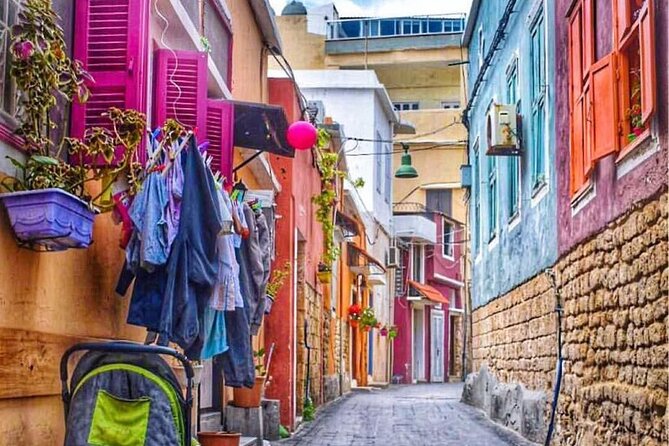
Reviewed · TOURS IN BEIRUT
Best Tours in Lebanon, 3-days-with Pick-up & Drop-off
Lebanon packs an astonishing amount into a small area, and this three-day route takes you from underground caves and Phoenician ports to Roman temples and Umayyad ruins. The big draw is variety: Jeita Grotto and Baalbek alone would justify serious time, while Byblos, Sidon, Tyre, and Anjar fill in the country’s long story.
I like the ease of hotel pickup and drop-off, especially for a solo visitor who does not want to sort out long-distance transport. I also like the human touch from guides such as Ali and Harake, who are praised for warmth, patience, humor, and clear communication through WhatsApp.
The trade-off is pace. You cover a great deal in three days, so several stops are brief, and entrance fees are not included in the $225 price. If you want hours at each archaeological site, this is too compressed. If you want a broad first look without transport worries, it makes good sense.
Key points to know before booking
- Jeita Grotto opens the trip with dramatic cave scenery, including upper and lower cavern areas and an optional cable-car ride at Harissa.
- Byblos gives you a pleasant mix of archaeology, harbor views, a Crusader castle, and traditional shops in one compact stop.
- Day two reaches Sidon and Tyre, with sea castles, old markets, a soap museum, Roman ruins, and a major hippodrome.
- Baalbek is the grand finale, with the Temple of Bacchus, the Temple of Jupiter, and some of the largest ancient building stones ever used.
- The group is limited to 15 people, making the price more reasonable for solo visitors and couples who want shared transport.
- Admission costs are extra, so budget beyond the advertised $225, especially for Jeita, Byblos Castle, Tyre, Anjar, and Baalbek.
Why this three-day Lebanon route works
This is a sightseeing package built around geography. Each day heads in a different direction from Beirut, which avoids repeating long journeys and lets you see several sides of Lebanon.
Day one follows the coast north toward Jeita, Harissa, and Byblos. Day two runs south to Sidon and Tyre, with a stop at Maghdoucheh. Day three heads inland through the Bekaa Valley to Anjar and Baalbek. You get mountains, coast, caves, shrines, old markets, and ancient cities without changing hotels.
The transport matters. Public connections between these sites are not the simple part of a Lebanon trip, and the package removes much of that planning. Pickup begins around 8:15 or 8:30 in the morning, depending on the day, in an air-conditioned vehicle. The group can reach 15 people, so this is not a private tour, but it is still far smaller than a large coach outing.
The local group leader gives a basic explanation at each place. That level of guiding can vary. Some guides, including Ali and Harake, are praised for stories, patience, and helpful answers. One lower-rated experience felt that Byblos and Baalbek needed more background. I would treat the guide as a useful interpreter, but bring your own curiosity and read a little before going.
Other trips people book in Beirut:
- Guided Small-Group Tour to Baalbek, Anjar and Ksara with Lunch
★ 5.0 · 511 reviews - Guided Small-Group Tour to Jeita, Harissa, Byblos with Lunch
★ 5.0 · 361 reviews - Paragliding Trip Over Lebanon – Jounieh Bay
★ 5.0 · 257 reviews
Day one: caves, mountain views, and old Byblos
Jeita Grotto at 8:30 in the morning
The first stop is Jeita Grotto, a cave system formed in limestone and extending for nearly 10 kilometers. You have about an hour to explore the famous caverns, though the exact experience can depend on which sections are open.
The caves are the day’s most unusual stop. Instead of another ruined wall or museum display, you see natural chambers shaped by water over long periods. The cool underground setting also gives you a welcome change from Lebanon’s summer heat.
Admission is extra, and the published price does not include it. Check the day’s arrangements with the operator, since cave access can be affected by conditions.
Harissa and Our Lady of Lebanon
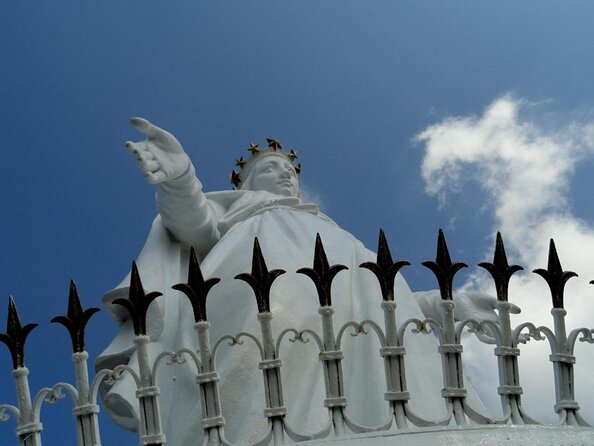
From Jeita, the vehicle climbs toward Harissa. The main sight is the tall statue of the Virgin Mary at the Shrine of Our Lady of Lebanon, a major Marian pilgrimage site above Jounieh.
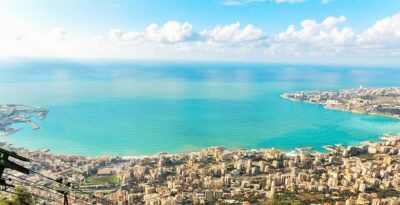
You have roughly 30 minutes at the shrine and another short period for the surrounding views. From this height, you can look across Jounieh Bay and the coast. The stop is less about a long religious visit and more about the combination of shrine, mountain road, and wide coastal outlook.
The cable car from Harissa to Jounieh is part of the plan when operating. The ride takes about 30 minutes and gives you another angle on the bay. The ticket is not included. If the cable car is closed, the group continues by vehicle, so you should not count on the ride as guaranteed.
Same base, a different sort of day:
- Jeita Grotto,Harissa&Byblos Full-Day PRIVATE-CAR Trip from Beirut
★ 5.0 · 222 reviews - First Paragliding Club in Lebanon – Since 1992
★ 5.0 · 193 reviews - Anjar, Baalbek & Ksara Day Trip – With Lunch (4G on Board)
★ 4.5 · 181 reviews - Jeita Grotto – Harissa – Byblos Trip
★ 5.0 · 169 reviews
Byblos, the harbor, and the old souk
Byblos is one of the strongest stops on the entire trip. The city is associated with the ancient Phoenician world and has been continuously inhabited for thousands of years. In a short visit, you can move from archaeological ruins to the harbor, the Crusader castle, and a market street lined with local shops.
The schedule gives about 90 minutes for Byblos, followed by time around the port and souk. The actual stop descriptions divide this into several shorter visits, so expect a guided introduction rather than a slow archaeological study.
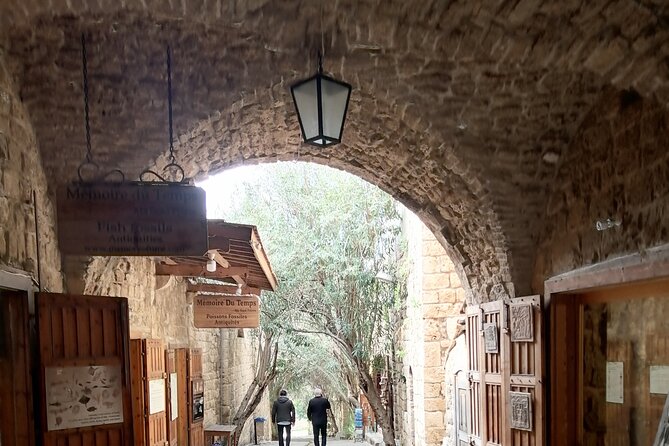
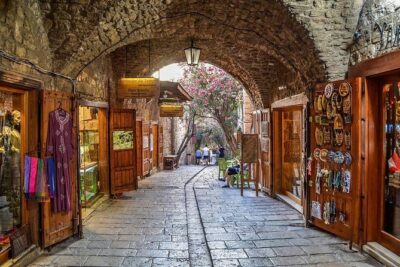
The port is easy to enjoy on foot. You can walk beside the marina, look toward the castle, and then enter the old souk for antiques, crafts, souvenirs, and other local goods. This is one of the few parts of the package where the experience feels relaxed and social rather than purely historical.
Byblos Castle, also called the castle of Gibelet, is adjacent to the ancient site. You can choose to enter, but the ticket costs extra. Inside and around the archaeological area are traces linked with Phoenician religious buildings, including the Temple of Baalat Gebal and the Temple of the Obelisks.
Lunch is arranged at a traditional Lebanese restaurant near the port. One lunch is included in the package, while the itinerary also refers to meals that are paid separately, so confirm which meal is covered before setting out. A meal beside the Byblos harbor is a fitting end to the day.
The vehicle then returns you to Beirut. Since the day begins early and includes several short stops, you should have time to rest before the next morning.
Day two: Sidon’s markets and Tyre’s Roman remains
Sidon Sea Castle and the old markets
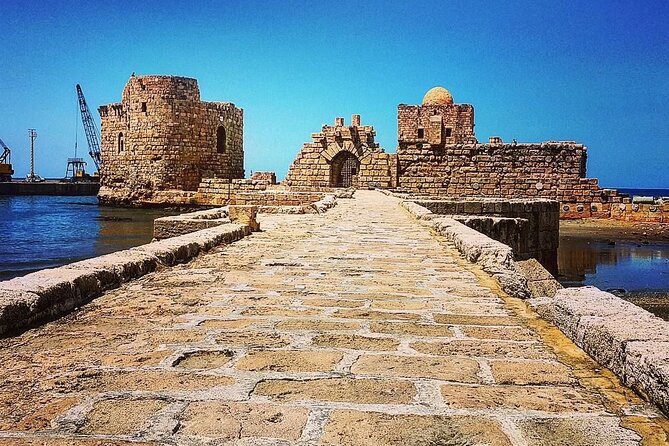
Pickup is around 8:15 a.m. for the drive south to Sidon, an old Phoenician port with major religious, political, and commercial importance. The first visit is the Crusaders Sea Castle, set by the water.
You have about an hour in the castle area. The location gives you a direct sense of Sidon’s relationship with the sea, and the ruins are especially effective when viewed from the shoreline.
Afterward, you walk through the old souks toward the Land Castle, also known as St. Louis Castle. The markets retain vaulted passages, workshops, and older buildings. The descriptions refer to long covered alleys, small craft shops, a coffee house, and fish sellers near the port.
This is a good section of the tour for seeing daily life rather than only monuments. The old market is not polished into a museum. It has a working feel, and that makes it more interesting. Take care with your pace, since the tour allows about an hour and the lanes can invite you to linger.
The Soap Museum and Khan El Franj
The Musée du Savon occupies an old soap factory, with parts of the building thought to date as far back as the 13th century. The museum explains traditional olive-oil soap production and the role of the hammam, or bath, in local culture.
The visit takes about 30 minutes and admission is extra. It is a small stop, but it adds useful context to Sidon’s commercial life. You see how an ordinary product can tell you about trade, craft, hygiene, and local customs.
Nearby, Khan El Franj is a traditional merchant inn built around a rectangular courtyard. It was connected with trade and once housed the French consulate. The schedule gives only a brief visit, so you will mainly get an exterior impression and a short explanation.
The Great al-Omari Mosque is another quick stop. Its walls date to the 13th century, and the building began as a Crusader church before becoming a mosque. The visit is listed at only about five minutes, so do not expect a full interior tour.
Maghdoucheh and Our Lady of Mantara
The route then leaves the coast for Maghdoucheh and the shrine of Our Lady of Mantara. This Melkite Greek Catholic site includes a tower topped by a statue of the Virgin and Child, a cathedral, a cemetery, and a sacred cave.
The cave is traditionally associated with the place where Mary waited while Jesus traveled nearby. The visit lasts about 50 minutes and admission is listed as free.
This stop gives the day a different tone. After castles, markets, and workshops, you see a living religious site with an active devotional purpose. Dress and behave respectfully, as you would at any shrine.
Tyre’s harbor and Roman monuments
Tyre begins with a short visit to the old port and traditional seafront houses. The time listed for the port and beach area is brief, about 15 minutes at each point, so this is a quick look rather than a beach outing.
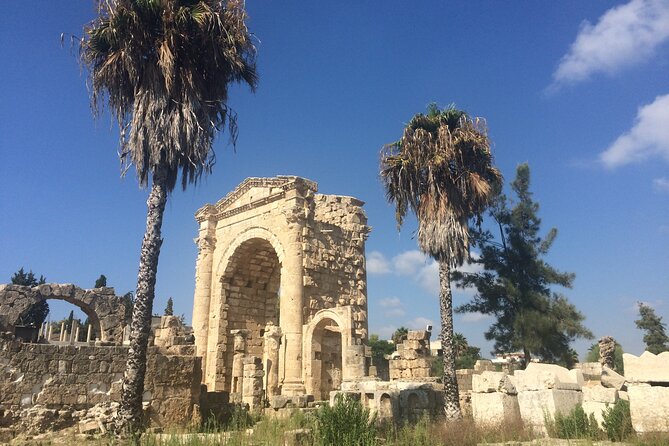
The main archaeological visit comes at the Roman Hippodrome. This horseshoe-shaped structure is about 480 meters long and 90 meters wide, with room for roughly 20,000 spectators. It was built for chariot racing and is considered one of the largest and best-preserved Roman hippodromes of its type.
You then see the Al-Bass Archaeological Site, where the remains include a Byzantine road, a Roman road, an aqueduct, and a second-century triumphal arch. The scale of the site makes Tyre one of the day’s more substantial ancient stops.
Admission to the hippodrome and Al-Bass site is extra. The itinerary allows about an hour for each, though the full day also includes driving and lunch. Wear comfortable shoes, since you will be walking across open archaeological areas.
Lunch is at a traditional fast-food restaurant in Tyre, with the cost listed separately. You then return to Beirut, arriving after a long day. This is the most demanding day in terms of distance and the number of stops, but it also gives you the best mix of port life and Roman remains.
Day three: Anjar and the enormous stones of Baalbek
The Bekaa Valley on the road inland
The final day begins around 8:30 a.m. and heads east through the Bekaa Valley. The valley lies between Mount Lebanon and the Anti-Lebanon range and is an important farming area. You will see fields along the road as the vehicle moves toward Baalbek.
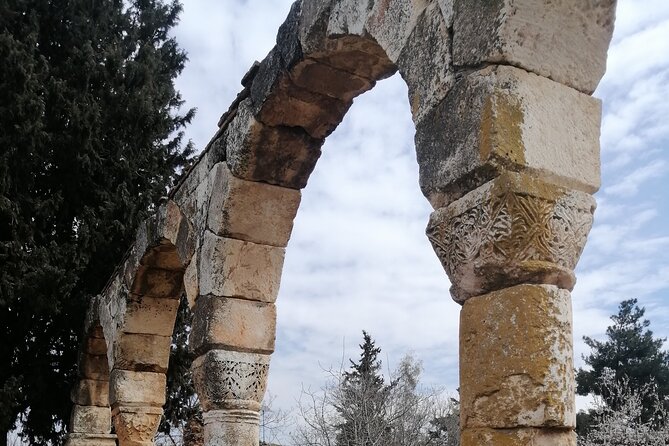
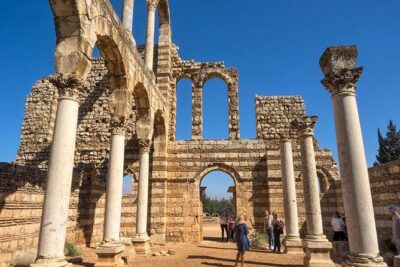
Anjar was founded by the Umayyad caliph Walid I in the early eighth century. Its layout is unusually regular, with walls, palaces, a mosque, baths, and other structures arranged like a planned city.
The site links Umayyad urban planning with older Roman building methods. Pillars and architectural fragments show how builders reused forms and techniques from earlier periods. Admission to the main ruins is extra, despite one itinerary entry listing the broader Anjar visit as free, so ask the operator about the current ticket arrangement.
You also pass the Mosque of Sayyida Khawla in Baalbek. It is associated with Khawla, the daughter of Imam al-Hussein, and is an important religious site for those who visit it.
Hajar al-Hibla, the Stone of the Pregnant Woman
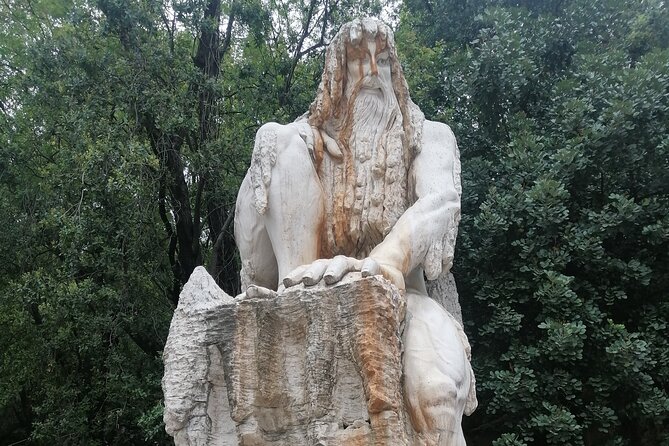
Before the main temple complex, the route stops at Hajar al-Hibla, commonly known as the Stone of the Pregnant Woman. It is a huge worked Roman stone block, one of several massive stones quarried for the Baalbek complex.
You have about 30 minutes here. The stop helps you understand the physical problem facing the ancient builders. Before seeing the temples, you already have a sense of the extraordinary size of the material they cut, moved, and fitted together.
Baalbek’s temples
Baalbek is the climax of the tour. The sanctuary was known as Heliopolis during the Hellenistic and Roman periods and was linked with a Phoenician religious tradition later expressed through a Romanized triad of Jupiter, Venus, and Bacchus.
The Temple of Bacchus is especially well preserved, with ornate columns and carved details dating mainly to the second century. Despite its name, the building is enormous, and its size makes the usual image of a Roman temple seem far too small.
The Temple of Jupiter is even more imposing in conception. The temple once had columns about 30 meters high, and its platform used several of the heaviest stone blocks known from ancient construction. The complex took centuries to build and served as a major pilgrimage center.
The itinerary divides the Baalbek visit into several short segments, adding up to roughly two hours or a little more. That is enough to see the major structures and hear an introduction, but not enough for every inscription, carved detail, and historical layer. I would make Baalbek your priority for personal reading before the trip.
Admission is extra. Lunch follows at a traditional restaurant, with options described as including meat, chicken, vegetarian dishes, and snacks. The return to Beirut completes the three-day schedule.
What the $225 price really buys you

At $225 per person, the value comes from the amount of ground covered and the transport provided. You receive three days of hotel pickup and drop-off, an air-conditioned vehicle, fuel costs, and an English-speaking local group leader. For a solo visitor, shared transport can be far cheaper and simpler than arranging several private day trips.
The price does not cover every cost. Entrance tickets are excluded at several major sites, including Jeita Grotto, Byblos Castle, the Sidon Soap Museum, Tyre’s archaeological sites, Anjar, and Baalbek. Meals are not all included either, although one lunch is specified as included.
Ask for a clear estimate of admission fees before departure. That lets you compare the true cost with a private guide or separate day tours. Group discounts are available, and the maximum group size is 15.
Guides, communication, and the level of explanation
The most praised part of the service is the staff. Ali is described as warm and funny, while Harake is repeatedly described as polite, patient, friendly, and attentive. Other guides named in the feedback include Zayd and a guide whose name is variously written as Harik.
You may have a different guide each day. That can be useful because each guide brings a different personality, but it also means the quality and depth of explanation may not be identical.
Communication through WhatsApp is a practical advantage. Pickup details, the next day’s time, and driver information can be sent directly, which reduces uncertainty in a trip with early starts. Still, I would ask specific questions about entrance tickets, meal coverage, and the next morning’s pickup time.
Who should book this tour?
I would choose this package if you have only a few days in Lebanon and want to see the main ancient sites without arranging intercity transport. It is particularly well suited to solo visitors, couples, and first-time visitors who value a planned route.
It also suits people who like a broad introduction. You see natural caves, Christian and Muslim religious sites, Phoenician ports, Crusader buildings, Roman monuments, and Umayyad ruins. That range is the real strength.
I would hesitate if you prefer slow travel, long museum visits, or private guiding. The route is full, and some stops are only 15 or 30 minutes. At Baalbek and Byblos, you may wish for more time and more historical detail.
Free cancellation is available up to 24 hours before the start time. Changes or cancellations inside that window are not refunded, and poor weather may lead to a different date or a full refund.
Should you book it?
Book it if your priority is seeing as much of Lebanon as possible from a Beirut base. The combination of hotel transfers, small-group transport, friendly local staff, and an ambitious route gives you strong value for three days.
Go in with realistic expectations. This is a guided overview, not a private archaeological seminar. Budget for entrance fees, expect some long drives, and ask for extra explanation when a site matters most to you. With that approach, the trip gives you a memorable first look at Lebanon’s caves, coast, shrines, and ancient cities.
FAQ
Where does the tour begin?
Pickup is offered from hotels in Beirut. The listed start time is around 8:30 a.m., with day two pickup listed at approximately 8:15 a.m.
How large is the group?
The group can include a maximum of 15 people.
Are entrance fees included?
No. Entrance fees are excluded at several stops, including Jeita Grotto, the Harissa cable car, Byblos Castle, the Sidon Soap Museum, Tyre’s archaeological sites, Anjar, and Baalbek.
Is lunch included?
Lunch is included on one day. Other meals mentioned in the schedule, including lunch in Byblos and Tyre, may require separate payment, so confirm the exact coverage before departure.
Which places are visited?
The route includes Jeita Grotto, Harissa, Byblos, Sidon, Maghdoucheh, Tyre, Anjar, and Baalbek, along with their main religious, archaeological, coastal, and market sights.
Can I cancel for a full refund?
You can cancel at least 24 hours before the experience begins for a full refund. Cancellations or changes made within 24 hours are not refunded, and poor weather may result in a new date or a full refund.
Just added in Beirut
- Semi-Private Tour to Jeita Grotto, Harissa & Byblos with Lunch★ 5.0 · 52 reviews
- Guided Small-Group Tour to Qadisha, Bcharee & Cedars with Lunch★ 5.0 · 39 reviews
- Small Group Tours to Baalbek, Anjar & Chateau Ksara with lunch and Tickets★ 5.0 · 29 reviews
- Sidon, Tyre & Maghdouche Day Trip – With Lunch (4G on Board)★ 4.5 · 44 reviews
- Paragliding activity in Lebanon★ 5.0 · 33 reviews
- Jeita Grotto, Byblos and Harissa Full-Day Tour from Beirut★ 5.0 · 23 reviews
- PRIVATE city Tour of authentic Tripoli and vibrant Batroun★ 5.0 · 51 reviews
- Paragliding Trip Over Lebanon – Jounieh Bay★ 5.0 · 257 reviews
Tours in Beirut, compared.

Guided Small-Group Tour to Baalbek, Anjar and Ksara with Lunch
Read our review →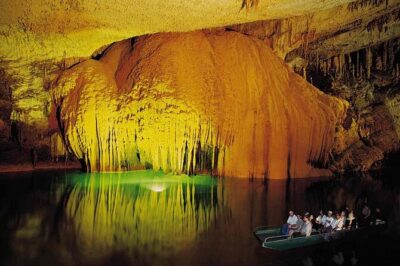
Guided Small-Group Tour to Jeita, Harissa, Byblos with Lunch
Read our review →
Jeita Grotto,Harissa&Byblos Full-Day PRIVATE-CAR Trip from Beirut
Read our review →
Anjar, Baalbek & Ksara Day Trip – With Lunch (4G on Board)
Read our review →
Byblos, Jeita Grotto & Harissa Day Trip -With Lunch (4G on Board)
Read our review →Browse the lists this tour appears in