
Reviewed · TOURS IN SALALAH
Salalah: Sunset Desert Safari – Rub Al Khali – Empty Quarter
The big draw here is the Rub Al Khali, the Empty Quarter, where dunes roll away in every direction and the sunset has room to spread across the whole sky. From Salalah, you’ll ride in a 4WD through Dhofar, stop at frankincense country and a camel farm, then trade paved roads for soft golden sand.
I like the mix of culture and action. Wadi Dawkah gives the day a real sense of place, while dune bashing adds the grin-inducing part. I also like that the guides can work in several languages, and that named guides such as Musllam, Rabi, and Thaer have been praised for being attentive and easy to communicate with.
The main drawback is the long, flexible day. The stated duration ranges from 8 to 21 hours, pickup time depends on your hotel, and dinner, camel riding, and the Ubar entrance fee cost extra. If you want a quick desert outing, this is not it.
Key points at a glance
- The Empty Quarter is the main event: You reach the world’s largest continuous sand desert for dune driving and sunset views.
- Wadi Dawkah adds meaning: You see living frankincense trees at a UNESCO-listed site rather than spending the whole day on sand.
- Dune bashing is a real activity: Your 4WD driver handles the high dunes while you stop for photographs at the top.
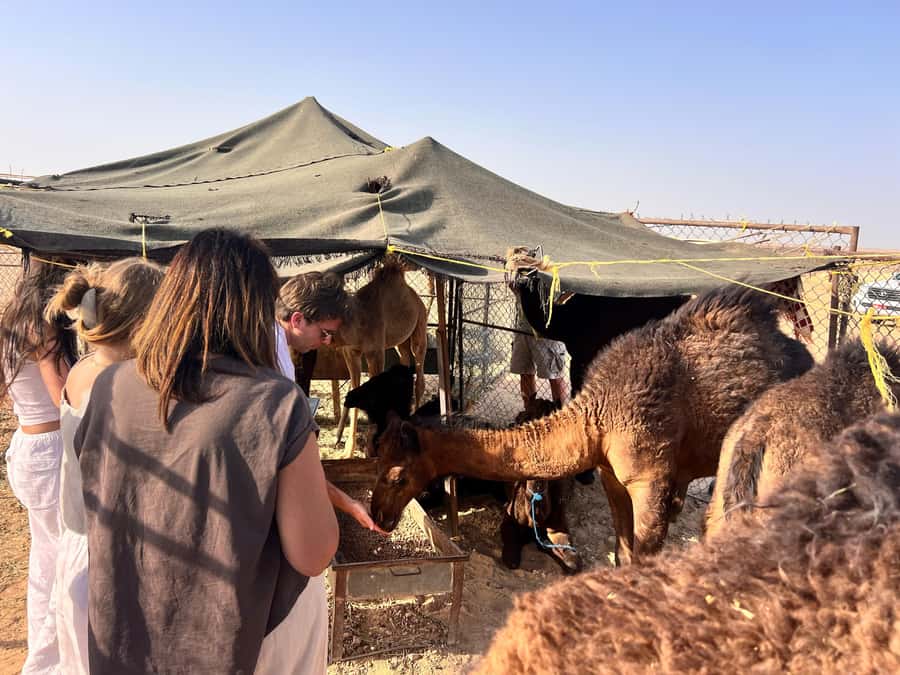
- Black camels are part of the route: A camel-farm stop gives you a chance to photograph a distinctive desert animal, and perhaps a young camel.
- Ubar is optional: You can pay 3 OMR per person to enter the archaeological site, or see it from outside the fence.
- Dinner needs planning: A Bedouin-style meal and camel riding are available, but neither is included in the $102 price.
Why this Salalah safari is worth the long ride
This is not a short trip to a sandy patch outside town. The route takes you from Salalah’s greener Dhofar setting toward the broad, severe emptiness of the Rub Al Khali. That change is part of the experience.
You spend the afternoon watching the scenery flatten and open up. Thumrait marks an important point on the route. It is described as a historical Bedouin settlement and acts as a gateway to the Empty Quarter. The stop helps you understand that the desert is not simply an attraction added to a holiday. It has long been part of how people moved, traded, and lived in southern Oman.
The $102 price makes the most sense if you value transport, guiding, and a full day of stops. You are not only paying for a sunset photograph. The cost covers hotel pickup and drop-off, bottled water, a private 4WD vehicle, an experienced Omani guide, the camel-farm visit, and admission to Wadi Dawkah.
Still, keep the extras in mind. Ubar costs 3 OMR per person to enter. Dinner is separate, as is camel riding. The base price is fair for a long private-style desert excursion, but your final bill will rise if you add the evening meal and other options.
More Desert Safaris in Oman
- Desert Safari Sharing Tours
★ 5.0 · 313 reviews - Desert Safari Private
★ 5.0 · 177 reviews - Sunset Desert Safari Salalah Tour in Rub Al Khali – Empty Quarter
★ 5.0 · 91 reviews
Leaving Salalah by 4WD
Pickup is available from hotels and apartments in Salalah and Hawana Salalah, as well as Salalah airport and port. The transfer is free from those locations. If you are staying in Mirbat or Hinu Bay, expect an extra charge of 10 OMR per group.
The exact pickup hour depends on where you stay. Communication is arranged through WhatsApp, using the numbers +968 9120 6678 and +968 9135 3647. Confirm the time before the day of the tour, since the advertised duration is unusually broad, from 8 to 21 hours.
You’ll travel in a 4WD vehicle, the right tool for the route. The road portion lets you settle in before the more active part begins. Bring water, though bottled water is included, and dress for sun, wind, and sand. Comfortable clothes, a hat, sunscreen, and sandals are sensible choices.
A scarf is especially useful. Wind can blow sand into your hair and ears, and a light scarf gives you quick protection. I would also avoid bringing a large bag, since luggage and big bags are not allowed.
Wadi Dawkah and the frankincense trees
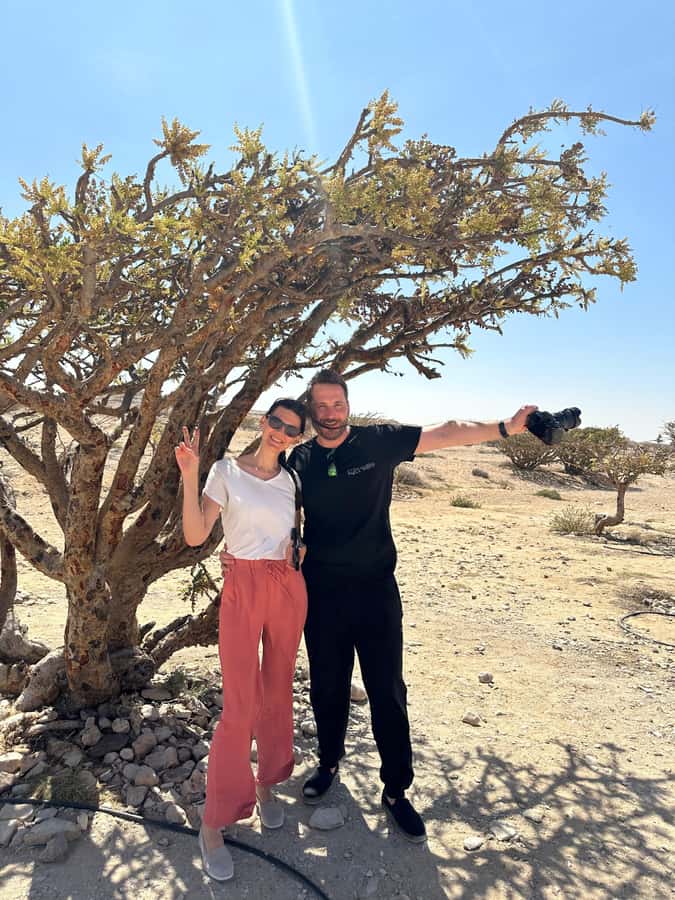
The first major stop is the Frankincense Park of Wadi Dawkah. This is a UNESCO site, and the point is the frankincense trees themselves. You’ll see them growing in their natural setting rather than in a shop display or museum case.
Frankincense has a long connection with Dhofar. The trees make this stop valuable because they link the desert road to the region’s older trade and cultural story. You get a pause from the vehicle, a chance to look closely at the trees, and a better sense of why southern Oman is associated with frankincense.
Admission to Wadi Dawkah is included. That matters because it keeps the first part of the day simple, with no extra ticket decision before you have even reached the dunes.
Do not expect a long guided museum visit here. The appeal is outdoors and straightforward: see the trees, hear about the site from your guide, and take photographs before continuing toward the Empty Quarter.
Thumrait, black camels, and the road to the dunes
As you continue, Thumrait marks the approach to the desert. The area connects the modern road journey with Bedouin routes and desert life. The stop is part of the gradual change from settled Dhofar to wide-open sand.
The camel-farm visit is one of the more unusual details of the outing. You’ll have the chance to see black desert camels and photograph them. If timing is fortunate, you might also see a young camel only a few months old.
This stop is worth taking slowly. Camel photographs are easy to rush, but the animals are one of the clearest reminders that the Empty Quarter is not an empty place in the human sense. It supports animals adapted to heat, distance, and limited water.
The information provided does not promise a fixed amount of time at the farm or a particular interaction with the camels. Treat it as a viewing and photography stop rather than expecting a formal animal show.
Same base, a different sort of day:
- Muscat: Daymaniat Islands Snorkeling Trip with Brunch
★ 4.7 · 2,317 reviews - From Muscat: Wadi Shab & Bimmah Sinkhole Full-Day Tour
★ 4.8 · 1,862 reviews - Muscat: Wahiba Desert and Wadi Bani Khalid Guided Group Tour
★ 4.8 · 820 reviews - Muscat: Half-Day Sightseeing Essentials Tour and Audio Guide
★ 4.2 · 598 reviews
Ubar, the optional archaeological stop
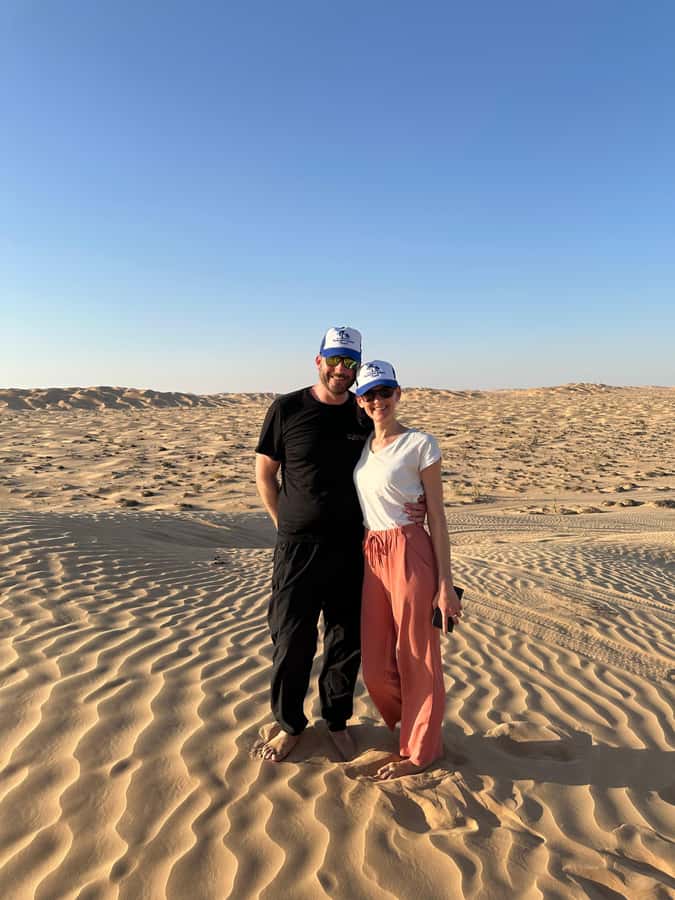
Ubar is offered as an optional visit. It is often linked with the idea of the Atlantis of the Sand, and the remains are described as an important archaeological site. The entrance fee is not included and costs 3 OMR per person.
You can also see the site from outside the fence if you do not want to pay the entrance fee. That choice is useful if your main goal is the dunes and sunset, or if you are keeping the total cost down.
I would choose the paid entrance if archaeological places matter to you and you want more than a roadside glimpse. If your priority is the Empty Quarter, you may prefer to save the time and money for the main desert portion. The tour already has several stops, so this is a genuine choice rather than a required part of the route.
Dune bashing in the Rub Al Khali
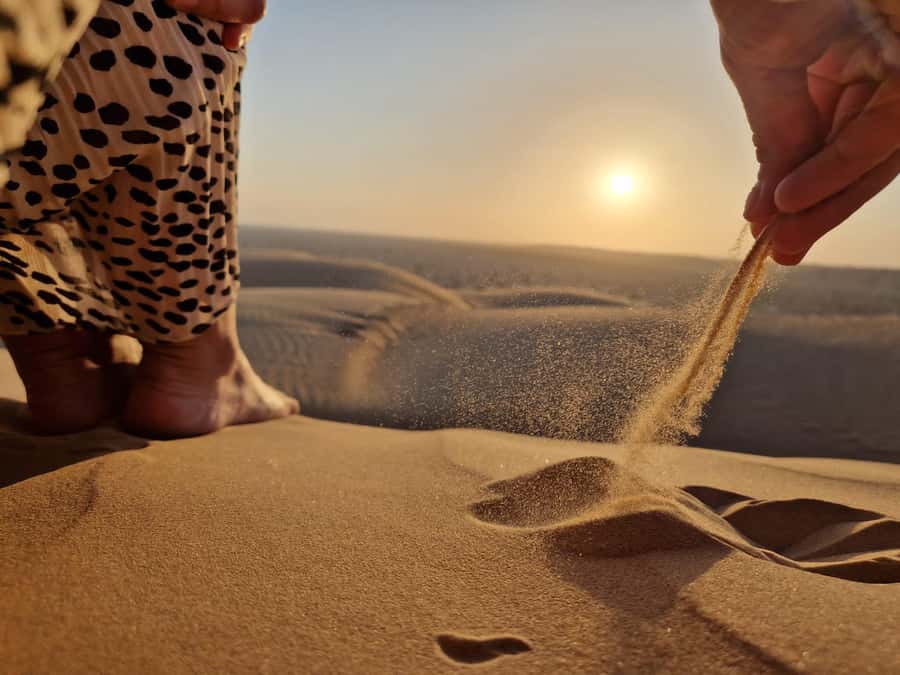
Once you reach the sand, the mood changes. Your driver takes the 4WD over the dunes in a lively ride that combines speed, slopes, and careful vehicle control. This is the tour’s most active section.
The phrase dune bashing can mean different things on different outings. Here, the plan includes driving into the endless golden dunes, climbing high ridges, and stopping for photographs. The driver is expected to handle the vehicle and the terrain, so your job is to hold on, enjoy the movement, and speak up if you need a calmer pace.
You should take the health restrictions seriously. The outing is not suitable for pregnant women or people with heart or back problems. It is also not suitable for people over 95 years old. Even if you have no listed condition, tell the guide if the ride is uncomfortable. A good desert outing should be exciting, not punishing.
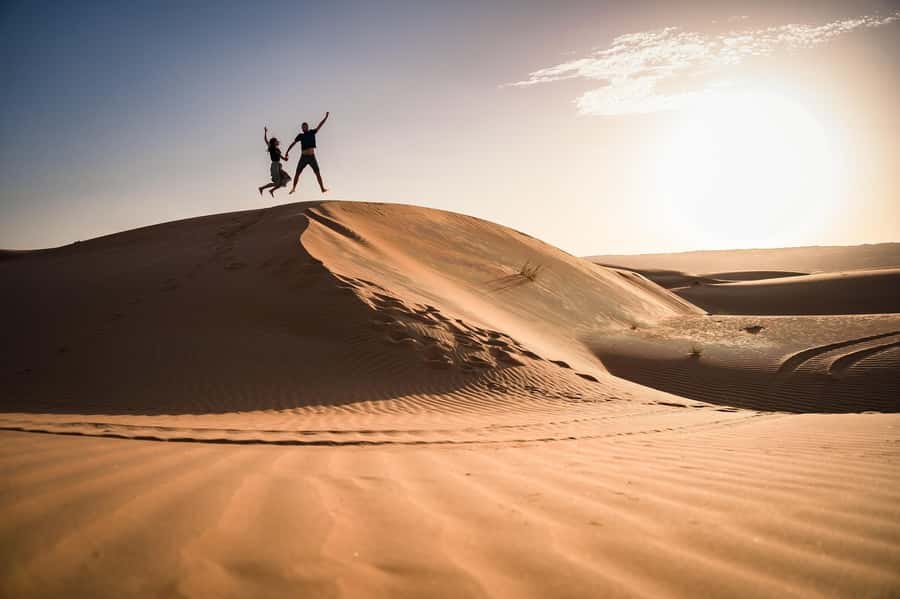
The high-dune stops are important. They break up the driving and give you time to step out, take photographs, and look around. From the top, the views stretch in every direction, with few visual distractions. That sense of space is the reward for the long approach from Salalah.
Sunset over the golden dunes
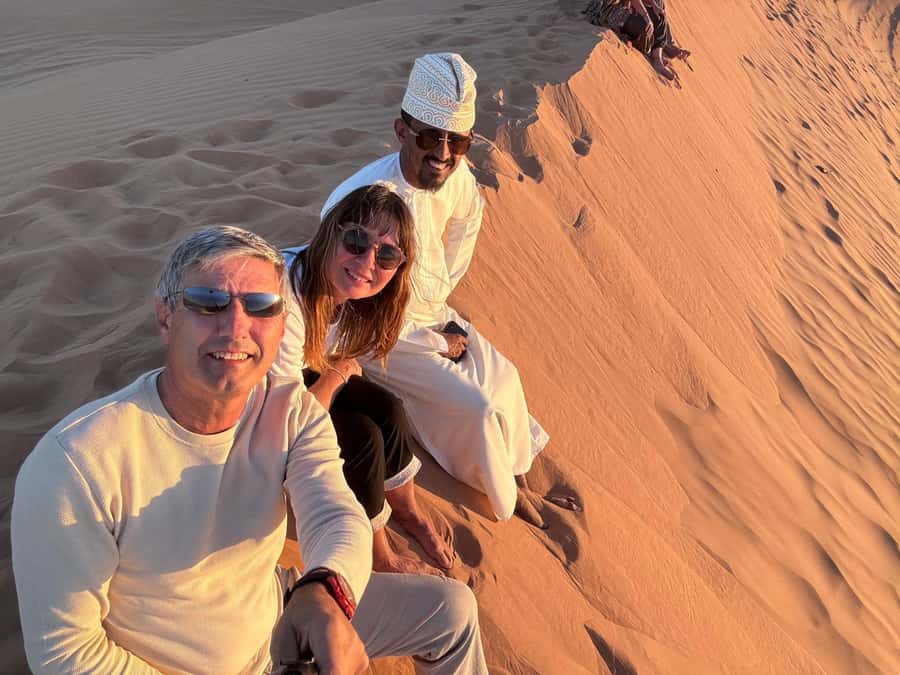
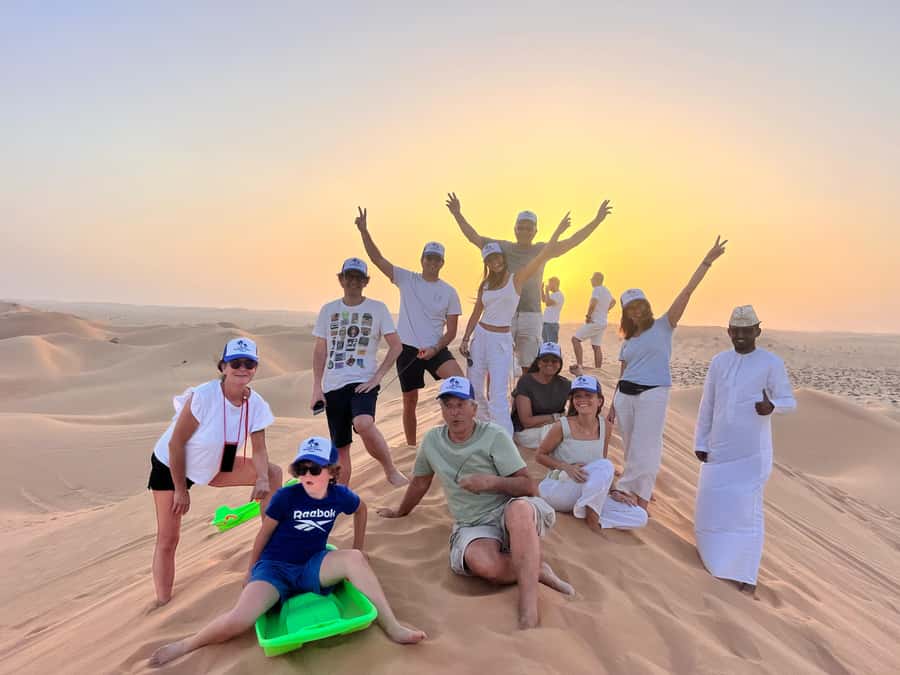
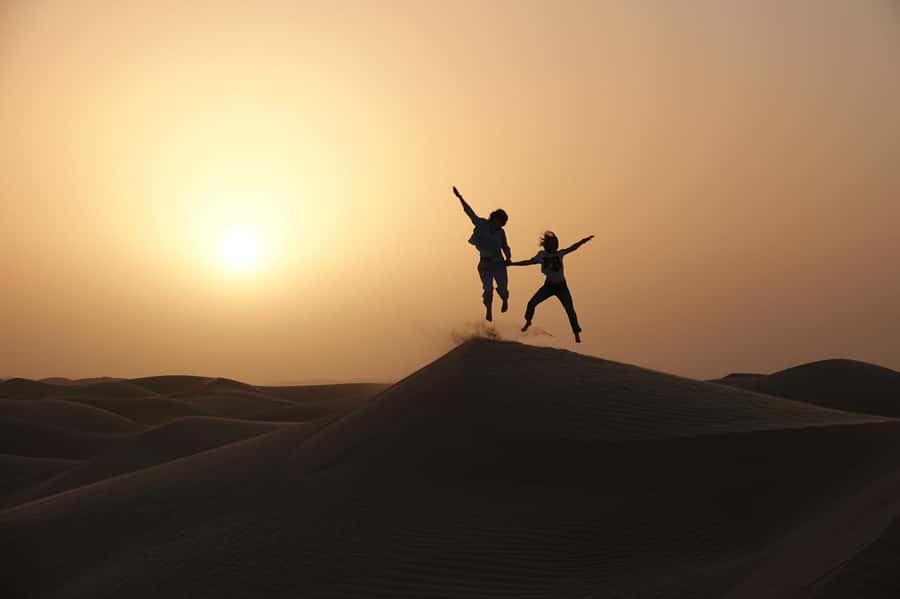
The timing is built around sunset. As the sun drops, you’ll climb a dune and watch the sand change color. The supplied description points to gold, orange, and purple tones, but the exact show depends on the day’s weather and haze.
This is when the tour earns its name. The Empty Quarter gives the sunset a clean setting, without city buildings or a crowded waterfront competing for attention. You can take photographs, but leave a little time to simply watch. The view works best when you are not rushing from one picture to the next.
Bring a scarf and keep your phone or camera protected from blowing sand. Sand gets into small openings quickly, especially when the wind picks up. A hat helps with the sun, though it may need a firm grip on the dune tops.
The guide can also make a difference here. Musllam has been noted for explaining the stops in English and using translation help when a subject became difficult. Rabi and Thaer have also been praised for friendly, welcoming service. The guide’s role is practical: helping with timing, explaining what you are seeing, and making the long day easier.
Dinner under the stars, for an added cost
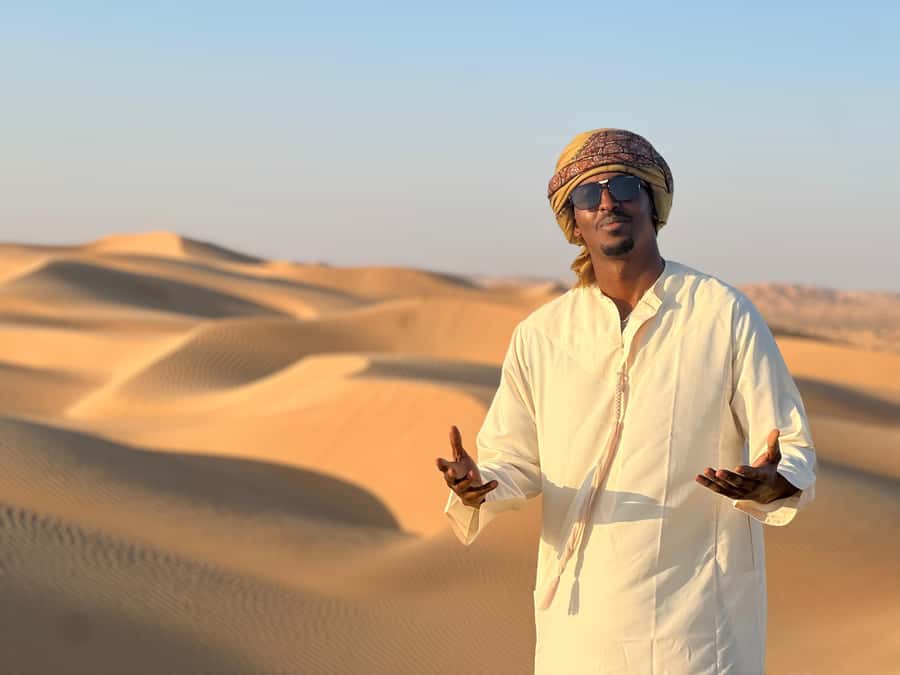
You can add a Bedouin-style dinner in the desert after sunset. It is served under the night sky and gives the day a slower finish. The meal is not part of the $102 base price, so confirm the extra cost before booking the option.
A dinner makes sense if you want the outing to feel like a complete evening rather than a sunset stop followed by the drive home. One particularly positive account singled out the meal and a Yemeni chef, so food may be a strong reason to add it.
On the other hand, dinner extends an already long day. If you have an early morning flight or a packed schedule the next day, the return to Salalah may feel late. The duration is listed as 8 to 21 hours, so ask for a realistic return estimate when you arrange pickup.
Camel riding is another optional extra. The supplied details do not specify how long the ride lasts or its price, so ask before committing. The camel farm visit itself is included, but riding is not.
Guides, languages, and group style
The tour offers live guiding in English, Arabic, Italian, Polish, French, Hindi, Urdu, German, Russian, and Ukrainian. That is useful on a route where explanations about frankincense, Bedouin history, camels, and Ubar add much of the meaning.
Private groups are available. The details do not state that every booking is automatically private, so check the group arrangement when you reserve. A private group is helpful if you want more control over photo stops, dune-bashing speed, or the decision to visit Ubar.
The guide names connected with especially warm service include Musllam, Rabi, and Thaer. Names and assignments can change, but the practical lesson is clear: confirm who will collect you and keep the WhatsApp contact numbers handy.
Free cancellation is available up to 24 hours before the start, and you can reserve now and pay later. Those terms help if your Salalah plans are still moving around, though you should still confirm the pickup details directly.
Who should book this desert day
I would recommend this to you if you want several sides of Dhofar in one outing: frankincense trees, camel country, an archaeological option, serious dunes, and a sunset far from town. It works particularly well for first-time visitors who do not have a rental 4WD or the confidence to drive into the Empty Quarter alone.
It also suits photographers, provided you protect your equipment from sand and accept that the light and timing cannot be controlled. The broad dunes offer plenty of space for simple, powerful images.
Families and older visitors should judge the dune ride carefully. The excursion is not suitable for pregnant women, people with heart or back problems, or anyone over 95. If your group includes people who dislike bumpy driving, ask whether the driver can keep the dune section moderate.
I would skip the optional dinner if you want to return early, and skip paid Ubar entry if your main interest is the desert. I would add dinner if you want a longer evening and do not mind the extra charge.
Should you book this Salalah safari?
Book it if the idea of reaching the real Empty Quarter appeals to you more than a short beach-side sunset. The long drive is part of the cost, but so are the changing scenery, Wadi Dawkah, black camels, 4WD dune driving, and a sunset over open sand.
At $102 per person, the value is strongest when you use the included transport and guide service as much as possible. Add Ubar, dinner, and camel riding only if those extras match your interests. Pack a scarf, keep your bags small, confirm the pickup time, and expect a full day.
This is a strong choice for an active, wide-ranging Salalah excursion. It is less suitable if you want a gentle ride, a fixed short schedule, or an all-inclusive price with no add-ons.
FAQ
Where does the desert safari start?
Pickup is available from hotels and apartments in Salalah and Hawana Salalah, plus Salalah airport and port.
Is pickup included?
Yes. Pickup and drop-off are included from Salalah and Hawana Salalah locations, as well as Salalah airport and port.
Is there an extra pickup fee from Mirbat or Hinu Bay?
Yes. Pickup from Mirbat or Hinu Bay costs an additional 10 OMR per group.
What is included in the $102 price?
The price includes bottled water, hotel pickup and drop-off, transport by 4WD, an experienced multilingual Omani guide, a camel-farm visit, and admission to Wadi Dawkah.
Is the Ubar archaeological site included?
No. Entry to Ubar costs 3 OMR per person. You can also view the site from outside the fence without paying the entrance fee.
Is dinner included?
No. A Bedouin-style desert dinner is optional and costs extra.
Is camel riding included?
No. Optional camel riding is available for an additional cost. The camel-farm visit itself is included.
What languages are available for the live guide?
Guiding is available in English, Arabic, Italian, Polish, French, Hindi, Urdu, German, Russian, and Ukrainian.
What should I bring?
Bring comfortable clothes, a scarf, sunscreen, a passport or ID card, a hat, and sandals. A scarf is especially useful because wind can blow sand into your hair and ears.
Who should not take this safari?
The experience is not suitable for pregnant women, people with heart problems, people with back problems, or people over 95 years old. Alcohol, drugs, nudity, luggage, and large bags are not allowed.
Just added in Oman
- From Muscat: Nizwa and Jebel Shams Day Trip★ 4.8 · 153 reviews
- From Muscat: Desert Overnight and Wadi Bani Khalid★ 4.4 · 31 reviews
- From Muscat: Dimaniyat Islands Snorkeling Tour★ 4.7 · 59 reviews
- From Muscat: Guided Overnight Desert Camp Tour★ 4.9 · 28 reviews
- From Khasab: Fjords of Musandam Dhow Cruise & Buffet Lunch★ 4.7 · 55 reviews
- From Dubai to Norway of Arabia|Telegraph Island| Dhow Cruise★ 4.9 · 91 reviews
- From Al-Seeb: Dimaniyat Islands Boat Trip with Snorkeling★ 4.8 · 87 reviews
- Muscat: Evening Guided City Highlights Tour by Van★ 4.8 · 175 reviews
Tours in Salalah, compared.
East Salalah Mountain Safari, Wadi Darbat, Beach, Camels, Dunes
Read our review →
Wadi Darbat, Jabal Samhan, Baobab, Mirbat Sand Dune
Read our review →
Sunset Desert Safari Salalah Tour in Rub Al Khali – Empty Quarter
Read our review →
Browse the lists this tour appears in