
Reviewed · TOURS IN MUSCAT
Muscat: Omani Food Tour with Shuwa & Halwa
Omani Shuwa is not fast food. Meat or chicken is wrapped with spices and banana leaves, placed underground for eight to 24 hours, and prepared as part of a tradition that includes more than 40 days of fermentation. This Muscat food tour gives you a chance to taste that slow-cooked specialty alongside Qabuli rice, halwa, Zanzibar snacks, Omani bread, spiced tea, and Mishkak.
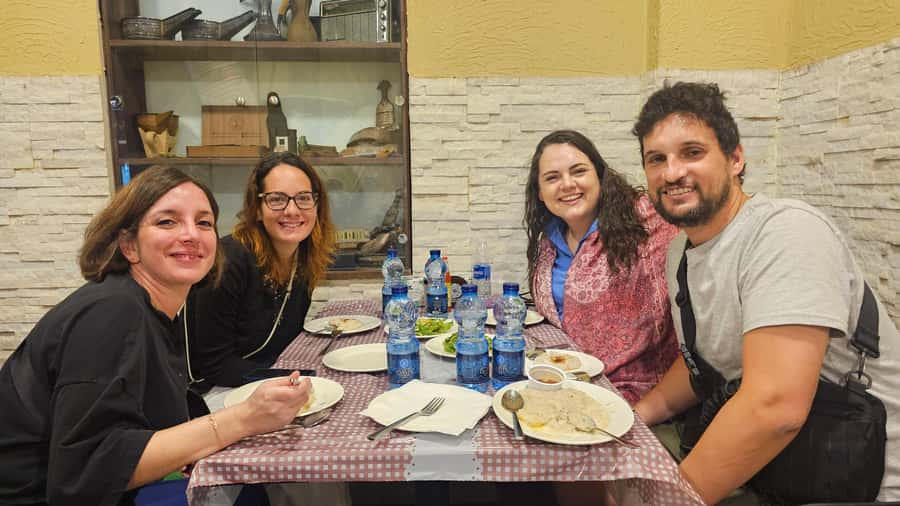
I like the way the tour connects food with daily life, especially when guides such as Hisham and Yousef use family stories and short preparation videos to explain what you are eating. I also like the small group, limited to six, plus hotel pickup and drop-off, which makes a food-focused evening easy to manage. The main drawback is simple: you eat a lot in 150 minutes, and this tour is not suitable for people with food allergies.
Key points to know before booking
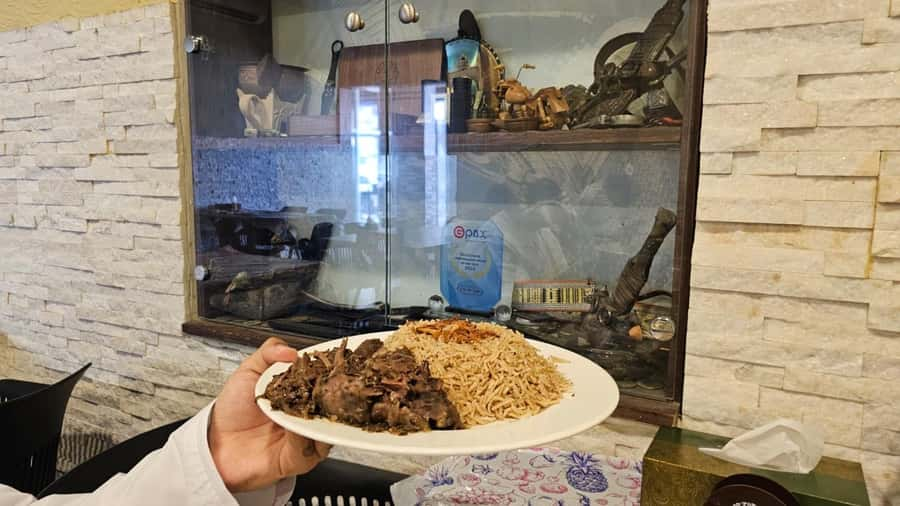
- Shuwa is the main event: Try Omani meat or chicken cooked underground and served with spiced Qabuli rice.
- Five different food stops: The evening moves beyond one meal, with Zanzibar snacks, bread, tea, sweets, and grilled Mishkak.
- A cultural introduction: Guides explain preparation methods, family traditions, Omani customs, and the country beyond the plate.
- Come very hungry: Portions are generous, and the food keeps arriving throughout the evening.
- Small and comfortable: Groups are limited to six, with English-speaking guides and included hotel transportation.
- Vegetarian flexibility: Meat or chicken can be replaced with fish or salad, but food allergies are a reason to choose another experience.
Why Shuwa gives this Muscat tour its focus
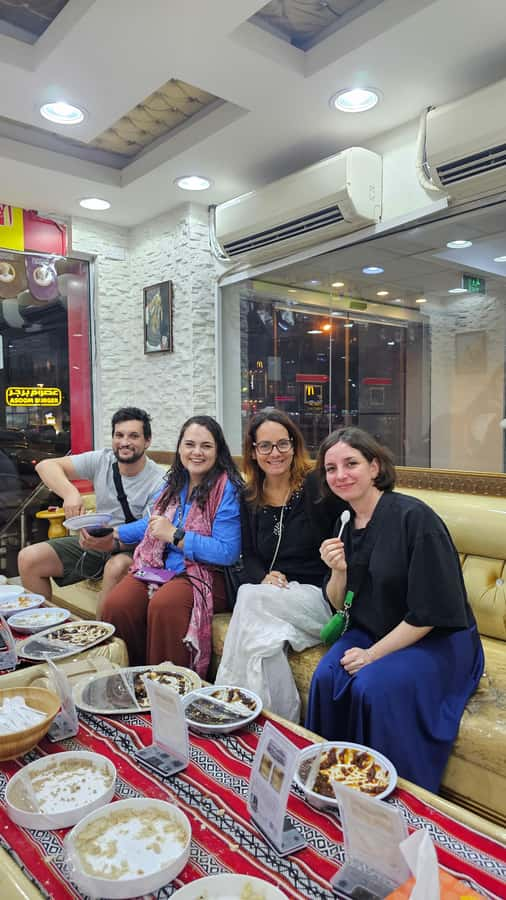
The best reason to book this experience is that Shuwa is difficult to understand from a menu alone. It is a celebratory dish tied to patience, preparation, and shared meals. Here you taste it with Qabuli, rice cooked with meat spices, rather than treating it as an isolated sample.
The preparation story adds real context. The meat or chicken is wrapped in banana leaves and spices, then placed underground for a long cooking period of roughly eight to 24 hours. The description also refers to fermentation lasting more than 40 days, a detail that helps explain why Shuwa is associated with careful preparation rather than an ordinary weeknight dish.
You should expect the flavor to be savory, seasoned, and tender, though the exact experience depends on the portion served that evening. The meal is not presented as a cooking class, so you will not prepare the Shuwa yourself. Instead, your guide explains how it is made and why it matters.
That distinction is useful. If you want to watch every stage of the process, this is not that kind of activity. If you want to taste an important Omani dish while learning how it fits into family celebrations and local customs, it does the job well.
A few more things to do in Muscat worth a look
- Dubai: Old Town, Creek, Museums, Souks, & Street Food Tour
★ 4.8 · 10,816 reviews - Dubai: Old Town, Souks, Street Food, Guided Tour & Abra Ride
★ 4.9 · 7,170 reviews - Dubai: Old Town, Souks, Street Food, Guided Tour & Abra Ride
★ 5.0 · 1,664 reviews
Five stops, five different sides of Omani food
This is not a single restaurant dinner. The 150-minute route moves through several food stops, with each one offering a different part of the country’s food culture. The exact order may vary, but the experience includes five broad stages.
1. Shuwa and Qabuli rice
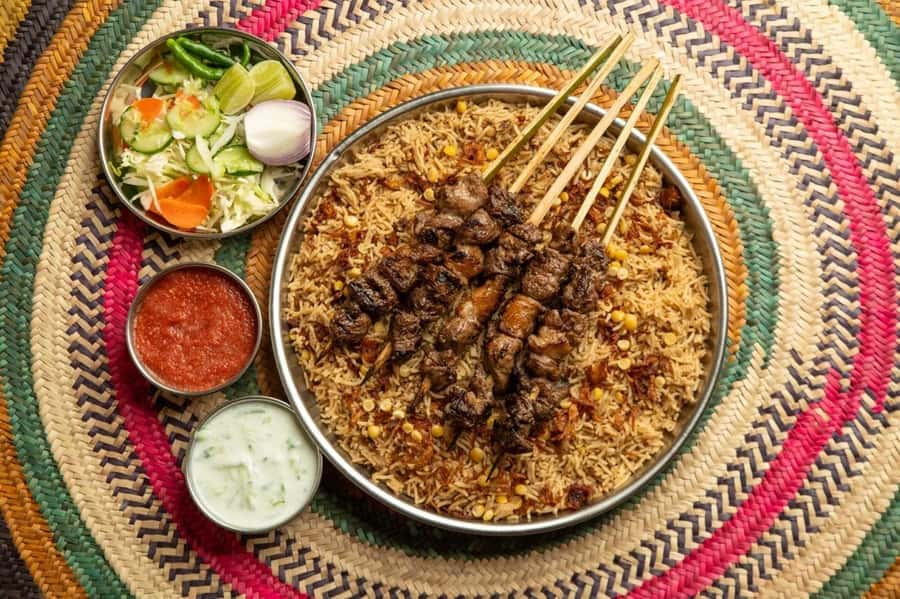
The main savory course is Shuwa served with Qabuli. The rice carries the warm spice profile of the meat preparation, giving you a fuller meal rather than just a taste of meat.
This is the point where you may want to ask questions. Guides including Hisham, Yousef, Yusuf, and Amin have been praised for explaining how dishes are prepared and for connecting food with Omani life. Names can vary depending on the guide assigned to your group, but English guidance is included.
2. Halwa with Omani coffee
After the main dish comes Omani Halwa, traditionally made with ingredients such as nuts, honey, saffron, ghee, and cardamom. Some ingredients are kept as family secrets, which gives the sweet a personal connection beyond its recipe.
Halwa is served with coffee, making this a classic sweet and bitter pairing. It is worth pacing yourself here. The halwa is only one of several sweet or filling items on the route, and the tour continues after this stop.
This part also helps you understand the social side of Omani hospitality. Coffee and sweets are not just dessert. They are part of welcoming and sharing, so the guide’s explanation adds meaning to a small serving.
Same base, a different sort of day:
- Muscat: Daymaniat Islands Snorkeling Trip with Brunch
★ 4.7 · 2,317 reviews - From Muscat: Wadi Shab & Bimmah Sinkhole Full-Day Tour
★ 4.8 · 1,862 reviews - Muscat: Wahiba Desert and Wadi Bani Khalid Guided Group Tour
★ 4.8 · 820 reviews - Muscat: Half-Day Sightseeing Essentials Tour and Audio Guide
★ 4.2 · 598 reviews
3. Zanzibar and East African snacks
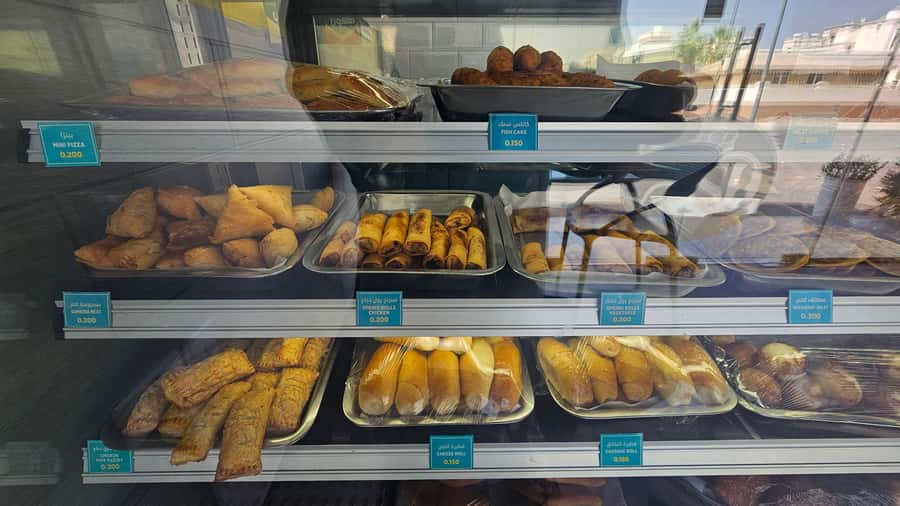
Oman’s food culture reaches across the sea, and the East African snack course makes that clear. You may try samosas, mandazi, kachori, and katlisi, foods associated with Omani connections to Zanzibar.
These are lighter than the Shuwa course, but they help keep the meal from feeling one-note. The snacks bring fried textures and different seasoning styles into the evening. If you are mainly interested in classic Gulf dishes, this stop may be a pleasant surprise because it shows how movement, trade, and family ties have shaped what people eat in Oman.
The food is served as part of the wider Omani story, not as a separate international food segment. That makes it one of the more useful parts of the route for anyone who wants more than the usual rice-and-meat introduction.
4. Omani bread with different toppings
The bread course is flexible and easy to enjoy. You may receive slices with cheese, honey, date juice, eggs, potatoes, or thyme.
This is a good reminder that Omani food is not limited to special-occasion dishes. Bread with different toppings can feel more familiar and informal than Shuwa, offering a look at everyday combinations and simple comfort food.
Since the toppings vary, you can ask your guide what each one is and how it is commonly eaten. The range also gives you a better chance of finding something you like if one flavor does not suit you.
5. Spiced tea and Mishkak
Tea comes with spices such as ginger, saffron, cardamom, cinnamon, and milk. Some descriptions of the experience refer to this as karak tea, a strong, milky, spiced drink that works well late in the meal.
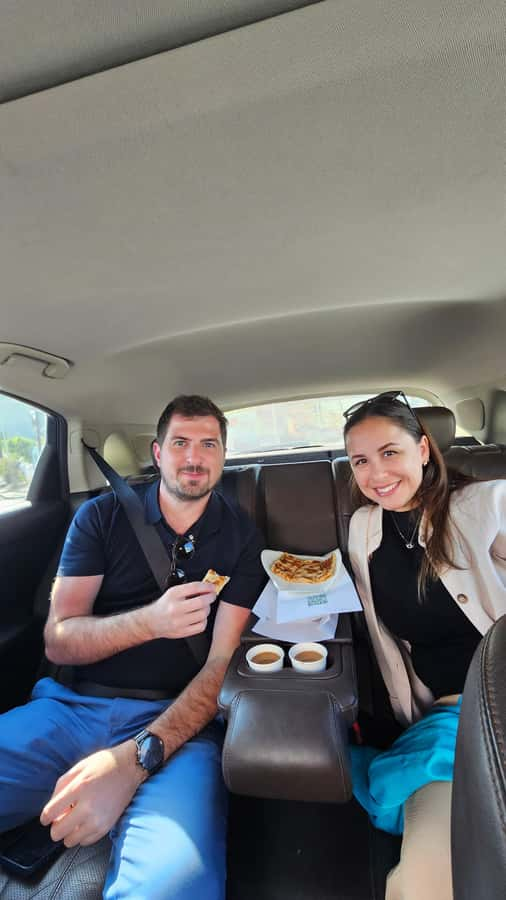
The tea is more than a pause between courses. It is part of the social rhythm of the evening, and one of the distinctive touches is ordering and drinking karak in the car. That small detail gives the tour a local, everyday feel instead of making every moment look like a formal tasting.
The final savory item is Mishkak, grilled pieces of meat, chicken, or squid served with a tamarind-like sauce and Omani spices. The smoky grilled flavor provides a good contrast to the slow-cooked Shuwa. If you prefer seafood, squid may be available, and vegetarian participants can request fish or salad instead of meat or chicken.
The guides make the food easier to understand
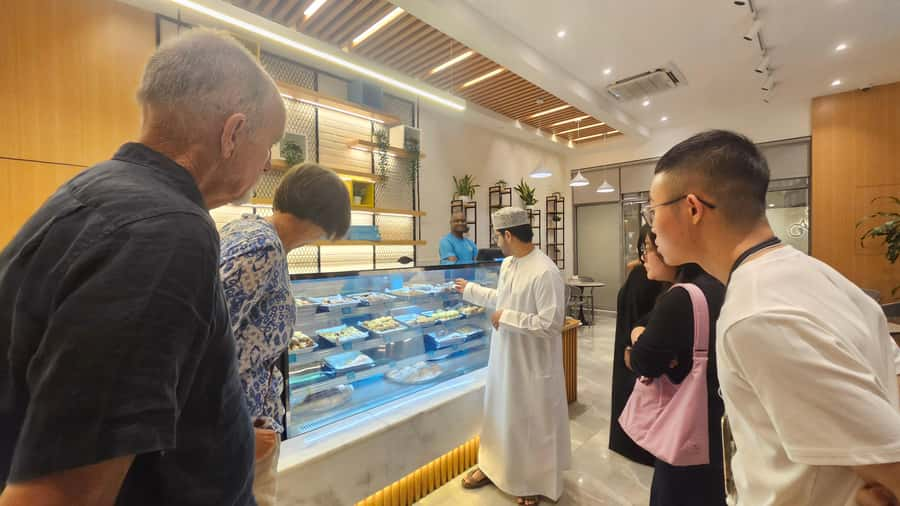
Food tours depend heavily on the person explaining the meal. Here, Hisham, Yousef, Yusuf, Hanieh, Amin, and other members of the team may lead the experience, depending on the date.
The strongest part of the guiding style is the personal context. Yousef has used short videos to show how certain dishes are prepared during family celebrations. Hisham has been praised for talking about Omani culture as well as food. Other guides have helped visitors understand the history, origin, and social meaning of each dish.
That matters because several foods may be unfamiliar. Without an explanation, Shuwa might simply be slow-cooked meat, halwa might seem like a very sweet dessert, and the Zanzibar snacks might look like generic fried food. With context, each course has a clearer place in Omani life.
You can also ask questions beyond the menu. Previous tour descriptions include conversations about local customs, history, daily life, and places to visit during the rest of a Muscat stay. That makes the experience useful on your first night, when you are still working out how Oman fits together.
A useful first-night activity in Muscat
I would place this tour near the start of your stay, not at the end. It gives you food names and flavors you can recognize later, which makes the rest of your time in Oman more rewarding.
It also gives you a gentle introduction to Muscat itself. The included vehicle pickup and drop-off mean you do not need to work out several restaurant locations on your own. The car is described as clean and comfortable, and the route may show you parts of the city beyond the usual sightseeing stops.
Some groups have received a short mosque detour or a view over the city. These additions are not promised as a fixed part of the itinerary, so do not book the tour specifically for them. Treat them as possible extras connected to the guide and the evening’s timing.
The included transportation is especially helpful for solo visitors. You can join a group of up to six, sample several foods without ordering full meals everywhere, and return to your accommodation afterward.
What the small group changes
A maximum of six people is a useful size for this type of outing. It allows the guide to explain dishes without shouting across a large group, and it makes it easier to ask about ingredients or request a modest adjustment.
The social side can also be part of the fun. Solo participants may share the evening with couples or families, while private groups can have more room for questions and conversation. The tone is informal rather than lecture-like.
The small group does not mean every moment will be quiet or private. You are still eating at several locations and sharing a vehicle. If you want a completely personal itinerary, ask about private arrangements before booking. If you simply want a friendly group with plenty of guide contact, six people is a sensible limit.
How much food do you really get?
The practical advice is to arrive hungry. You are not just tasting one spoonful at each stop. The meal includes Shuwa, Qabuli, halwa, coffee, East African snacks, Omani bread, spiced tea, and Mishkak, with portions described as generous.
Some evenings may run longer than the advertised 150 minutes, especially if the group eats slowly and talks between stops. That can be a benefit if you enjoy relaxed meals, but it may matter if you have a strict evening schedule.
Do not plan a large dinner before the tour. You may also want to avoid booking it immediately before another food activity. The range of dishes is wide, and the repeated combination of bread, rice, fried snacks, sweets, and grilled food can be very filling.
The price is $77 per person. For that amount, you receive transportation, a small-group guide, and several food categories rather than one restaurant meal. I consider it fair value if you would otherwise need separate taxis, several independent food orders, and time researching where to find Shuwa or Mishkak.
It is less compelling if you already have a local host arranging meals for you, or if you only want a short tasting with no transportation. The value comes from the number of stops and the explanation around them.
Dietary needs and practical limits
Vegetarian participants can replace meat or chicken with fish or salad. That option should be arranged clearly before or at the start of the tour, since the standard experience centers on Shuwa and Mishkak.
The tour is not suitable for people with food allergies. The menu includes many dishes and ingredients, including nuts, dairy, spices, honey, ghee, and fried foods. The supplied information does not promise allergy-safe preparation or separate cooking areas, so anyone with a serious allergy should choose a different activity.
Fresh juices and personal expenses are not included. Smoking, pets, and alcoholic drinks in the vehicle are not allowed. The tour is wheelchair accessible, but you should still provide your access needs when booking so the pickup can be handled properly.
Hotel pickup is included when your accommodation is inside the service area. If your hotel is not listed or is outside that area, use the Royal Opera House as the meeting point and arrive there independently.
Cancellation is flexible: you can cancel up to 24 hours in advance for a full refund, and you can reserve now while paying later. Starting times depend on availability.
Who should book this food tour?
This is a strong choice for a first evening in Muscat, especially if you want a practical introduction to Omani food without spending time finding several local spots yourself. It suits solo visitors, couples, small families, and anyone who enjoys asking questions while eating.
You will get the most from it if you are open to sweet, savory, fried, grilled, and heavily spiced foods in one sitting. The experience is also a good match for people interested in the connections between Oman and Zanzibar, rather than only the most famous local dishes.
I would not choose it if you have major food allergies, dislike shared group outings, or need a tightly timed 150-minute schedule. It is also not a cooking lesson, so look elsewhere if you want hands-on preparation.
Should you book the Muscat Omani Food Tour?
Book it if you want to eat your way through several parts of Omani culture in one evening. The Shuwa and Qabuli provide the main reason to go, while the halwa, Zanzibar snacks, bread, tea, and Mishkak keep the route varied.
The strongest value comes from the guides, the five-stop structure, and the included transportation. Choose an early date in your Muscat stay, arrive with an empty stomach, and tell the team in advance if you prefer fish, salad, or vegetarian food. For most visitors, this is a friendly and filling way to get oriented to Oman through its kitchen.
FAQ
How long does the Omani food tour last?
The scheduled duration is 150 minutes. Some evenings may take longer if the group eats and talks slowly.
What food is included?
The experience includes Shuwa, Qabuli rice, Omani halwa with coffee, East African snacks, Omani bread with different toppings, spiced tea, and Mishkak.
Is hotel pickup included?
Yes. Hotel pickup and drop-off are included when your accommodation is within the pickup area.
What if my hotel is outside the pickup area?
Choose the Royal Opera House as the meeting point and arrive there independently.
Can vegetarians join the tour?
Yes. Meat or chicken can be replaced with fish or salad. The standard menu, however, focuses heavily on meat-based dishes.
Is the tour suitable for people with food allergies?
No. The activity is listed as unsuitable for people with food allergies.
How large is the group?
The group is limited to six participants. The tour is conducted in English and is wheelchair accessible.
Just added in Muscat
- Muscat: Omani Traditional Dhow Sunset Cruise★ 4.4 · 53 reviews
- Private Half-Day Muscat City Tour★ 4.6 · 50 reviews
- Oman: Wahiba and Wadi Bani Khaled Private Trip★ 4.5 · 33 reviews
- Oman: Snorkeling Trip at Daymaniyat Islands★ 4.9 · 38 reviews
- Oman: Private City Tour of Muscat with pick up/drop off★ 4.4 · 88 reviews
- Nizwa Heritage & Culture Full Day Tour with Audio Guiding★ 4.3 · 213 reviews
- Muscat: Nizwa and Jabal Shams- Full Day Tour★ 4.5 · 26 reviews
- Muscat: Wahiba Sands, Wadi Bani Khalid & Mudayrib Tour★ 4.7 · 266 reviews
Tours in Muscat, compared.

Daymaniat Islands Snorkeling Trip with Brunch
Read our review →

Wahiba Desert and Wadi Bani Khalid Guided Group Tour
Read our review →
Half-Day Sightseeing Essentials Tour and Audio Guide
Read our review →

Daymaniat Islands Snorkeling Tour with Refreshments
Read our review →

Daymaniyat Island: Snorkelling Tour with Tasty Lunch
Read our review →Browse the lists this tour appears in