
Reviewed · TOURS IN MUSCAT
Full-Day Tour in Oman: Enchanting Forts of Nizwa and Jabreen
Nizwa’s huge circular cannon tower is the star of this day out, but the real pleasure is seeing how forts, souqs, old villages, irrigation channels, and pottery fit together in Oman’s interior. Nizwa Fort and Jabreen Castle give you two very different looks at Omani power and daily life.
I like the small group, limited to four people, and the chance to travel with guides such as Mohammed or Rachid, who have been praised for explaining both history and present-day Oman. I also like the route’s variety: fort rooms and painted ceilings give way to Bahla’s pottery tradition. The main drawback is time. Eight hours from Muscat covers a lot of road, and the short visits can feel rushed if you want to inspect every room.
Key points to know before you book
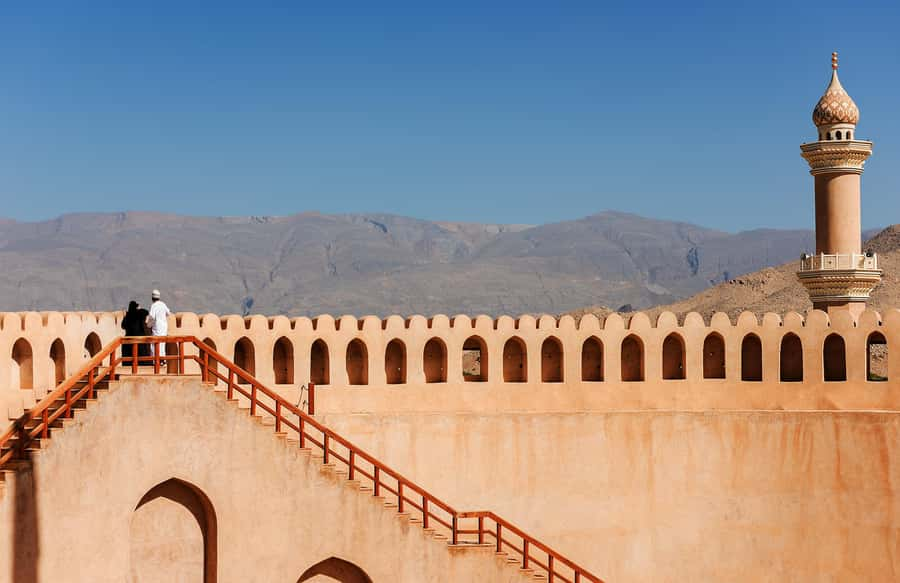
- The circular cannon tower at Nizwa Fort is the visual high point, with a massive structure built for defense.
- Jabreen Castle offers the richest interior visit, with carved doors, plasterwork, and painted wooden ceiling beams.
- Bahla adds a living craft tradition, including a stop at a pottery workshop.
- A small group of up to four makes the long drive more comfortable and allows easier conversation with your guide.
- The day includes rough ground and many steps, so it is not suitable for wheelchair users or anyone with limited mobility.
- The $251 price is easiest to justify for a private or very small group, since hotel pickup, transport, guiding, and several major sights are bundled together.
Why Nizwa makes such a strong first stop
The drive from Muscat takes you toward Oman’s interior and through the Hajar Mountains. Even when the road itself is the quiet part of the day, this change in setting matters. You are leaving the capital behind and heading toward towns shaped by forts, farming, trade, and tribal power.
Nizwa was once Oman’s capital and remains one of the country’s main cultural centers. The town’s importance is easy to understand once you see its fort and traditional souq side by side. The fort represents authority and defense. The souq shows the commercial life that helped the town function.
The visit to Nizwa Fort is scheduled for about 20 minutes. That is enough to see the main structure and get a sense of its scale, but it is not a leisurely museum visit. You will want to move with purpose, especially if you hope to take photographs and listen to the guide at the same time.
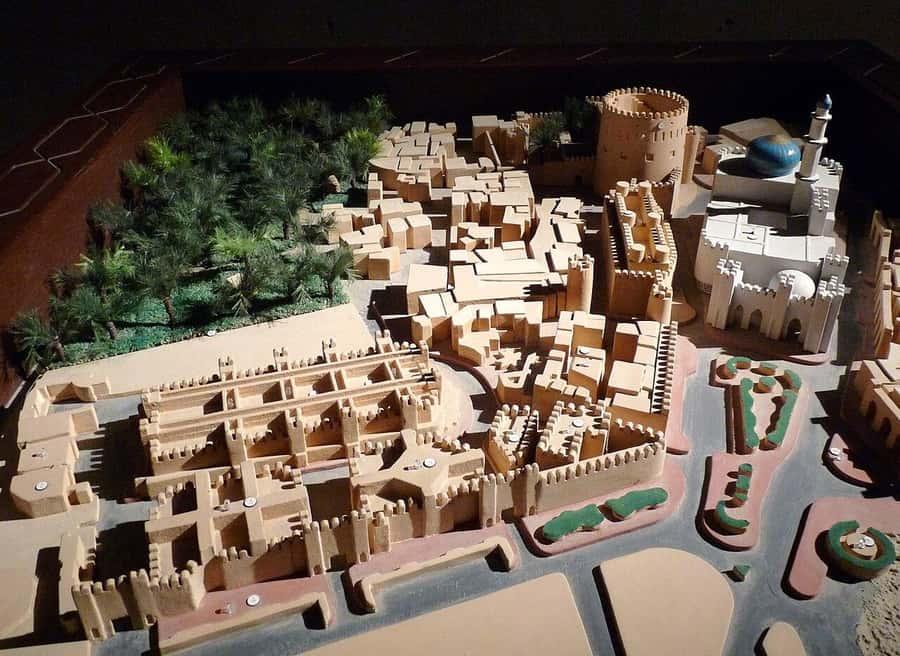
The massive Circular Cannon Tower is the fort’s signature feature. Its size is hard to grasp from a photograph. The tower was designed as a defensive platform, and its broad shape gives the building a heavy, grounded appearance. Inside, you can focus on the practical side of Omani fort design: thick walls, elevated positions, narrow routes, and spaces built to control movement.
I would listen closely to the guide here rather than trying to read every surface for yourself. A good explanation turns the fort from a large stone structure into a working part of Nizwa’s political and military story. Guides named Mohammed, Rachid, and Rasheed have led this experience at different times, and the strongest feedback has centered on clear explanations, patience, and safe driving.
Other trips people book in Muscat:
- Muscat: Daymaniat Islands Snorkeling Trip with Brunch
★ 4.7 · 2,317 reviews - From Muscat: Wadi Shab & Bimmah Sinkhole Full-Day Tour
★ 4.8 · 1,862 reviews - Muscat: Wahiba Desert and Wadi Bani Khalid Guided Group Tour
★ 4.8 · 820 reviews
Nizwa Souq in a quick but useful visit
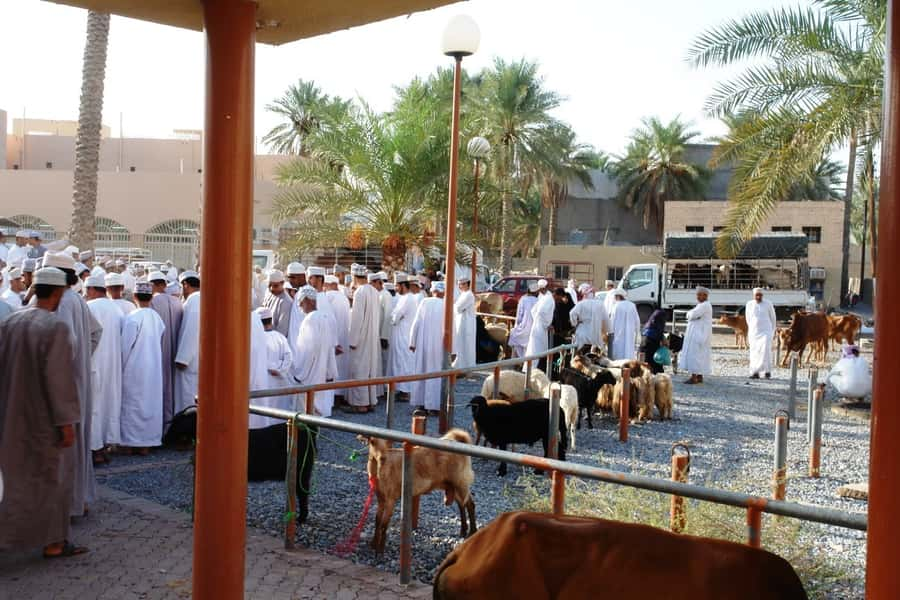
The traditional Nizwa Souq follows the fort, with about 20 minutes set aside. This is brief, so think of it as a compact introduction rather than a full shopping session.
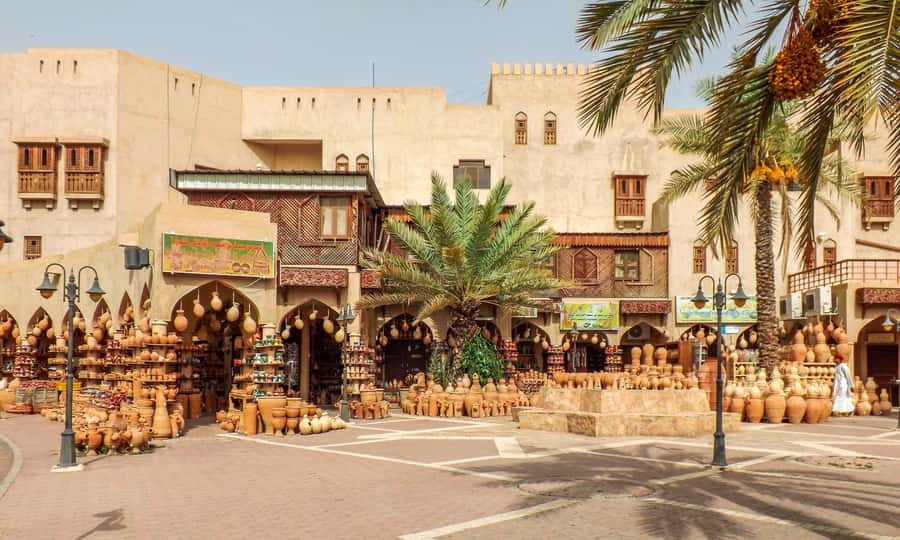
The souq helps you see the commercial side of the town. You can walk through the lanes, look at local goods, and notice how close the market is to the fort. That pairing is one of the day’s best features. The fort tells you who held power, while the souq hints at how ordinary trade supported the town.
If you hope to buy something, keep an eye on the clock. The program includes several major stops, and there is no promise of extra shopping time. I would use the first few minutes to get your bearings, then decide if there is one item worth your attention rather than trying to browse every stall.
Dress modestly here. Oman has conservative public dress customs, and men and women should cover shoulders and knees in souqs, shops, and villages. Lightweight clothing works well for much of the year, but a sweater or jacket can help during winter evenings.
Jabreen Castle reveals a more refined side of Oman
Jabreen Castle, also called Jabrin in some references, is the most decorative stop on the route. It dates from the 17th century and differs from Nizwa Fort in mood and purpose. Nizwa feels strongly defensive. Jabreen gives you more of a sense of residence, learning, and formal design.
The scheduled guided visit lasts about 20 minutes. Again, you will not see every corner at a slow pace, but the main details are easy to appreciate. Look for the carved doors, plaster decoration, and painted wooden ceiling beams. These features give the castle a warmer and more finished appearance than a simple military stronghold.
This is the stop where a guide can add the most value. Without context, you may notice attractive ceilings and thick walls but miss why the spaces were arranged as they were. With a good explanation, the building becomes easier to read. You can pay attention to defensive elements while also noticing how decoration and comfort mattered inside an important residence.
The castle involves rough, inclined ground and many steps. This is not a flat, polished attraction. Wear shoes with a firm grip, and do not treat the 20-minute visit as a reason to hurry on unsafe steps. Anyone with an injury or condition that makes climbing difficult should think carefully before booking.
Bahla connects fortifications with local craft
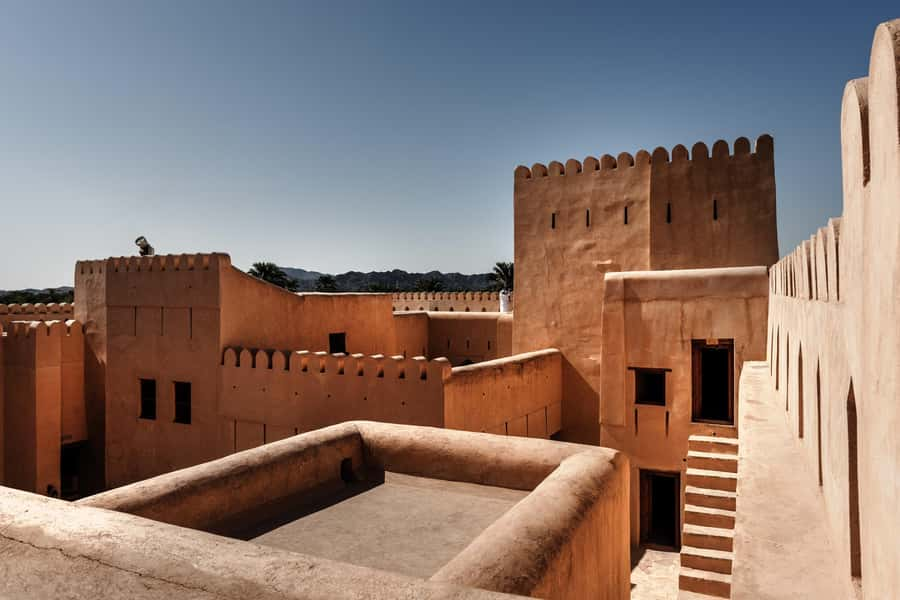
Bahla is one of Oman’s oldest small towns and was the capital of the local tribe in the 12th century. The town’s fort is monumental, but the visit here is handled differently from Nizwa and Jabreen.
You get a photo stop of about 20 minutes, followed by a pottery workshop visit of about 15 minutes. The fort has been open to the public after a long restoration period, though the short stop means you should expect an outside view and photographs rather than a full exploration of the structure.
Bahla is especially known for pottery. The workshop gives the day a useful change of pace. You are no longer looking only at old walls and royal rooms. You are seeing a craft that connects the town’s past with present-day work. The visit is short, but it adds a human scale to a route otherwise dominated by monumental buildings.
I like this part of the route because it keeps the tour from becoming a parade of forts. You get architecture, local production, and a reminder that Oman’s heritage is not only preserved in restored buildings. It also lives in skills passed between generations.
The schedule may include photo stops at abandoned mud-built villages or views of traditional irrigation channels, depending on timing and the guide’s route. Such stops have appeared on previous outings, but they should not be treated as guaranteed parts of the published program. The exact day can change with traffic, weather, public holidays, or official decisions.
Same base, a different sort of day:
- Muscat: Half-Day Sightseeing Essentials Tour and Audio Guide
★ 4.2 · 598 reviews - Muscat: Wadi Bani Khalid Oasis & Oman Desert Tour
★ 4.8 · 434 reviews - Muscat: Daymaniat Islands Snorkeling Tour with Refreshments
★ 4.7 · 426 reviews - Daymaniyat Island: Snorkelling Tour with Tasty Lunch
★ 4.8 · 403 reviews
What the eight-hour schedule feels like
This is a full day, even though the formal duration is eight hours. Muscat pickup and drop-off are included, and the driving distance makes transport a major part of the experience. You will spend meaningful time in the vehicle, so a comfortable car and a careful driver matter.
Past outings have included a 4WD vehicle, and the driving has been praised for comfort and safety. The operator may collect another couple if the departure is organized as a small shared group, even though the group limit is four. That arrangement can keep the price below a fully private car while still avoiding a large coach.
The pickup time shown when booking is approximate. You need to provide the full hotel name and room number when confirming, then reconfirm the exact time with the local operator. Traffic and other hotel pickups can cause delays, so do not schedule a tight appointment immediately after the expected return.
The tour does not include meals or drinks. You should plan for that rather than assuming food is part of the day. One past outing included lunch along the route, but that is not an included feature you should count on. Bring water and sunscreen, and carry only a small day bag because large bags and luggage are not allowed.
How the price compares with the experience
At $251 per person, this is not a budget sightseeing bus. The value depends heavily on your group size.
For one person, the price is substantial. For a couple or a small group sharing the experience, it becomes easier to defend because hotel transport, an eight-hour vehicle service, an English-speaking guide, Nizwa Fort, Nizwa Souq, Jabreen Castle, Bahla, and the pottery workshop are combined in one day.
I would especially consider it if you have limited time in Oman and do not want to arrange a long interior drive yourself. You avoid the work of planning the route, finding each fort, and managing the return to Muscat. The guide also gives you a chance to ask about daily life, local customs, and the meaning of the buildings rather than simply taking photographs and moving on.
The value is weaker if you want a slow archaeological visit. The 20-minute stops at Nizwa Fort, Nizwa Souq, and Jabreen Castle are efficient, but they leave little room for lingering. If you prefer to read every panel, shop at length, or sketch the buildings, you may find the program too tight.
Practical clothing and photography advice
The sun can be strong, particularly when you are walking around exposed fort walls. Bring sunscreen, wear a hat or other head covering, and use good sunglasses. People who wear spectacles may find photochromatic lenses useful in bright conditions.
A light outfit is suitable for much of the year, but winter evenings can be cool. A sweater or jacket is sensible if your day begins early or ends after sunset.
Photography is generally fine for normal tourist subjects. Do not photograph government buildings, police, or military installations. Photographing Arab women is considered offensive, and you should ask permission before photographing men. These are simple rules, but following them shows respect and avoids an awkward moment.
The forts require walking on uneven, sloping ground with many stairs. This experience is not suitable for wheelchair users, pregnant women, or anyone whose mobility is limited by an injury or medical condition. If you can walk comfortably but dislike steep steps, tell the operator when confirming. The supplied information does not promise an adapted route.
The role of the guide can shape the whole day

The strongest part of this experience is likely to be the person in the front seat. Several guides have been associated with the tour, including Mohammed, Rachid, and Rasheed. Names are not guaranteed, but you can expect an English-speaking guide.
The best guide style for this route is not a nonstop lecture. You need someone who can explain why Nizwa mattered, point out the difference between a defensive fort and a decorated castle, and answer practical questions about life in Oman today. Past guiding has included explanations of Omani culture, irrigation channels, abandoned villages, and local history.
There is some variation to keep in mind. One past outing was described as having a driver who offered little information, while others had a guide who explained the sites carefully and gave extra photo stops. That tells you to treat the guiding element as important but not entirely predictable. If you care strongly about interpretation, ask for a guide-led experience when reconfirming rather than assuming the driver will provide a full talk at every stop.
Who should book this Oman forts tour?
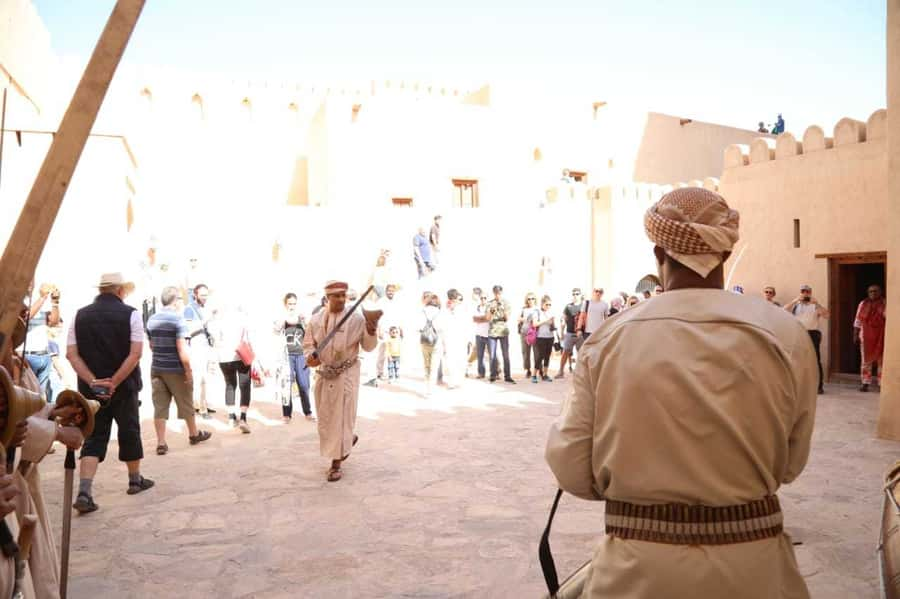
I would recommend it to first-time visitors staying in Muscat who want a broad introduction to Oman’s interior in one day. It suits people who enjoy historic buildings, traditional markets, mountain drives, and local craft, and who prefer a small vehicle to a large group.
It also works well for anyone who values door-to-door transport. You can see three important heritage areas without arranging a rental car, learning the roads, or managing the return drive after a long day.
I would hesitate if your main goal is a relaxed pace. The route covers Nizwa, Jabreen, and Bahla in eight hours, with short stops at several locations. You will see a lot, but you will not have unlimited time at any one fort.
Should you book it?
Book this tour if you want maximum variety in one Muscat day and value a guide, hotel pickup, and a small group. Nizwa provides the grand defensive structure, Jabreen supplies the finest decoration, and Bahla adds pottery and a sense of continuing local tradition.
Think twice if $251 feels high for a day with substantial driving and short visits, or if stairs are a problem. For everyone else, this is a practical way to reach Oman’s interior and see more than a single fort without taking on the planning yourself.
FAQ
Where does the tour begin and end?
Pickup and drop-off are provided at your hotel in Muscat.
How long does the experience last?
The tour lasts approximately eight hours. The exact duration can change with traffic and the time of day.
What language does the guide speak?
The live guide speaks English.
How many people can join the tour?
The group is limited to four participants.
Are meals and drinks included?
No. Meals and drinks are not included, so you should plan accordingly.
What should I bring?
Bring sunscreen. Good sunglasses, a hat, and suitable walking shoes are also useful for the bright sun and uneven ground.
Is the tour suitable for wheelchair users?
No. The forts involve rough, inclined ground and many steps, and the experience is not suitable for wheelchair users.
Just added in Muscat
- Muscat: Omani Traditional Dhow Sunset Cruise★ 4.4 · 53 reviews
- Private Half-Day Muscat City Tour★ 4.6 · 50 reviews
- Oman: Wahiba and Wadi Bani Khaled Private Trip★ 4.5 · 33 reviews
- Oman: Snorkeling Trip at Daymaniyat Islands★ 4.9 · 38 reviews
- Oman: Private City Tour of Muscat with pick up/drop off★ 4.4 · 88 reviews
- Nizwa Heritage & Culture Full Day Tour with Audio Guiding★ 4.3 · 213 reviews
- Muscat: Nizwa and Jabal Shams- Full Day Tour★ 4.5 · 26 reviews
- Muscat: Wahiba Sands, Wadi Bani Khalid & Mudayrib Tour★ 4.7 · 266 reviews
Tours in Muscat, compared.

Daymaniat Islands Snorkeling Trip with Brunch
Read our review →
Wahiba Desert and Wadi Bani Khalid Guided Group Tour
Read our review →
Half-Day Sightseeing Essentials Tour and Audio Guide
Read our review →

Daymaniat Islands Snorkeling Tour with Refreshments
Read our review →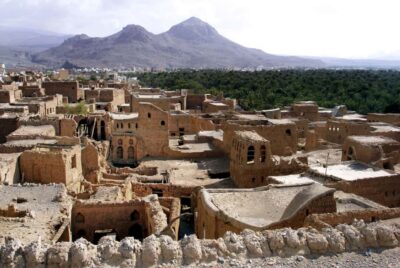

Daymaniyat Island: Snorkelling Tour with Tasty Lunch
Read our review →Browse the lists this tour appears in