
Reviewed · TOURS IN DUBAI
Authentic Emirati Cultural Meal and Talk in Old Dubai
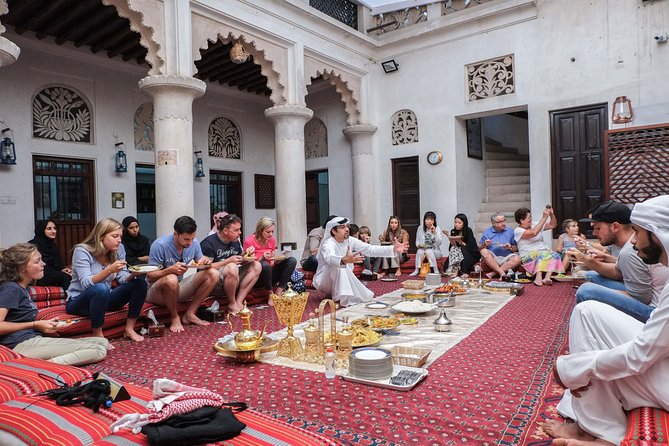
Dubai’s most useful cultural lesson may happen over a plate of food, not inside a tall museum. At the Sheikh Mohammed Centre for Cultural Understanding, you sit in a traditional wind-tower courtyard in Al Fahidi and talk with an Emirati host about faith, family, dress, food, and daily life.
I like two things right away: the informal question-and-answer format lets you ask what you actually want to know, and the setting puts you in old Dubai rather than a polished hotel dining room. The Arabic coffee, dates, generous local meal, and syrupy ligamat add a pleasant social touch.
The main consideration is that the meal may feel broader than a carefully defined Emirati food tasting. One past participant expected more specifically Emirati dishes. Come mainly for the conversation and cultural exchange, with lunch or dinner as an important part of the experience rather than the entire point.
Key points to know before booking
- A meal with conversation at its center: Your questions guide much of the 90-minute session, so arrive with a few ready.
- A genuine old-Dubai setting: The program takes place at the Sheikh Mohammed Centre for Cultural Understanding in Al Fahidi, inside a wind-tower house.
- Coffee, dates, and ligamat: Arabic coffee and dates begin the visit, followed by local dishes and small doughnuts covered in date syrup.
- A small group of up to nine: This is better suited to discussion than to a large, scripted show.
- Breakfast, lunch, or dinner choices: You can fit the experience into different Dubai sightseeing plans.
- A strong introduction to local customs: The discussion can cover greetings, Islamic influence, clothing, food, family life, and cultural sensitivities.
Why this short meal can explain Dubai better than a sightseeing drive
Dubai is easy to admire from the outside. You can see the towers, malls, highways, and grand hotels within a day. It is harder to understand the customs and beliefs that shaped the city before the modern skyline appeared.
That is where this experience helps. For 90 minutes, you are not simply looking at old buildings or listening to a rehearsed timeline. You are encouraged to ask direct questions and hear explanations from an Emirati cultural presenter. Topics can include Arabic greetings, Islamic faith, social values, local food, traditional clothing, and the effect of religion on daily life.
The approach is informal. You sit, eat, and talk. That matters because questions about family life, modesty, marriage, hospitality, and religious practice often make more sense in a conversation than in a standard tour speech.
The group size also works in your favor. With a maximum of nine people, you should have a fair chance to ask something personal to your interests. A large group can turn cultural talks into a lecture. This format is more like a hosted discussion, although the quality and shape of the conversation will depend on the host and the questions brought by the group.
The experience has earned a 4.8 rating from 150 published ratings, with 97 percent recommending it. Those figures suggest that the strongest part is the human contact and open exchange, not simply the food.
More Souk Walks in Dubai
- Dubai: Old Town, Creek, Museums, Souks, & Street Food Tour
★ 4.8 · 10,816 reviews - Dubai: Old Town, Souks, Street Food, Guided Tour & Abra Ride
★ 4.9 · 7,170 reviews - Dubai: Frame Tickets, Creek, Souks & Blue Mosque Guided Tour
★ 4.8 · 5,980 reviews
Entering Al Fahidi and the wind-tower house
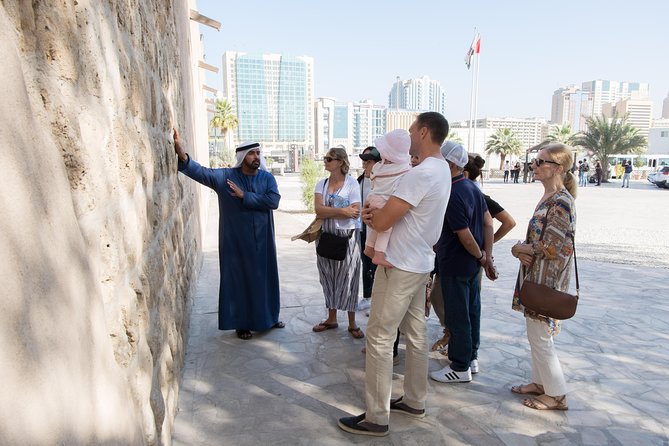
You meet at the head office of the Sheikh Mohammed Centre for Cultural Understanding on Al Mussallah Road in the Al Fahidi neighborhood. The area is part of old Dubai’s Al Bastakiya district, a useful place to visit before or after the meal because it gives you a visual setting for the conversation.
The meal takes place in a traditional wind-tower house. Wind towers were designed to catch air and help cool buildings before modern air-conditioning. Even without a long architectural lesson, the courtyard gives the gathering a clear sense of place.
This is a better setting for cultural learning than a generic restaurant. The building connects the discussion to the older residential character of Dubai, while the center provides a comfortable place to ask questions. You are not being asked to observe from a distance. You are welcomed into a social space.
The meeting point is also practical for independent sightseeing. The activity ends back at the same location, and no transportation is included. You will need to arrange your own taxi, public transport, or walk from wherever you are staying. Plan that part carefully, especially if you choose breakfast or dinner and are unfamiliar with the narrow streets of Al Fahidi.
Coffee, dates, and the opening welcome
The session begins with Arabic coffee, tea, water, and dates. This is not just a snack before the main meal. Hospitality is an important part of Arab culture, and the opening ritual gives your host a natural way to welcome the group.
Arabic coffee is usually served in small cups, so do not expect a large mug. Dates provide a sweet counterpoint and are closely linked with hospitality across the Gulf. These first minutes also help settle the group before the questions begin.
You may be offered explanations about greetings, coffee customs, and polite behavior. If you have never experienced an Emirati gathering, pay attention to these small details. They can tell you as much about social values as a list of dates and political facts.
This is also a good time to ask basic questions. You can ask about the clothing worn by your host, why certain greetings are used, or how visitors should behave in homes and religious settings. The stated format encourages direct questions, and several sessions have included hosts in traditional clothing.
The Emirati meal and what to expect on the plate
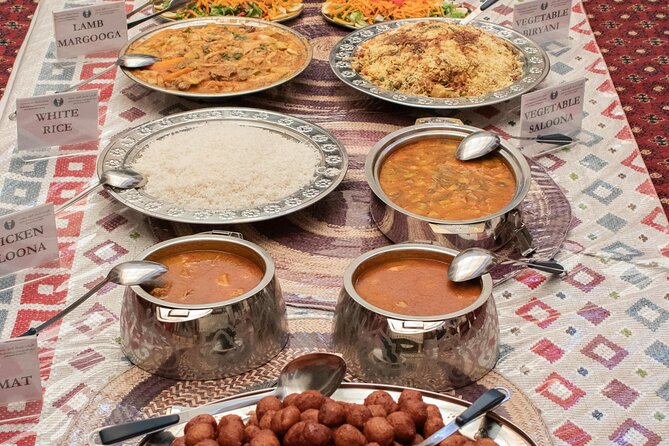
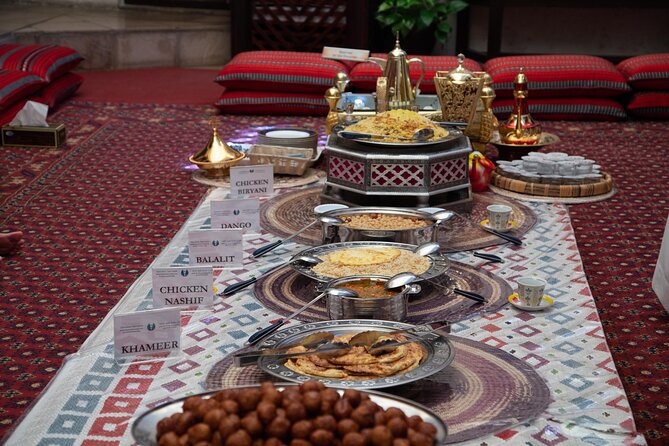
The meal includes authentic Emirati cuisine, along with water, Arabic coffee, tea, and dates. The food is served as part of the cultural program, not as a formal cooking class. You should expect local specialties and generous portions, but the exact menu is not specified.
One highlighted item is ligamat, small fried doughnuts served with date syrup. They provide the clearest sweet finish to the meal and are likely to be popular with children as well as adults.
The food has been praised for being tasty and plentiful, but you should set your expectations sensibly. This is not advertised as a full food tour through the United Arab Emirates, and one participant felt the meal did not contain as much specifically Emirati food as expected. If your main goal is a detailed study of regional dishes, you may want a separate food-focused activity.
I see the meal as a conversation starter. Eating together makes the session feel social rather than academic. You can ask what people eat at home, how food is shared, how meals are served, and how traditional habits fit into modern Dubai life.
The food may also be useful for families. Children get something concrete to taste while adults ask about customs and beliefs. Just remember that the meal is part of a cultural talk, so the food experience may not satisfy someone looking for a long tasting menu or a cooking demonstration.
Same base, a different sort of day:
- Dubai: Burj Khalifa Levels 124 & 125 Entry Ticket + Options
★ 4.3 · 90,891 reviews - Dubai: Desert Safari, Quad Bike, Camel Ride & Al Khayma Camp
★ 4.9 · 68,962 reviews - Dubai: Desert Safari, Quad Bike, Camel Ride and Sandboarding
★ 4.9 · 43,505 reviews - Dubai: Safari, Quad Bike, Camel Ride, and Buffet Dinner
★ 4.9 · 33,424 reviews
Let your questions shape the cultural talk
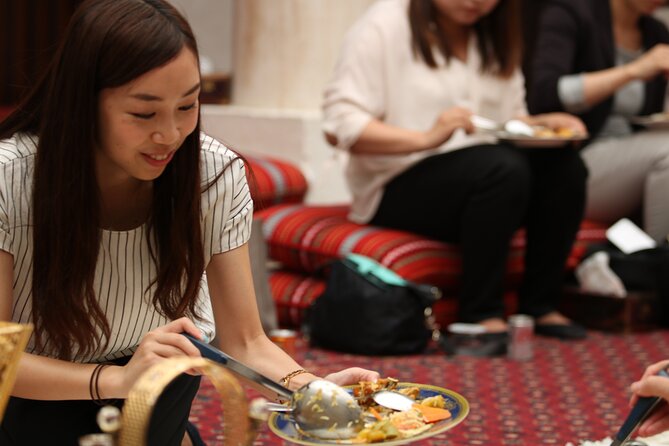
The central feature is the open Q&A. The discussion can cover Arabic culture, Islam and its impact on local life, cultural values, important Arabic expressions, dress, food, and daily routines.
Come with questions. One useful piece of advice from the experience is that the guests guide much of the conversation. If nobody asks much, the session may feel less lively. If you prepare a short list, you can turn the time into a focused introduction to topics that interest you.
You might ask:
- How does Emirati dress differ by occasion?
- Which Arabic greetings should a visitor learn?
- How does Islam influence daily routines?
- What customs should you understand before visiting an Emirati home?
- How has Dubai changed for local families?
- What foods are eaten on ordinary days and during celebrations?
The format is especially useful if you want to discuss Muslim beliefs without relying on stereotypes. The hosts are there to explain local traditions and answer questions in an informal setting. Past sessions have included both male and female presenters, including an Emirati woman in traditional clothing and a host named Abdullah.
The tone is meant to be welcoming and entertaining, but it is still wise to ask questions respectfully. The point is not to test your host or force a debate. Ask with curiosity, listen to the answer, and use follow-up questions when a subject needs more explanation.
What makes the old-Dubai setting worth your time
Al Fahidi gives the meal a useful sense of contrast. Modern Dubai often presents itself through glass towers, luxury shopping, and large-scale attractions. Here, you see a quieter architectural side of the city, with courtyards and wind towers connected to an older way of living.
You can walk around the neighborhood after the session. This is one of the best ways to extend the experience because the buildings provide visual context for what you have just discussed. If the meal is your first stop in Dubai, the conversation can also help you notice customs and details during the rest of your visit.
The activity itself is short enough to fit into a larger day. You could schedule it before exploring Al Fahidi, Dubai Creek, or nearby cultural sites. Since the program lasts about an hour and a half, it does not require the commitment of a full-day tour.
Still, allow time around the appointment. The published duration covers the activity, not your journey to the center or your walk through the surrounding district. Transportation is not included, and the activity ends where it starts.
Price, group size, and overall value
The cost is about $36.28 per person. For that price, you receive a meal, coffee, tea, dates, water, a cultural presentation, and direct access to a local host in a small group.
I consider this good value if you want cultural context rather than another sightseeing stop. A meal alone might not justify the price for everyone, especially if you are hoping for a large or highly specialized menu. The value comes from the access to conversation and the chance to ask questions that a regular restaurant cannot answer.
The small group is important. Up to nine people creates a more personal setting and gives you a better chance to speak. It also means the experience can feel different from one session to another. A curious group may produce a lively exchange, while a quiet group may depend more heavily on the presenter.
The activity is often booked about 36 days ahead. That is useful planning information if your Dubai dates are fixed. Confirmation is issued within 48 hours, subject to availability, so do not treat the reservation as final until it is confirmed.
You can choose breakfast, lunch, or dinner. Lunch may work best for combining the meal with an afternoon walk through Al Fahidi. Dinner could suit you if your day is filled with sightseeing, while breakfast gives you an early cultural start. The right choice depends on your schedule rather than on a major difference in the experience itself.
Who will enjoy this most
I would recommend this to first-time visitors who want a clearer understanding of Emirati life. It is also a good choice for anyone who has questions about Islam, local dress, greetings, family customs, or the difference between Dubai’s international image and Emirati traditions.
Families can benefit from it because the format is social and the questions can be adapted to different ages. Children must be accompanied by an adult, and most people can take part. Service animals are allowed.
The experience also suits independent-minded visitors who prefer a conversation over a fixed speech. If you enjoy asking questions, it may be one of the most useful early activities in your trip. Several people have found that it works well as a first stop because it gives them cultural context for everything that follows.
You may be less satisfied if you want a long culinary tour, a detailed cooking lesson, or a tightly timed presentation with a fixed list of subjects. The meal is important, but the discussion is the real focus.
Practical tips for a better visit
Prepare three or four questions before you arrive. This simple step can make the session much more rewarding, especially because the conversation is shaped by the group.
Wear comfortable clothing suitable for a cultural setting. The experience includes discussion of dress and local customs, and you will want to feel at ease in a traditional neighborhood and courtyard.
Do not rush away after the meal. If your schedule allows, walk through Al Fahidi afterward. The area helps connect the conversation about old Dubai with something you can see and feel around you.
Keep your expectations clear about the food. You will receive a local meal with items such as ligamat, coffee, dates, and other Emirati dishes, but the exact menu is not listed and one person felt it was not specifically Emirati enough. Book this for the people and the setting first, then enjoy the food as part of the welcome.
Free cancellation is available if you cancel at least 24 hours before the local start time. Changes or cancellations inside that window are not accepted for a refund, and the program requires a minimum number of participants. If that minimum is not met, you are offered another date or experience, or a full refund.
Should you book this Emirati cultural meal?
Book it if you want to understand Dubai through conversation, food, and a real old-neighborhood setting. The small group, open questions, Arabic coffee, dates, and traditional courtyard make this a thoughtful way to begin a visit.
I would especially choose it early in a Dubai trip. The discussion can help you understand local dress, greetings, faith, hospitality, and daily life before you encounter those customs elsewhere.
Skip it if your main goal is a serious food tour or a long list of Emirati dishes. The menu is not fully specified, and the cultural talk carries more weight than the meal. For most curious visitors, though, the $36.28 price is fair for a welcoming 90-minute conversation that can make the rest of Dubai easier to read.
FAQ
Where does the Emirati cultural meal take place?
It takes place at the Sheikh Mohammed Centre for Cultural Understanding in the Al Fahidi neighborhood of old Dubai, also known as part of the Al Bastakiya district.
How long does the experience last?
The activity lasts about 1 hour and 30 minutes.
What food and drinks are included?
The visit includes an Emirati meal, water, Arabic coffee, tea, and dates. Ligamat doughnuts with date syrup are one of the featured local treats.
Can I choose the time of day?
Yes. Breakfast, lunch, and dinner options are available.
How large is the group?
The activity has a maximum of nine participants.
Is transportation included?
No. You must arrange your own transportation to the meeting point. The activity ends back at the same meeting point.
Can I cancel for a refund?
Yes. You can receive a full refund if you cancel at least 24 hours before the local start time. Cancellations or changes made less than 24 hours before the start are not refunded.
Just added in Dubai
- IMG World Of Adventure Dubai: Entry Tickets★ 4.5 · 28 reviews
- Escape Room: Escape Hunt Dubai – Jack The Ripper★ 5.0 · 95 reviews
- Hot air Balloon Dubai Magical Morning Without Breakfast★ 5.0 · 52 reviews
- Inside Burj Al Arab Dubai Guided Tour with Experience Package★ 4.0 · 52 reviews
- Inside Burj Al Arab Guided Tour with Transfer & Dinner Options★ 4.0 · 57 reviews
- Dubai Hot Air Balloon Ride with Breakfast, Falconry & Camel Ride★ 5.0 · 220 reviews
- Global Village Dubai★ 4.5 · 44 reviews
- Hot Air Balloon Sunrise Tour with free transport in Dubai★ 4.5 · 74 reviews
Tours in Dubai, compared.

Burj Khalifa Levels 124 & 125 Entry Ticket + Options
Read our review →
Desert Safari, Quad Bike, Camel Ride & Al Khayma Camp
Read our review →
Desert Safari, Quad Bike, Camel Ride and Sandboarding
Read our review →
Safari, Quad Bike, Camel Ride, and Buffet Dinner
Read our review →
Red Dune Safari, Quad Bike, Camel Ride, BBQ Dinner
Read our review →
Premium Safari, Camel Ride & Al Khayma Camp 3-Buffets
Read our review →
Burj Khalifa Sky Level 148, 124, & 125 Entry Ticket
Read our review →
The View At The Palm Observatory Entry Ticket
Read our review →Browse the lists this tour appears in