
Reviewed · TOURS IN DUBAI
Dubai: Old Town Walking Tour with Abra Cruise & Street Food
Old Dubai is at its best on foot, where wind towers, old walls, souks, and creek boats tell a very different story from the glass towers across town. This tour links the main sights of Al Fahidi with a traditional abra ride and tastings of Arabic coffee, street food, and camel milk chocolate.
I like the clear local focus and the small-group format, which make it easier to ask questions and get help in the markets. I also like the practical shopping guidance, especially if you want to barter without feeling lost. The main thing to consider is the walking: hot weather, uneven surfaces, and a tour that is not suited to wheelchair users, people with mobility impairments, or children under two.
Key points to know before booking
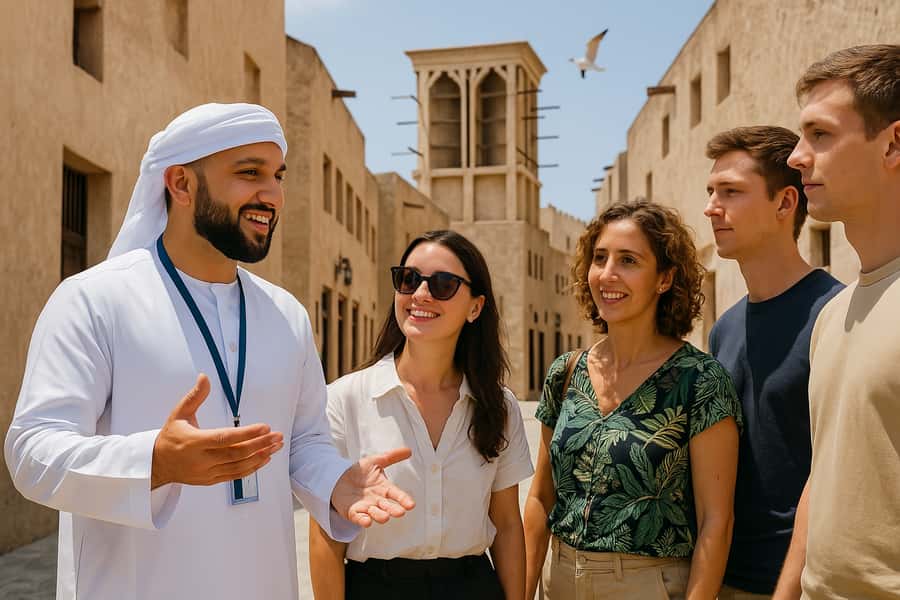
- Al Fahidi gives you Dubai before the skyscrapers: See Arabian-style houses, wind towers, the Old Mosque, and remains of a wall built around 1800 AD.
- The abra ride is part of the sightseeing: You cross Dubai Creek in a traditional water taxi rather than simply viewing the water from shore.
- The food stops are simple but useful: Arabic coffee, street food, water, and camel milk chocolate are included in the $26 price.
- Muhammad Bilal and Abdulla are named guides: Guides explain local customs, history, and souk shopping, with English and Spanish available.
- The souks are easier with help: You get support with market visits and bargaining, though you should still decide carefully what you want to buy.
- Plan for a warm, active outing: Wear comfortable shoes, bring a hat and sunglasses, and leave large bags and strollers behind.
Starting at Al Seef and entering Al Fahidi
The tour begins in front of Wokyo Noodle Bar at Al Seef. This is a useful meeting point because Al Seef sits beside Dubai Creek and is close to Sharaf DG Metro Station on the Green Line. If you arrive by taxi or Uber, enter Wokyo Noodle Bar, Al Seef, into your map app.
Arrive at least 10 minutes early. That small buffer matters in the older part of Dubai, where lanes and courtyards can be less obvious than a hotel lobby. The activity ends back at the same meeting point, so you do not need to work out a second pickup location.
The first stretch takes you into the Al Fahidi District, one of the most appealing places in Dubai for seeing traditional building styles. Its narrow lanes and restored houses offer a sharp contrast to the city’s newer districts. Many buildings now hold museums, galleries, and small cultural venues, including a coffee museum.
I like starting here because the setting gives the tour a clear purpose. You are not just ticking off old buildings. You are seeing how homes were designed around shade, privacy, and airflow before modern cooling systems changed daily life. The wind towers are especially useful to look at with a guide, since their shape makes more sense once you understand their role in directing air into a building.
A few more things to do in Dubai worth a look
- Dubai: Old Town, Creek, Museums, Souks, & Street Food Tour
★ 4.8 · 10,816 reviews - Dubai: Old Town, Souks, Street Food, Guided Tour & Abra Ride
★ 4.9 · 7,170 reviews - Dubai: Old Town, Souks, Street Food, Guided Tour & Abra Ride
★ 5.0 · 1,664 reviews
The Old Mosque and wall remains
The route passes the Old Mosque, where you can look at the simple forms and details of traditional Islamic architecture. The stop is brief compared with the souks, but it helps set the tone for the walk. This is a neighborhood shaped by faith, trade, family life, and the creek, not a collection of decorative facades built only for tourists.
You also see remains of the Old Wall, built around 1800 AD. A fragment of wall can seem modest beside Dubai’s towers, but that is precisely why it is worth pausing here. It gives you a physical marker for the earlier settlement and a reminder that Dubai’s past was not only about pearl diving or trade. The town needed boundaries, homes, places of worship, and market streets.
Your guide is important at this point. Muhammad Bilal is praised for explaining the country’s culture and history in a clear, friendly way, while Abdulla is also named as an excellent guide. Guides such as these turn small details into useful context. You can ask about architecture, customs, and the transition from old trading town to modern city instead of simply moving from one photo stop to the next.
Dubai Museum and the story behind the objects
The tour continues to Dubai Museum, where you can see relics and artifacts connected with Emirati civilization. The museum provides a more formal history stop after the open-air walk through Al Fahidi.
This part is valuable if you want some structure. Old houses and market lanes show you what the area looks like, but museum displays help explain the people, tools, and traditions behind those buildings. Your guide can help connect what you see inside with the streets outside.
The pace is one of the tour’s strengths. This is not designed as a long museum lecture followed by a rushed race through the souks. It moves between architecture, exhibits, food, shopping, and transport. That variety should suit you if you want a first look at Old Dubai without giving an entire day to one neighborhood.
Still, keep your expectations sensible. At $26 per person, this is an introductory walking tour, not a private museum seminar. The value comes from the combination of sights and local explanation, plus the included food and abra crossing.
Textile Souk: color, cloth, and shopping advice
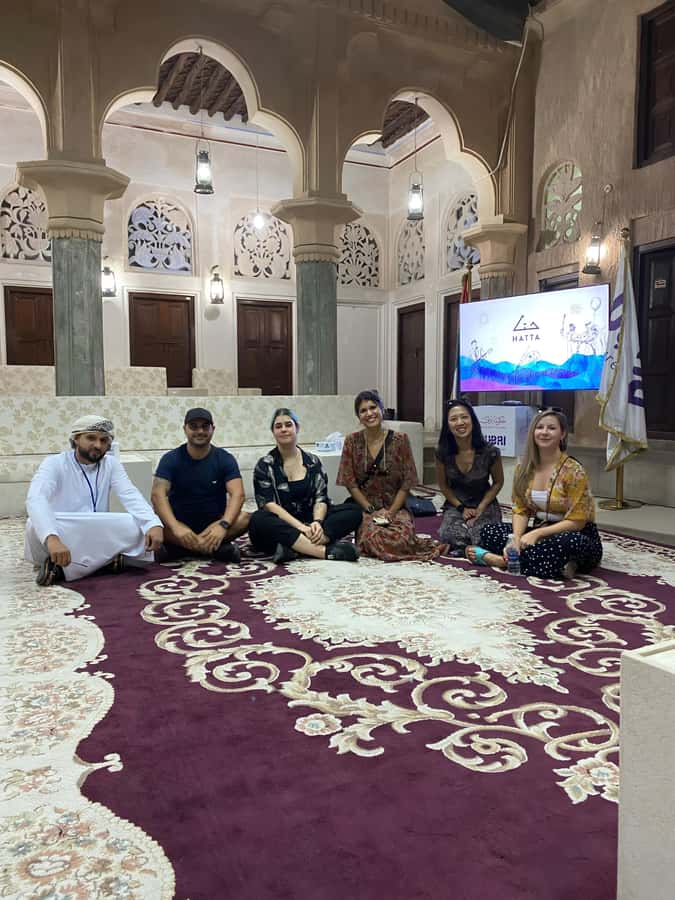
The Textile Souk brings the walking tour into a more commercial setting. You can expect stalls and displays of fabrics in many colors, with vendors ready to talk about what they sell. The market is a good place to see how Old Dubai still works as a trading district rather than only as a preserved historic quarter.
This is also where a local guide can save you time and uncertainty. Several tour comments describe the guides helping with shopping and better prices. That does not mean every item is automatically a bargain. It means you have someone who can explain how the market works and help you approach bargaining with less hesitation.
My practical advice is to decide in advance whether you want to shop or simply look. If you want to buy, set a budget and compare before agreeing to a price. The tour gives you guidance, but you remain responsible for the purchase. You should not feel pressured to buy fabric, jewelry, spices, or souvenirs just because a vendor has welcomed you in.
The market can also be one of the more stimulating parts of the route. There are displays to inspect, sales conversations to follow, and other people moving through the lanes. Keep your belongings close and avoid bringing large bags. Large luggage and baby strollers are not allowed on the activity.
Same base, a different sort of day:
- Dubai: Burj Khalifa Levels 124 & 125 Entry Ticket + Options
★ 4.3 · 90,891 reviews - Dubai: Desert Safari, Quad Bike, Camel Ride & Al Khayma Camp
★ 4.9 · 68,962 reviews - Dubai: Desert Safari, Quad Bike, Camel Ride and Sandboarding
★ 4.9 · 43,505 reviews - Dubai: Safari, Quad Bike, Camel Ride, and Buffet Dinner
★ 4.9 · 33,424 reviews
Crossing Dubai Creek by traditional abra
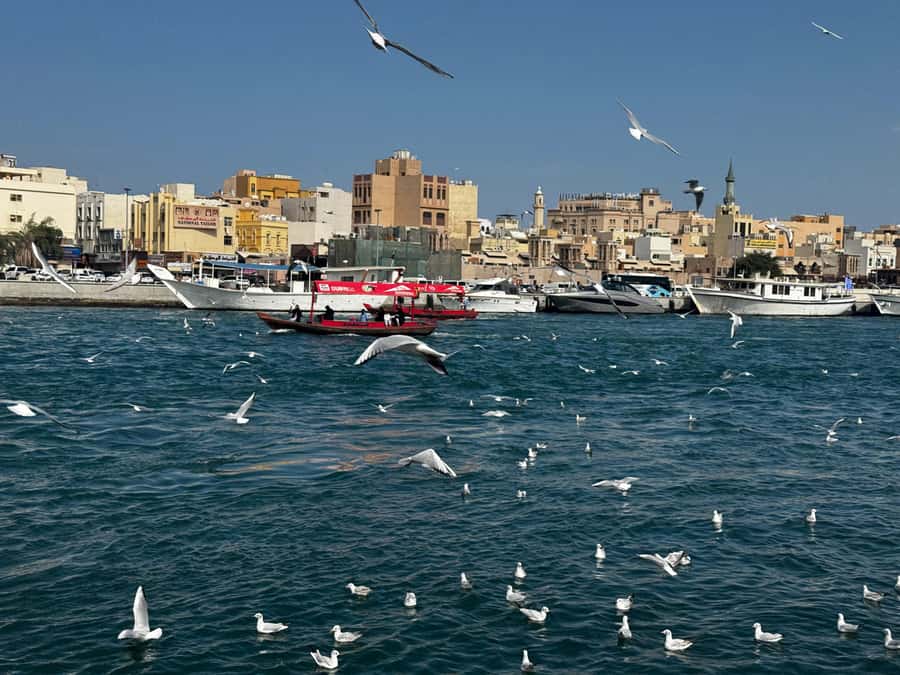
The abra ride is one of the clearest reasons to choose this tour rather than simply walking through Al Fahidi on your own. You board a traditional water taxi and cross Dubai Creek to reach the Deira side.
The crossing is short, but it changes the view completely. From the water, you see the older waterfront from a different angle, with boats and trading areas replacing the enclosed lanes of Al Fahidi. It is a practical trip as well as a sightseeing moment, since the creek has long connected the two sides of Old Dubai.
I like this part because it breaks up the walking. Three hours on foot can feel long in Dubai’s heat, but a boat crossing gives you a pause and a new setting. It also helps you understand why the creek mattered so much to the city’s growth.
The tour description does not give a fixed duration or exact departure time for the abra crossing. Your overall timing may also depend on the group, market conditions, and the guide’s pace. Treat the trip as part of a guided neighborhood walk, not as a standalone scenic cruise.
Gold Souk and the art of looking before buying
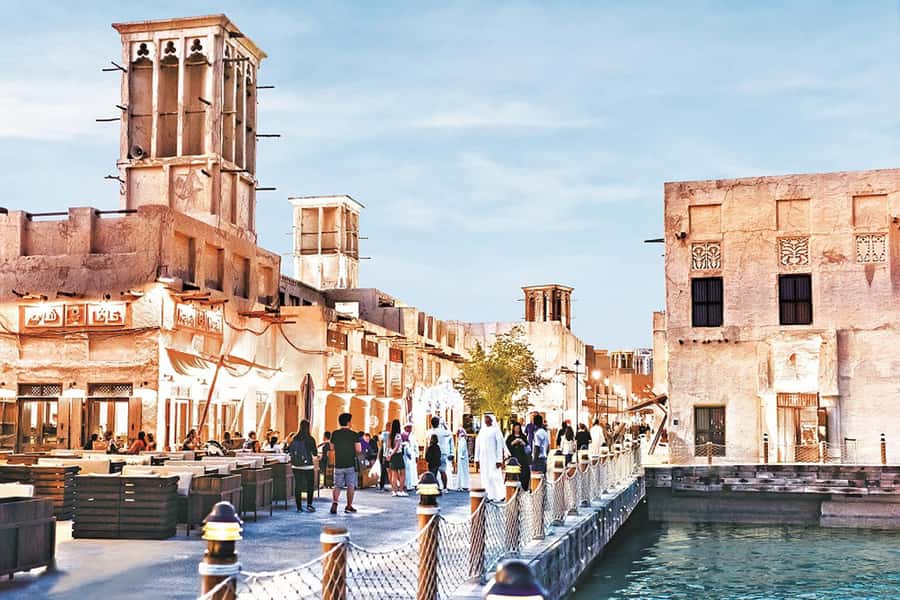
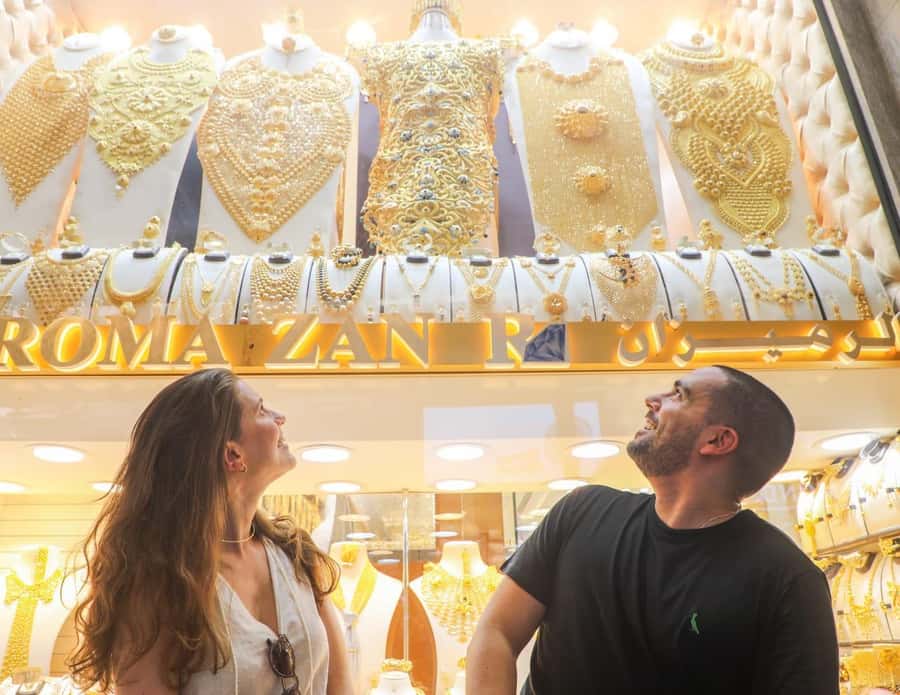
After crossing the creek, the route takes you to the Gold Souk, one of the world’s largest gold retail markets. The displays can be striking even if you have no plans to buy jewelry. Large shop windows, bright metalwork, and ornate designs make this one of the most memorable visual stops.
A guide is particularly useful here because the Gold Souk can feel confusing on your first visit. You can ask questions about styles, prices, and local shopping customs. The guide may also help you feel more comfortable moving through the market, as several comments highlight assistance with bargaining and finding fairer prices.
That help should not be confused with a guarantee of the lowest price. Gold purchases involve weight, workmanship, purity, and shop pricing. If you buy, ask clear questions and take your time. If you do not buy, enjoy the displays and treat the souk as a living market rather than a compulsory shopping stop.
For many people, the Gold Souk is less about purchasing and more about seeing a part of Dubai’s commercial identity. The city may be famous for luxury malls, but this market offers a more direct connection to trading traditions and family businesses.
Spice Market and the included food stops
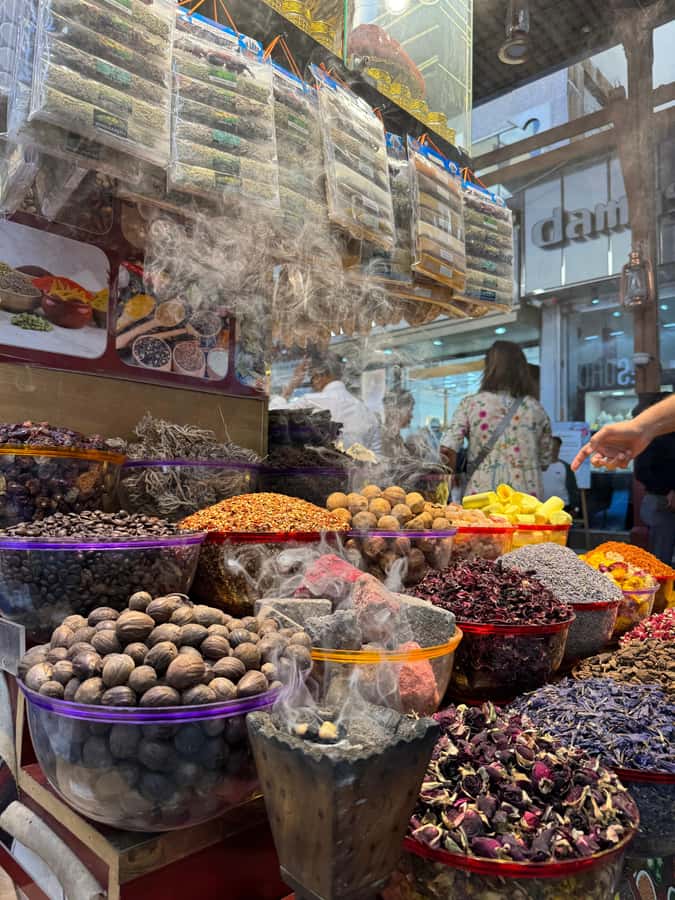
The final market section takes you through the traditional spice market. Here you can see vendors selling spices and other ingredients associated with Middle Eastern cooking. The smells and colors make this a more sensory stop than the museum or architecture sections.
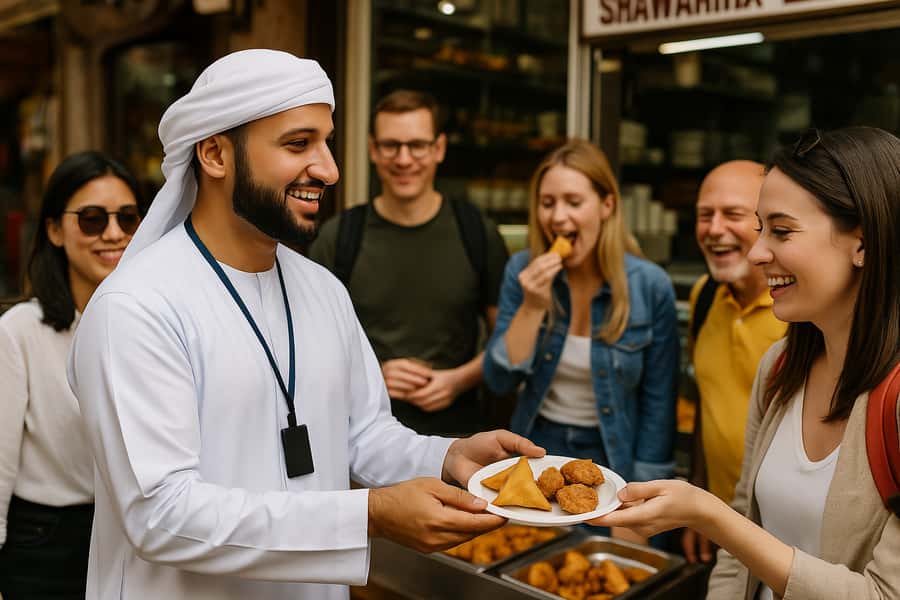
You also receive street food during the experience, along with Arabic coffee, water, and camel milk chocolate. These inclusions add real value at $26, especially if you would otherwise pay for snacks during a three-hour outing. The food is not presented as a full meal, so you should not book this as a replacement for lunch or dinner.
The tastings give the guide an easy way to explain local food customs. Arabic coffee offers a small cultural ritual, while camel milk chocolate gives you a distinctly regional souvenir taste without requiring a large purchase. Street food is the most substantial of the included food elements, but the exact items are not specified, so do not expect a fixed tasting menu.
If you have allergies or dietary restrictions, ask the provider before booking. The available information confirms that food is included, but it does not list ingredients or special dietary arrangements.
What the guides add to the experience
The guide may be the biggest variable in any walking tour, and the named guides receive especially strong praise. Muhammad Bilal is described as friendly, clear, attentive, and passionate about Dubai and the United Arab Emirates. Abdulla is also singled out as an excellent guide.
The strongest pattern is not simply factual explanation. The guides help connect the sights to everyday culture, answer questions, and make the souks feel less intimidating. One useful benefit is help with bargaining, particularly if you have never shopped in a Dubai market before.
The tour is available in English and Spanish. You can choose a private experience or join a small group. A private option should suit you if you want more control over the pace or have specific questions. The small-group choice is likely the better value for most people, since the price is only $26 and the route already combines several major stops.
The experience is also described as intimate rather than commercial in feel. That matters if you prefer a personal walk over a large coach tour. Still, group size is not specified, so you should not assume it will be a one-on-one outing unless you select the private option.
Is $26 good value?
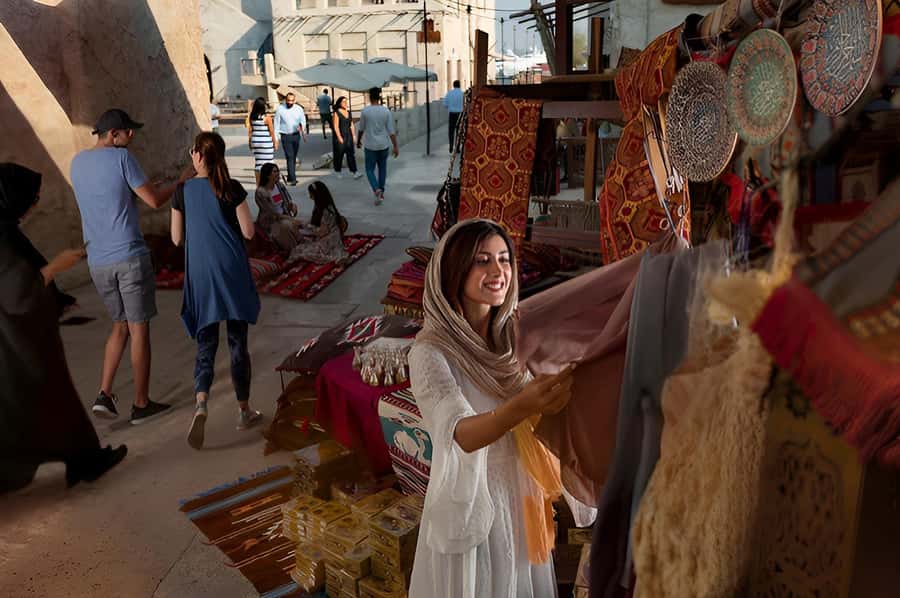
At $26, the tour offers a solid package for a half-day-style introduction to Old Dubai. You get a guide, Arabic coffee, street food, water, camel milk chocolate, and the abra trip, along with several major sights and markets.
The value is strongest if you want orientation. You can certainly walk around Al Fahidi, take an abra, and visit the souks on your own. But you would need to find the meeting points, understand the route, manage the crossing, and work out how to handle vendors without local help. The tour bundles those pieces into one experience.
It is less attractive if you already know Old Dubai well or prefer to spend a long time in one museum or market. You also pay separately for hotel transport unless you choose the private option. That is not a major issue if you can reach Al Seef by metro or taxi, but it is worth adding to your budget.
Who should book this Old Dubai walk?
I would recommend it to a first-time Dubai visitor who wants more than malls and modern towers. It suits you if you enjoy walking, local markets, short cultural explanations, and food samples rather than a formal luxury excursion.
It is also a good evening choice. One booking took the 5 pm to 8 pm tour and valued being out in the older district at night with a guide. The cooler timing can make the walk more pleasant, though the exact schedule depends on the date and available departure.
You should think twice if you have mobility limits. The activity is not suitable for wheelchair users or people with mobility impairments, and it is not suitable for children under two. Wear comfortable shoes and loose, comfortable clothes. Sunglasses and a sun hat are sensible, even for a later start.
You should also leave luggage and large bags behind. The route moves through narrow market areas, and the tour specifically does not allow them.
Should you book the Al Fahidi and abra tour?
Book it if you want a friendly, efficient introduction to Dubai’s older side, especially if this is your first time in Al Fahidi. The strongest reasons are the mix of architecture, museum, markets, food, and creek transport, along with the help you receive from guides such as Muhammad Bilal and Abdulla.
Skip it if you want a slow, highly specialized history tour, a full meal, or a completely flexible shopping day. For $26, though, you get a lot of useful ground covered without having to plan each step yourself. Bring good shoes, arrive early at Al Seef, and treat the souks as places to look, ask questions, and bargain carefully.
FAQ
Where does the Old Dubai tour start?
The tour starts in front of Wokyo Noodle Bar in Al Seef.
How can I reach the meeting point by metro?
The closest station is Sharaf DG Metro Station on the Green Line. From there, Al Seef is a few minutes away on foot.
What is included in the tour price?
The price includes a guide, Arabic coffee, street food, water, camel milk chocolate, and the abra water taxi trip.
Does the tour include hotel pickup and drop-off?
Hotel pickup and drop-off are not included unless you select the private option.
Which languages are available?
The tour is available in English and Spanish.
Is the abra ride included?
Yes. The traditional abra water taxi crossing is included in the activity.
Is the tour suitable for wheelchair users?
No. The activity is not suitable for wheelchair users or people with mobility impairments.
What should I bring?
Bring comfortable shoes, sunglasses, a sun hat, and comfortable clothes. Large bags, luggage, and baby strollers are not allowed.
More Walking Tours in Dubai
- Dubai: Private Old Town, Heritage & Souks Walking Tour
★ 4.9 · 102 reviews - Dubai: Old City Walking Tour with Abra Ride
★ 5.0 · 101 reviews - Dubai: Walking, Architecture and History Tour of Dubai Opera
★ 4.9 · 40 reviews - Private Walking Tour in Dubai / Old Dubai Tour
★ 5.0 · 25 reviews
Just added in Dubai
- From Dubai/Sharjah/RAK: Dibba Musandam Trip & Dhow Cruise★ 4.4 · 232 reviews
- From Dubai: Zerzura Dune Buggy Experience & Fossil Discovery★ 4.9 · 48 reviews
- From Dubai: Hatta Sightseeing Tour with kayaking★ 4.9 · 53 reviews
- From Dubai: Try Scuba Diving, Snorkeling with BBQ & Transfer★ 4.9 · 22 reviews
- From Dubai to Norway of Arabia|Telegraph Island| Dhow Cruise★ 4.9 · 91 reviews
- Dubai: Desert Safari, Camel Ride, and BBQ Dinner★ 4.0 · 192 reviews
- From Dubai: Discovery Scuba Diving & Snorkeling In Fujairah★ 4.9 · 93 reviews
- From Dubai: Fujairah Half-Day Scuba Dive and Snorkeling★ 4.7 · 186 reviews
Tours in Dubai, compared.

Burj Khalifa Levels 124 & 125 Entry Ticket + Options
Read our review →
Desert Safari, Quad Bike, Camel Ride & Al Khayma Camp
Read our review →
Desert Safari, Quad Bike, Camel Ride and Sandboarding
Read our review →
Safari, Quad Bike, Camel Ride, and Buffet Dinner
Read our review →
Red Dune Safari, Quad Bike, Camel Ride, BBQ Dinner
Read our review →
Premium Safari, Camel Ride & Al Khayma Camp 3-Buffets
Read our review →
Burj Khalifa Sky Level 148, 124, & 125 Entry Ticket
Read our review →
The View At The Palm Observatory Entry Ticket
Read our review →Browse the lists this tour appears in