Reviewed · TOURS IN DUBAI
Dubai Crocodile Park Ticket
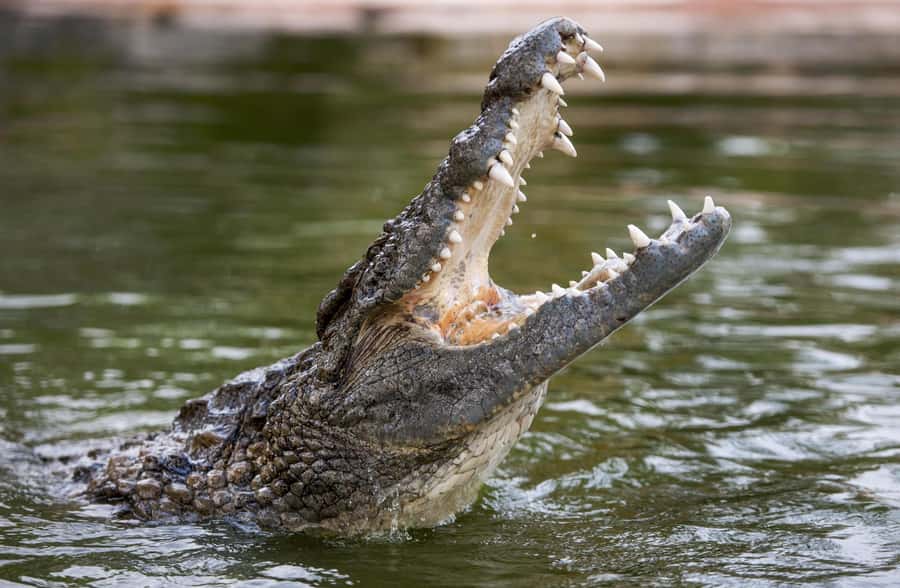
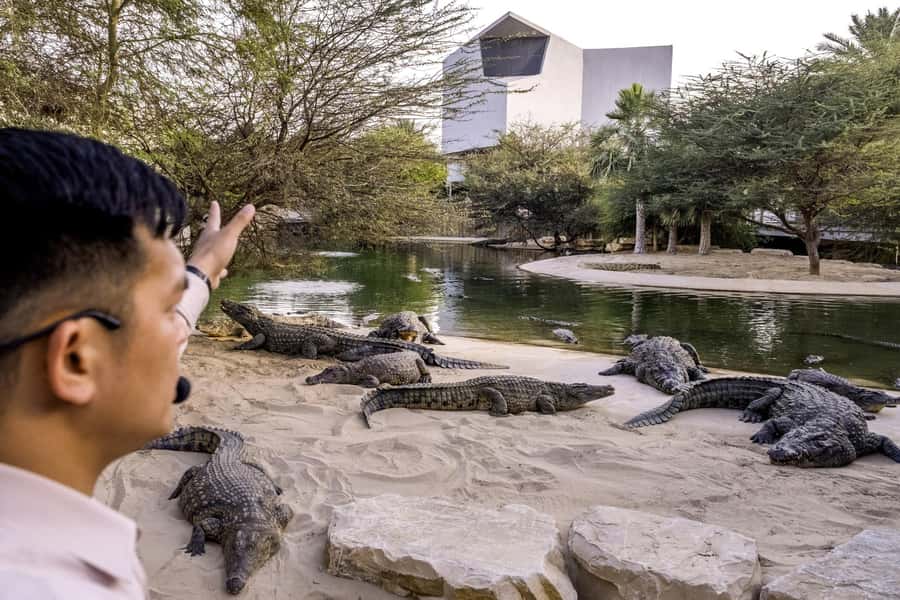
Dubai Crocodile Park puts you close to 250 Nile crocodiles without turning the visit into a simple animal display. The park uses lakes, islands, waterfalls, sandbanks, and underwater viewing areas to show how these reptiles live. I like the mix of live animals and serious information, especially the Natural History Museum’s account of crocodile evolution. I also like the friendly staff, who have often taken time to explain what you are seeing. The main drawback is size: some people finish the park in about an hour, so it works best as a focused outing rather than a full-day attraction.
The ticket costs $17 per person, which is fair if you enjoy wildlife, have children, or want something different from Dubai’s malls and skyscrapers. You should check opening hours before setting out, and remember that food, drinks, and hotel transport are not included.
Key points to know before you go
- 250 Nile crocodiles: See crocodiles of different ages and sizes, including young animals and large adults.
- An educator-led visit: Staff are available around the park to explain crocodile behavior, ecology, and conservation.
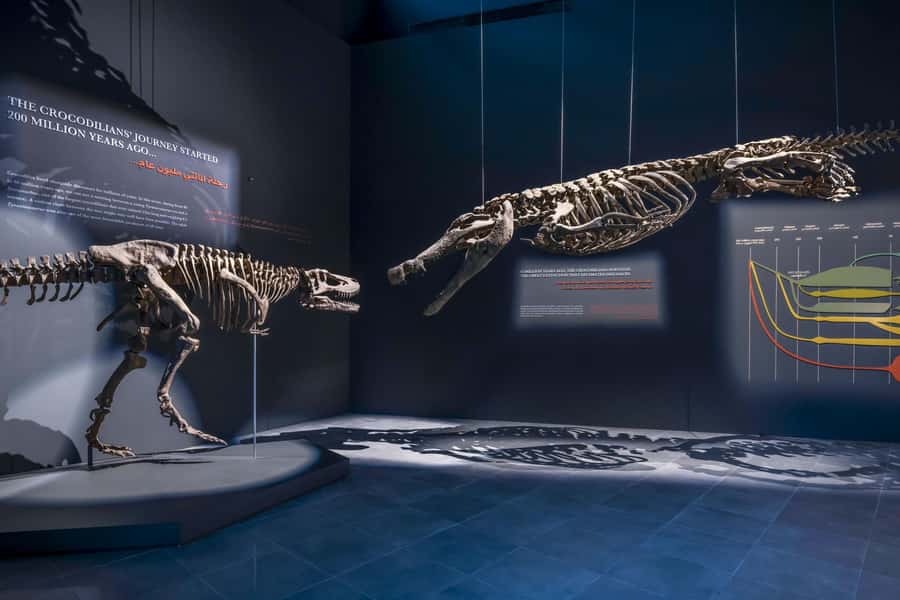
- A 200-million-year story: The Natural History Museum gives the animals context beyond the usual photo stop.
- Several viewing angles: Walk past lakes, islands, sandbanks, waterfalls, and an underwater aquarium area.
- Possible baby-crocodile encounter: Holding a baby crocodile has been included during some visits, but you should treat it as subject to the day’s arrangements.
- A short, easy outing: Many people spend around an hour here, making it simple to add to a Dubai day.
Why Dubai’s crocodiles make an unusual stop
Dubai has no shortage of big attractions, but the Crocodile Park offers a different kind of outing. The focus is not speed, spectacle, or a long list of rides. It is a chance to look carefully at an ancient animal and understand how it behaves.
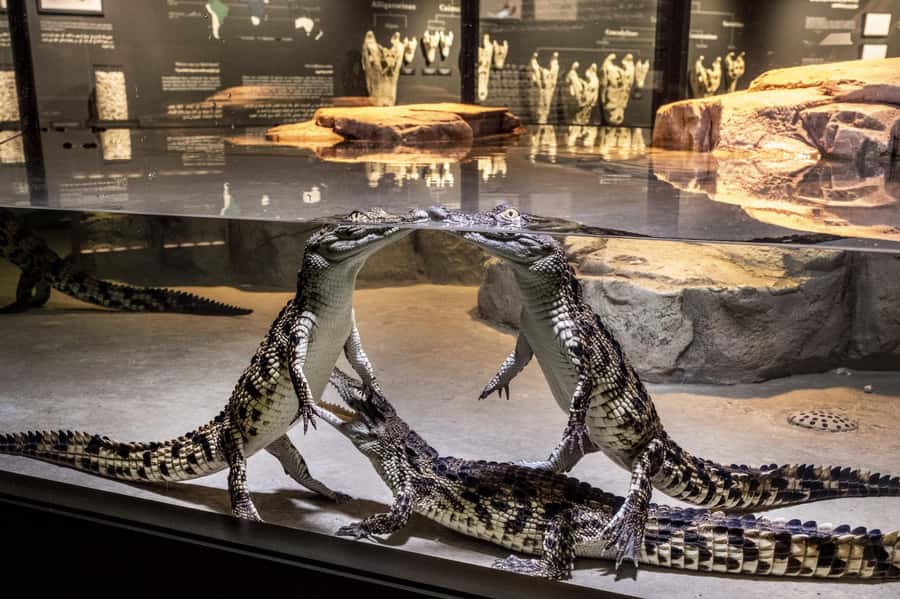
The park centers on Nile crocodiles, with animals at different stages of life. That matters because you can compare the smaller crocodiles with the much larger adults and see how size changes the way the animals occupy the water and banks.
I like that the visit does not end at the enclosures. The education element gives you a reason to slow down. Staff can explain crocodile behavior and conservation, and the museum provides the wider story of how crocodiles have developed over roughly 200 million years.
The setting also helps. Lakes, waterfalls, islands, and sandy banks make the crocodiles easier to observe in surroundings designed to echo their natural habitat. The water and climate are controlled for the animals, and high safety standards keep the viewing areas suitable for a family visit.
This is not a substitute for seeing crocodiles in the wild. It is a managed facility built around education, animal care, and close observation. If you want a wildlife visit with clear viewing points and staff on hand, that controlled setting is useful.
Other trips people book in Dubai:
- Dubai: Burj Khalifa Levels 124 & 125 Entry Ticket + Options
★ 4.3 · 90,891 reviews - Dubai: Desert Safari, Quad Bike, Camel Ride & Al Khayma Camp
★ 4.9 · 68,962 reviews - Dubai: Desert Safari, Quad Bike, Camel Ride and Sandboarding
★ 4.9 · 43,505 reviews
Entering the park and getting your bearings
Your pre-reserved ticket gives you entry to the park for one day. The ticket itself does not include hotel pickup, so you need to arrange your own way there. Food and drinks are also separate, which is worth remembering if you are visiting with young children.
Once inside, expect a compact facility rather than a sprawling zoo. One visitor estimated that the main route could take about an hour. I would allow extra time if you want to read the museum displays, ask questions, watch the crocodiles at rest, or arrive during a period when staff are explaining an activity.
The park is wheelchair accessible. Children under three enter free, while children under 12 must be accompanied by an adult. Those rules make the attraction fairly straightforward for families, but you still need to supervise children closely around any animal viewing area.
The park’s size can work in your favor. You are not committing to a long march in the heat, and you can concentrate on the crocodiles rather than rushing from one distant enclosure to another. The tradeoff is that visitors looking for a half-day or full-day attraction may find the experience brief.
Seeing the 250 Nile crocodiles
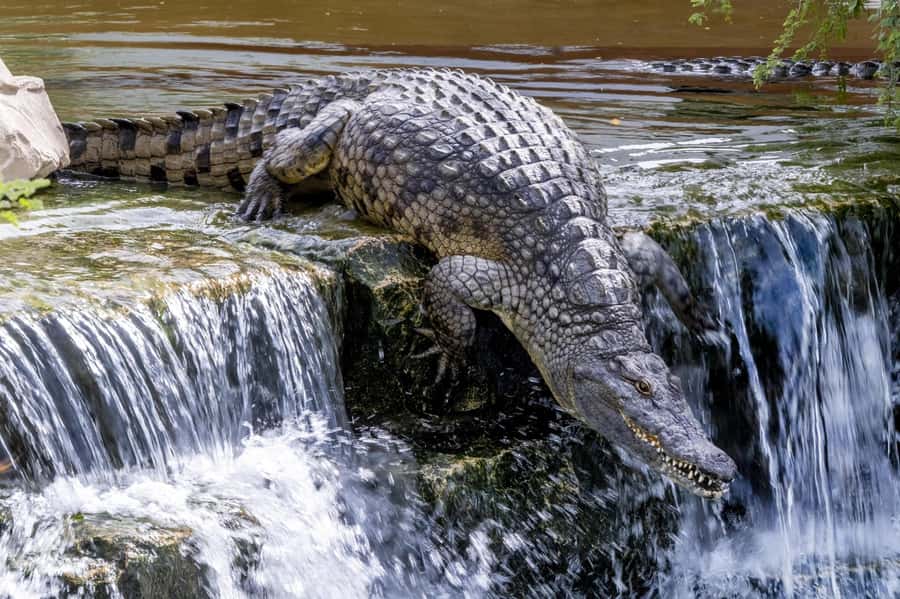
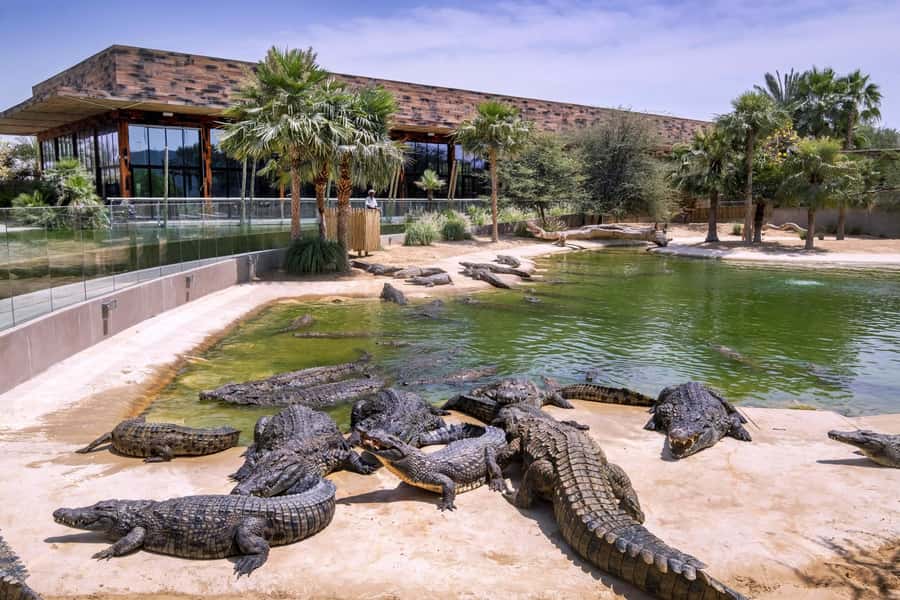
The main reason to come is the crocodile collection. You see Nile crocodiles of different ages and sizes, which gives the visit more variety than a single enclosure with one or two animals.
Look for the difference between animals resting on the banks and those partly submerged in the water. The design gives you several angles, so you can watch from above, beside the water, and through the aquarium-style underwater area. That change of viewpoint is important because crocodiles can appear almost motionless from one side and much more imposing from another.
The park includes lakes, islands, waterfalls, and sandbanks. These features are not just decoration. They break up the viewing areas and provide places for the crocodiles to rest, swim, and move between sections. The African theme also helps set the animals in a more relevant setting than a plain concrete enclosure.
Do not expect constant action. Crocodiles are often still, and that stillness is part of the lesson. You will get more from the visit if you watch for posture, position in the water, and the way different-sized animals use the available space.
The staff are a major part of the experience. They are positioned around the park and can offer explanations rather than leaving you to guess what you are looking at. Several visits have included staff-led walks or informal guided explanations, and the repeated praise for their friendly approach is easy to understand as a practical benefit. You can ask questions as you go instead of trying to absorb every display on your own.
The Natural History Museum and crocodile evolution
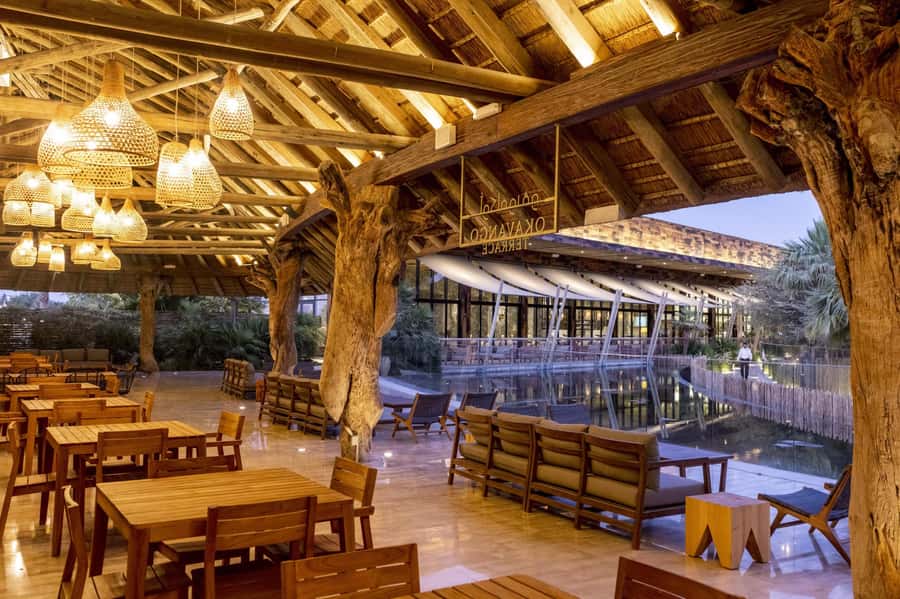
The museum gives the park its strongest educational layer. It traces the crocodile family’s journey across approximately 200 million years, helping you see these animals as more than a modern-day curiosity.
I especially like this section for families with older children and teenagers. A live crocodile is memorable, but the museum explains why crocodiles look and behave as they do. It also gives context to the conservation message, showing that this is an ancient group of animals with a long story behind it.
The museum is also a good answer to the question of value. If you only walked past the enclosures, the visit might feel short. Adding the museum turns the outing into a small lesson in natural history. One visitor found this part particularly interesting because crocodile evolution is not a subject commonly covered in standard sightseeing programs.
Do not expect a huge national museum. The facility is part of the park, and the experience remains compact. That is fine for a focused visit, but you should not plan your whole day around the museum alone.
Same base, a different sort of day:
- Dubai: Safari, Quad Bike, Camel Ride, and Buffet Dinner
★ 4.9 · 33,424 reviews - Dubai: Red Dune Safari, Quad Bike, Camel Ride, BBQ Dinner
★ 4.9 · 32,185 reviews - Dubai: Premium Safari, Camel Ride & Al Khayma Camp 3-Buffets
★ 4.9 · 30,335 reviews - Dubai: Burj Khalifa Sky Level 148, 124, & 125 Entry Ticket
★ 4.6 · 23,827 reviews
The African lake-themed aquarium
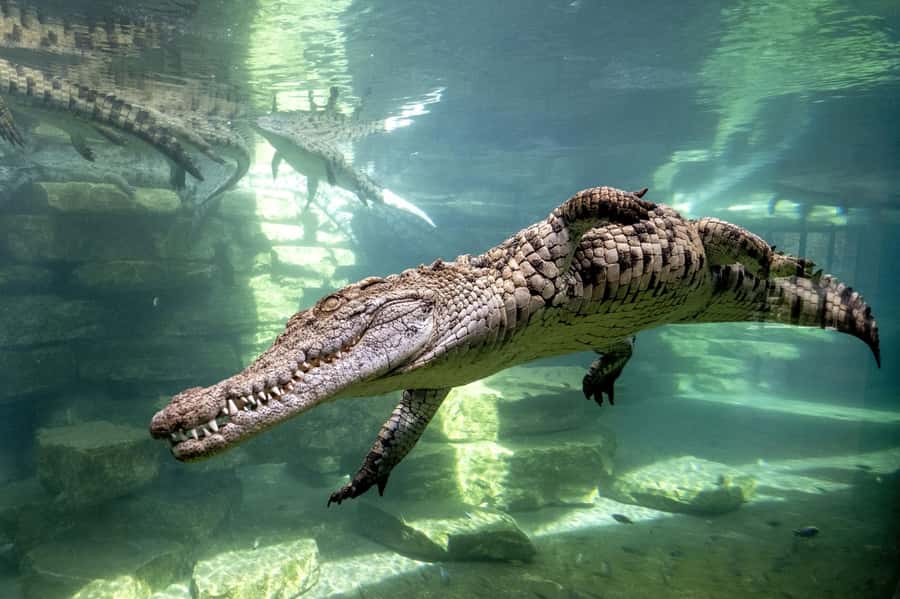
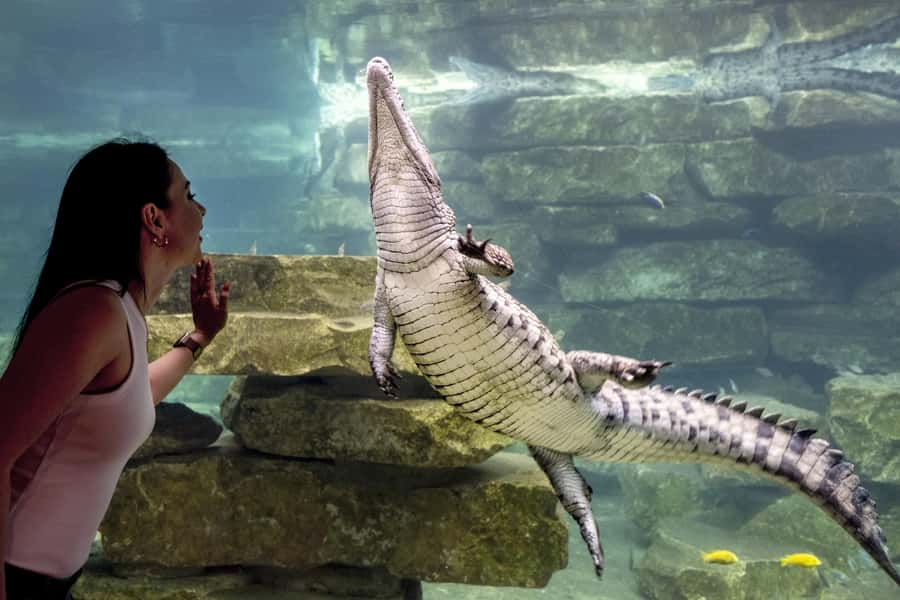
The underwater section changes the way you see the crocodiles. From above, a crocodile can look like a log with eyes. Underwater viewing reveals more of the animal’s shape and movement, even when it is not actively swimming.
This is a useful stop for children because it gives them a clear visual difference between crocodiles on land and crocodiles in water. It also supports the park’s wider point: water is not just a backdrop, but a central part of crocodile life.
The aquarium is described as African lake-themed, so it fits the wider setting rather than feeling like an unrelated exhibit. You move through several viewing areas instead of standing at one fence for the entire visit.
As with the outdoor sections, timing matters. The animals may be resting, and no attraction can guarantee constant movement. Give yourself time to look, rather than expecting a show every few minutes.
Staff talks, baby crocodiles, and feeding times
The staff interaction is one of the best reasons to buy an entry ticket rather than simply viewing crocodile photographs elsewhere. Staff have explained the animals’ habits, answered questions, and sometimes walked families around the park.
Some admission visits have included the chance to hold and gently touch a baby crocodile. This was a favorite moment for several families, especially children. I would not treat it as a guaranteed feature at every visit, since animal handling depends on the day, the staff, and the park’s arrangements. Ask when you arrive rather than promising it to a child in advance.
One visit also noted feeding sessions on Friday, Saturday, and Sunday around midday. Feeding schedules can change, so check the official website or ask the park before planning your arrival around one. If a feeding session is taking place, it can add movement and help you understand how the crocodiles respond to food. If not, the regular viewing areas and staff explanations remain the core experience.
This is also where the park’s safety approach matters. The facility uses controlled water and high safety standards, and the staff manage the interaction. You should follow every instruction, keep children close, and avoid treating a crocodile like a pet simply because a young one may be handled during a supervised activity.
How long you need and when the price makes sense
The ticket is listed at $17 per person, with children under three free. For a clean, focused wildlife attraction with 250 crocodiles, a museum, an aquarium area, and staff explanations, that is reasonable value.
The price makes the most sense in three situations. First, it suits families who want a manageable outing without committing to a huge theme park. Second, it works for people interested in reptiles and natural history. Third, it is a good choice when you have already seen Dubai’s major landmarks and want an activity that feels less predictable.
The calculation changes if you expect a full day. The official validity is one day, but that does not mean you will need the entire day. Some people complete the main route in about an hour. You may stay longer if you read every display, take your time at the viewing points, speak with staff, or catch a feeding session.
That short duration is not necessarily a flaw. It means you can pair the park with another Dubai activity. Just avoid booking it as the only major event in a full day unless crocodiles are your main interest.
Families, teenagers, and serious animal fans
Families with younger children are a natural match. The route is compact, the animals are easy to see, and the museum gives children something to learn beyond simply looking at crocodiles. The reported baby-crocodile handling can be a memorable extra, though again, it should not be promised before arrival.
Teenagers may enjoy the park more than they expect, especially if they already like reptiles or unusual wildlife. The underwater viewpoint and the contrast between young and adult crocodiles give the visit enough variety to avoid feeling like a single enclosure.
Adults interested in ecology and conservation will get more from the educator-led explanations and museum displays. The park is not only about taking photographs. It gives you information about behavior, evolution, and the effort to protect crocodiles.
I would be less likely to recommend it to someone who wants a long, action-packed attraction. The crocodiles may be inactive, the route is not huge, and there is no promise of a scheduled show in the information provided. This is a quiet observation visit, not a performance.
Practical advice for a smoother visit
Check the official website for opening hours before you go. The available starting times can change, and the park specifically advises checking daily hours.
If you are interested in feeding, ask about the schedule before setting out. One reported pattern placed feeding around midday on Friday, Saturday, and Sunday, but you should confirm it rather than rely on that timing.
Allow at least an hour for the main route, then add time for the museum, aquarium, questions, and photographs. If you are traveling with small children, the compact size is helpful, but keep the pace relaxed and do not rush the viewing areas.
Bring your own plan for transport, food, and drinks. None of those are included in the ticket. A cafe and gift shop have been described as reasonably priced, but you should still treat them as optional extras rather than part of the admission.
Book with some flexibility if your Dubai schedule is uncertain. Cancellation is free up to 24 hours before the visit, and the reserve-now, pay-later option lets you hold a place without paying immediately. Those terms are useful when weather, flights, or family plans are still moving.
Should you book Dubai Crocodile Park?
I would book it if you want a short, well-organized animal visit with real educational content. The strongest reasons are the large range of crocodile ages and sizes, the underwater viewing area, and the staff who explain what you are seeing.
I would also recommend it for families, reptile fans, and anyone who has a spare hour between larger Dubai attractions. At $17, the combination of live animals, museum displays, and several viewing areas offers solid value.
I would skip it if you need an all-day attraction or expect constant animal action. The park is compact, and the crocodiles may spend much of their time resting. For the right visitor, though, that is part of its appeal: you get close, slow down, and learn why these ancient reptiles are worth protecting.
FAQ
How much does admission to Dubai Crocodile Park cost?
The ticket costs $17 per person. Children under three are free of charge.
How long does a visit to Dubai Crocodile Park take?
The ticket is valid for one day, but the main park can take about an hour to walk around. You may spend longer if you visit the museum, aquarium area, and viewing points at a relaxed pace.
How many crocodiles are at the park?
The park is home to 250 Nile crocodiles of different ages and sizes.
Is Dubai Crocodile Park suitable for wheelchair users?
Yes. The park is wheelchair accessible.
Are food, drinks, and hotel transfers included?
No. The ticket includes entry to Dubai Crocodile Park only. Hotel pickup and drop-off, food, and drinks are not included.
Do children need an accompanying adult?
Yes. Children under 12 must be accompanied by an adult. You should also check the official website for the park’s daily opening hours before visiting.
Just added in Dubai
- From Dubai: Zerzura Dune Buggy Experience & Fossil Discovery★ 4.9 · 48 reviews
- From Dubai/Sharjah/RAK: Dibba Musandam Trip & Dhow Cruise★ 4.4 · 232 reviews
- From Dubai: Hatta Sightseeing Tour with kayaking★ 4.9 · 53 reviews
- From Dubai: Try Scuba Diving, Snorkeling with BBQ & Transfer★ 4.9 · 22 reviews
- From Dubai to Norway of Arabia|Telegraph Island| Dhow Cruise★ 4.9 · 91 reviews
- Dubai: Desert Safari, Camel Ride, and BBQ Dinner★ 4.0 · 192 reviews
- From Dubai: Discovery Scuba Diving & Snorkeling In Fujairah★ 4.9 · 93 reviews
- From Dubai: Fujairah Half-Day Scuba Dive and Snorkeling★ 4.7 · 186 reviews
Tours in Dubai, compared.

Burj Khalifa Levels 124 & 125 Entry Ticket + Options
Read our review →
Desert Safari, Quad Bike, Camel Ride & Al Khayma Camp
Read our review →
Desert Safari, Quad Bike, Camel Ride and Sandboarding
Read our review →
Safari, Quad Bike, Camel Ride, and Buffet Dinner
Read our review →
Red Dune Safari, Quad Bike, Camel Ride, BBQ Dinner
Read our review →
Premium Safari, Camel Ride & Al Khayma Camp 3-Buffets
Read our review →
Burj Khalifa Sky Level 148, 124, & 125 Entry Ticket
Read our review →