
Reviewed · JERUSALEM & BETHLEHEM TOURS
2024 Jerusalem & Bethlehem from Ashdod Port Small Groups
Jerusalem and Bethlehem in one day is a bold plan, but this tour makes the most of a cruise stop. You’ll move from the Mount of Olives and Gethsemane to the Western Wall, Via Dolorosa, Church of the Holy Sepulchre, and Bethlehem’s Church of the Nativity, all with port pickup built around your ship.
I like the small-group limit of 18 and the fact that the day includes both major religious centers rather than just Jerusalem. I also like the licensed English-speaking guide, since these sites make far more sense when someone explains the Jewish, Christian, Roman, and modern context. The catch is simple: this is a packed day, and lunch is not included.
Key points to know before booking
- Ashdod port pickup is timed to your ship, with the guide waiting at the arrival-terminal exit under a COMPASS sign.
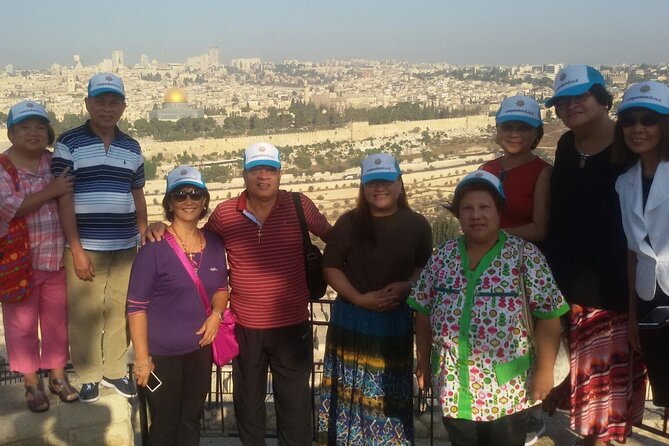
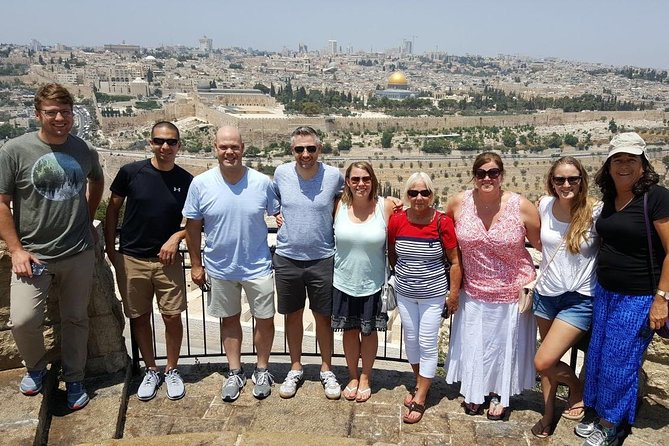
- Mount of Olives views give you the best broad introduction to Jerusalem before you enter the crowded Old City.
- The Old City walk lasts about two hours, covering the Armenian and Jewish quarters, Cardo, Western Wall, Via Dolorosa, and Christian Quarter.
- Bethlehem adds a second country and a second major pilgrimage center, including Shepherds’ Field, Manger’s Square, and the Church of the Nativity.
- The group can reach 18 people, small enough for a personal feel but large enough that a microphone would be useful in busy streets.
- You need modest clothing, with shoulders and knees covered for religious sites.
Why this port tour is worth considering
At $225 per person, this is not a cheap shore excursion. But the price covers a long round-trip transfer from Ashdod, a full day of guiding, an air-conditioned vehicle, and two major destinations that are difficult to combine on your own during a single port call.
The real value is time. You do not need to arrange a port taxi, work out the route to Jerusalem, find a guide in the Old City, or figure out the Bethlehem transfer. The operator also coordinates the return with your ship’s departure schedule, which matters more than saving a few dollars when your vessel is waiting in Ashdod.
The tour runs about eight to ten hours, depending on the ship’s schedule. That gives you enough time to see the headline sites, but not enough time for a slow museum visit, a long café stop, or aimless wandering through the market lanes. I would book this for access and structure, not for a relaxed pace.
The group limit is 18. Some departures may be smaller, and one group was reported at 10 people, which is a pleasant size for a day like this. Still, expect some time spent gathering people at busy corners and religious sites. One useful criticism is that a microphone and earpieces would help in noisy parts of Jerusalem.
More old-city days from Israel:
- From Tel Aviv: Jerusalem and Bethlehem Guided Day Trip
★ 4.3 · 1,316 reviews - Tel Aviv: Jerusalem, Bethlehem & Dead Sea
★ 4.0 · 881 reviews - From Tel Aviv: Guided Day Trip to Nazareth & Sea of Galilee
★ 4.4 · 824 reviews
Starting at Ashdod Port
Your day begins at the Port of Ashdod. The guide is scheduled to meet you at the exit of the arrival terminal with a COMPASS sign, then gather the full group before leaving the port.
You must provide your ship name, docking time, disembarkation time, and re-boarding time when booking. This is not paperwork to brush aside. The tour is built around ship movements, and the operator needs those details to plan the pickup and return.
The ride is in an air-conditioned vehicle. That is welcome after a ship disembarkation and especially useful during warmer months. The drive also gives you a chance to see how quickly the setting changes as you leave the coast and head inland toward Jerusalem.
The meeting point is clear on paper, but port pickups can be stressful if several tour groups gather at once. Go directly to the arrival-terminal exit and look for the COMPASS sign. Keep the company contact details handy and avoid wandering off to another pickup area.
The Mount of Olives gives Jerusalem its shape
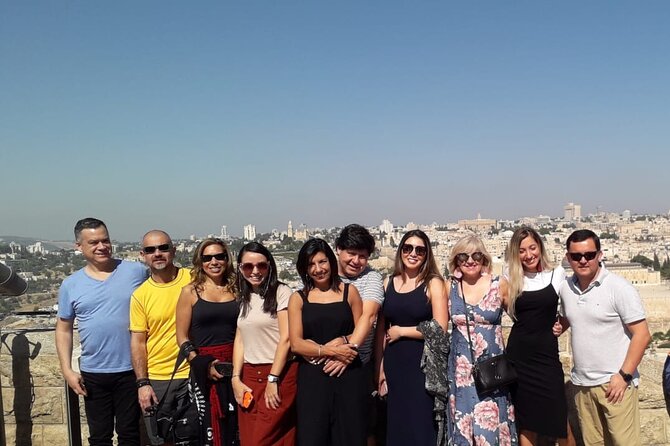
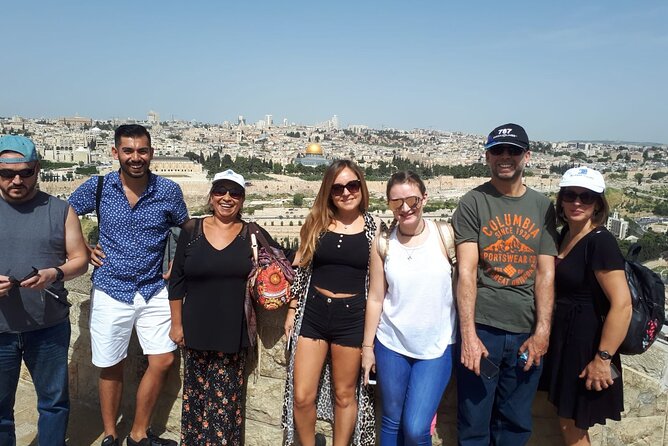
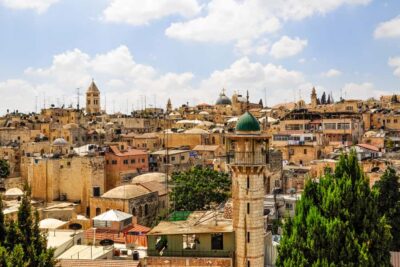
The first major stop is the Mount of Olives, where you look across toward Jerusalem and the Temple Mount. This opening view is more than a photo stop. It helps you understand the city’s layout before you enter its tight lanes.
From here, the Old City appears below, with the Temple Mount at its center and the Judean Desert stretching eastward. The mount also carries major importance in Christian tradition, including the account of Jesus’ ascension in the Acts of the Apostles.
You get about 30 minutes here. That is enough for the panorama and an introduction from the guide, but not for a long walk through the surrounding churches or cemeteries. Bring a hat and water if the weather is warm, since the stop is focused on the open view.
At the foot of the mount, the group visits the Garden of Gethsemane. The small olive groves here are associated with the Gospel accounts of Jesus praying and being arrested before the crucifixion. Several nearby church properties identify parts of the area with biblical Gethsemane, so your guide’s explanation helps separate religious tradition from what can be proved through archaeology.
This is another 30-minute stop. You will have time to look around and absorb the setting, but do not expect a long, quiet garden visit. The schedule has many major sites still ahead.
Mount Zion links scripture, tradition, and debate
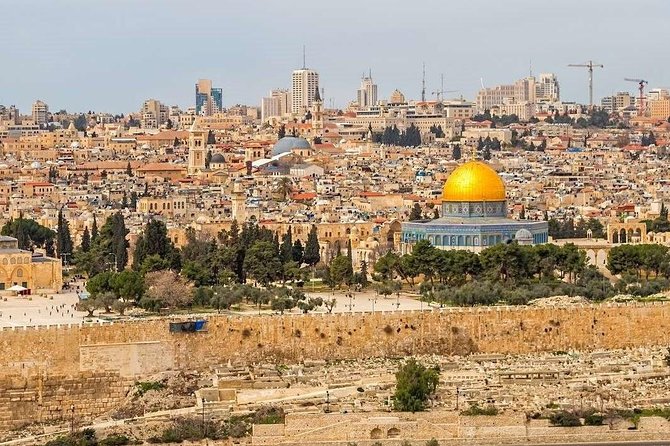
Mount Zion brings the tour to King David’s Tomb and the Room of the Last Supper. The hill has a powerful place in Jewish and Christian tradition, but the labels on these sites deserve some care.
King David’s Tomb is considered one of Judaism’s sacred places, though researchers cannot confirm that David is buried there. Biblical references place his burial in the City of David, below the Temple Mount. This tension between faith, tradition, and historical evidence is exactly the kind of thing a good guide can explain without flattening the story into a simple answer.
The Room of the Last Supper is also a traditional site rather than a proven location. You’ll have about 30 minutes at Mount Zion, so this is a brief visit with a strong religious focus. It suits you best if you want to understand why the places matter, even when the evidence is uncertain.
Same base, a different sort of day:
- From Tel Aviv: Masada & Dead Sea Full Day Tour with Pick Up
★ 4.5 · 1,496 reviews - Masada and the Dead Sea Day Trip from Tel Aviv
★ 4.5 · 1,014 reviews - From Tel Aviv: Jerusalem Old & New City Bus Tour
★ 4.2 · 824 reviews - From Jerusalem: Masada & Dead Sea Full Day Tour with Pick Up
★ 4.5 · 815 reviews
Walking the Old City and its Roman Cardo
The Old City is where the day becomes most physical. You enter through the Armenian and Jewish quarters and walk along the Cardo, a Roman and Byzantine street uncovered and restored in the Jewish Quarter.
The southern Cardo dates from the reign of Emperor Justinian, between 527 and 565. It once helped connect important churches in Byzantine Jerusalem, including the Church of the Holy Sepulchre and the Nea Church. The surviving colonnaded section gives you a clear sense that Jerusalem is not just a biblical city. Roman and Byzantine layers sit under and beside the living neighborhoods.
The Old City portion is scheduled for about two hours. That is a solid amount of time for an overview, but the walk can feel fast because the group has several major stops to cover. The lanes are narrow, the route is uneven in places, and religious sites can have lines or crowding.
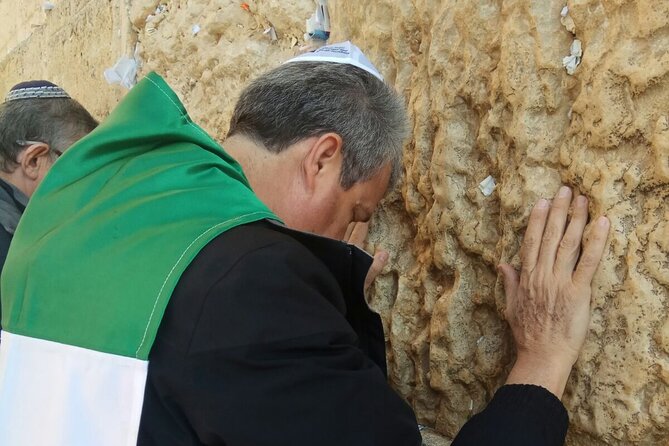
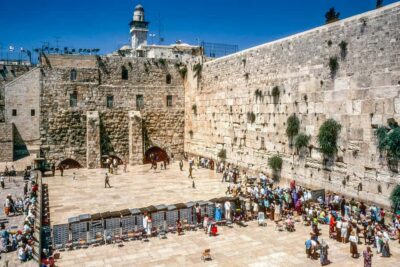
You will also see the Western Wall, known in Hebrew as the Kotel. It is a remaining section of the larger retaining wall around the Temple Mount. Its importance in Judaism comes from its closeness to the Temple Mount, where entry rules restrict access. For Jewish prayer, the Western Wall is the most accessible sacred point near the mount.
Give this stop the attention it deserves. The wall is not simply an old stone façade. People come here to pray, touch the stones, and place written prayers in the cracks. You should dress and behave quietly, and follow any directions from the guide or site staff.
Via Dolorosa and the Church of the Holy Sepulchre
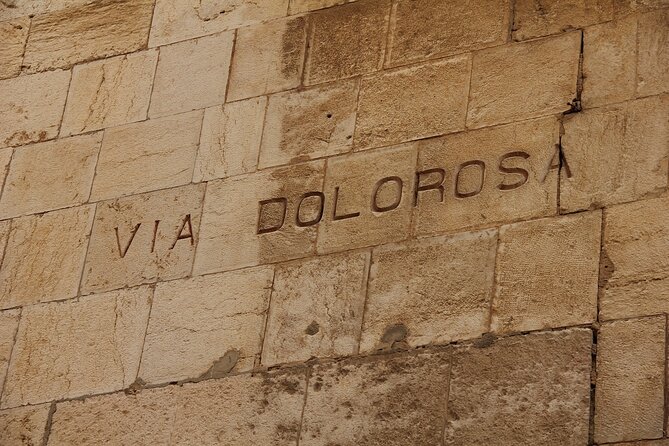
From the Jewish Quarter, the route continues into the Christian Quarter and along the Via Dolorosa. This narrow processional way represents the path Jesus is believed to have taken toward crucifixion under Roman guard.
The route is crowded with shops, homes, religious markers, and visitors moving in both directions. That contrast is part of the experience. This is not an empty ceremonial path preserved behind glass. It is a working part of the Old City, and the religious meaning unfolds among everyday movement.
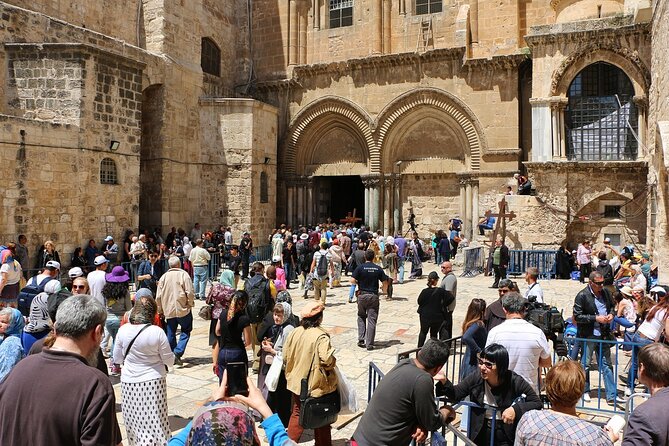
The walk is scheduled for about an hour, followed by another hour at the Church of the Holy Sepulchre. The church is sacred to millions of Christians because tradition identifies it as the site of Jesus’ crucifixion, burial, and resurrection.
Inside, the experience can feel intense and confusing, especially during busy periods. Several Christian communities share responsibility for the church, and the building contains chapels and shrines from different traditions. Your guide’s commentary is especially useful here, since the significance is not always obvious from the architecture alone.
Allow yourself a little patience. You may not get a long, private moment at every shrine, and the group must keep moving to stay on schedule. Even so, this is one of the day’s most important stops for anyone interested in Christian history or pilgrimage.
Bethlehem adds a different tone
After Jerusalem, the tour continues to Bethlehem. The plan includes an overview of Shepherds’ Field, a visit to the Church of the Nativity, and time at Manger’s Square.
The Church of the Nativity contains a grotto traditionally identified as the birthplace of Jesus. The Gospels of Matthew and Luke place Jesus’ birth in Bethlehem, and the grotto has been used as a Christian worship site for centuries.
The setting is less like a Christmas card than many first-time visitors expect. The church is old, active, and shaped by generations of worship, repairs, and competing religious traditions. Lines can affect how much time you have inside, so keep your expectations realistic.
The Bethlehem portion also gives you a second guide perspective. An additional local guide may lead part of the visit, adding local context to the church and surrounding area. Past departures have included guides named Yaniv, Avi, and Abraham, with Abraham especially noted for combining biblical history with modern Israeli context. Guide assignments can vary, so do not book based on one particular name.
Lunch is not included. Some departures have included a restaurant meal that was considered good quality but pricey, while another dining choice was poorly received. I would ask what lunch plan is available on your departure and keep enough time in mind for eating without turning the meal into a rushed stop.
What the schedule means for you
This is a full sightseeing day, not a leisurely Jerusalem stroll. You will cover several sites with only short breaks, then return to Ashdod for the ship.
The advantage is clear: you see the main religious landmarks in both cities without having to choose between Jerusalem and Bethlehem. The downside is that you will leave with an overview rather than a complete understanding of either place. You will not have much time for museums, shopping, independent prayer, or sitting down to study one site at length.
I would wear firm walking shoes and bring water. Modest clothing is required at places of worship and selected museums. Shorts and sleeveless tops are not allowed, and both men and women must cover their knees and shoulders. Smart casual clothing is the safe choice.
Most people can participate, but the day includes walking through old stone streets and standing at major sites. If you have mobility concerns, ask the operator before booking, since the supplied details do not promise a specific accessibility arrangement.
How the $225 price holds up
The $225 cost makes sense if you value a planned route and ship-safe transport. You are paying for the vehicle, port pickup and return, an English-speaking government-licensed guide, and the ability to combine two major destinations in one day.
Food and drinks are extra, and there is no separate entrance charge listed for the scheduled stops. That keeps the cost fairly direct, but you should budget for lunch and perhaps drinks along the way.
A private tour would offer more control, but this small-group option is a more moderate choice for a cruise passenger. At its best, a group of 10 or so gives you a personal guide without the full cost of a private car. At the maximum of 18, it may feel less intimate, especially inside the Old City.
The strongest part of the value is the return transfer. Missing a ship is an expensive mistake. A tour that tracks your anchoring and re-boarding times gives you useful protection, though you should still follow the operator’s meeting instructions closely.
Who should book this tour?
Book it if you want to see the main Jerusalem and Bethlehem sites during one Ashdod port call, prefer an organized day, and value religious and historical explanation more than free time.
It suits first-time visitors who want a broad introduction, cruise passengers who do not want to arrange transport, and anyone especially interested in biblical locations. The guides can add useful context about modern Israel as well as scripture and ancient history.
Think twice if you dislike fixed schedules, crowded religious sites, or long days in a vehicle. You should also choose another plan if your priority is shopping, museums, food, or slow photography.
For most cruise passengers, I would consider it a strong use of a demanding port day. Just dress correctly, expect a brisk pace, bring lunch money, and treat the experience as an overview of two extraordinary cities rather than a complete visit to either one.
FAQ
How long does the tour last?
The tour lasts approximately eight to ten hours, with the exact timing coordinated with the ship’s anchoring schedule.
Where does pickup take place?
Pickup begins at the Port of Ashdod. The guide is scheduled to wait at the exit of the arrival terminal with a COMPASS sign.
Is return transportation provided?
Yes. Return transportation to Ashdod Port is included and coordinated with the ship’s departure schedule.
What information must cruise passengers provide when booking?
You must provide your ship name, docking time, disembarkation time, and re-boarding time.
Is lunch included?
No. Food, drinks, and lunch are not included in the tour price.
What should I wear?
You need smart casual clothing with your shoulders and knees covered. Shorts and sleeveless tops are not allowed at places of worship and selected museums.
What is the cancellation policy?
You can cancel up to 24 hours before the experience starts for a full refund. Cancellations or changes made less than 24 hours before the start time are not accepted for a refund. If poor weather or an insufficient minimum group size causes cancellation, you will be offered another date or experience, or a full refund.
Just added in Israel
- Ashdod Port Shore Excursion: Jerusalem and Bethlehem Day Tour from Ashdod Port★ 3.5 · 31 reviews
- Ashdod Shore Excursion: Jerusalem and Dead Sea – for cruise ship guests only★ 4.5 · 104 reviews
- Ashdod Port Shore Excursion: Masada and the Dead Sea Day Tour from Ashdod Port★ 4.0 · 29 reviews
- From Tel Aviv/Jerusalem: Galilee, Nazareth, Jordan River★ 4.6 · 93 reviews
- Tel Aviv: Florentin Saturday Walking Tour★ 3.5 · 65 reviews
- Tel Aviv: Pub Crawl and Nightlife Tour with Shots★ 4.6 · 28 reviews
- Tel Aviv: Street Art and Graffiti Tour★ 5.0 · 36 reviews
- Tel Aviv: Jaffa & Carmel Market Walking Tour★ 4.7 · 60 reviews
Jerusalem & Bethlehem Tours, compared.
Masada and the Dead Sea Day Trip from Jerusalem
Read our review →
Day Tour to Jerusalem and Bethlehem from Tel Aviv
Read our review →
Browse the lists this tour appears in