
Reviewed · TOURS IN AMMAN
Full-Day Tour: Umm Qais, Jerash, and Ajloun from Amman
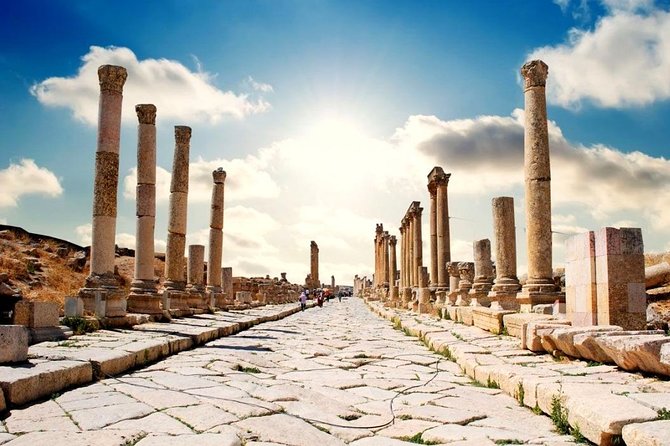
Jerash is the star here: its huge Oval Colonnade, long stone street, theaters, temples, and Hadrian’s Arch give you a strong sense of a Roman city rather than a single leftover monument. I like the private car and flexible pace, and I like having an English-speaking driver who can explain Jordan between stops. Drivers such as Hassan, Mohammad, Amer, and Yousef have been praised for calm driving, useful advice, and thoughtful help along the way.
The catch is distance. Umm Qais is far north, and fitting it with Ajloun and a proper Jerash visit can make the day feel tight, especially since the advertised duration is only six to eight hours. Admission fees and local guides are extra, so confirm the total cost and agree on your preferred route before setting off.
Key points at a glance
- Jerash deserves the most time: Plan to spend your best energy among the Oval Colonnade, Temple of Artemis, Hadrian’s Arch, and ancient theaters.
- Umm Qais adds the big views: From the hilltop ruins, you can look toward the Golan Heights, Lake Tiberius, and the Jordan Valley.
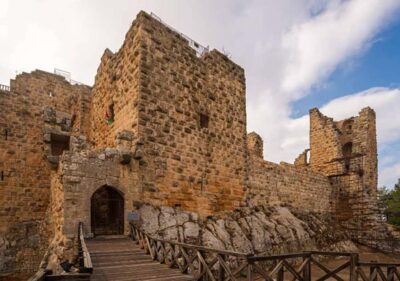
- Ajloun changes the mood: This 12th-century castle offers towers, corridors, a small museum, and a clear look at medieval Arab-Islamic defenses.
- You travel privately: The vehicle is for your group, with a maximum of three passengers, hotel pickup, drop-off, bottled water, and onboard Wi-Fi.
- Guides cost extra: You can explore independently or arrange local guiding, with Jerash guiding available if selected.
- The schedule needs discipline: The listed visits total about three and a half hours before driving, meals, and photo stops are counted.
Three northern Jordan sights in one long day
This tour works because the three stops tell different stories. Jerash shows the scale and confidence of a Greek and Roman city. Ajloun shifts the focus to Islamic military power in the Middle Ages. Umm Qais combines Roman remains with one of Jordan’s broadest viewpoints.
You leave Amman with a private English-speaking driver and head north. The drive itself matters. Several people have appreciated drivers who explain the towns and countryside, answer questions about daily life, and suggest useful stops. Hani, Hassan, Mohammad, Amer, Yousef, and others were praised for being punctual, friendly, and flexible. That personal contact can make a long day feel much easier.
Still, I would not treat this as a relaxed sightseeing day. The supplied duration is about six to eight hours, while the stops are spread across northern Jordan. The scheduled time is 45 minutes at Umm Qais, 45 minutes at Ajloun Castle, and two hours at Jerash. Those numbers leave little room for an unhurried meal or a long walk at every site.
Other trips people book in Amman:
- Amman: Petra, Wadi Rum, and Dead Sea 2-Day Tour
★ 4.9 · 1,173 reviews - 2-Day Tour: Petra, Wadi Rum, and Dead Sea from Amman
★ 5.0 · 1,141 reviews - From Amman: Petra & Wadi Rum Private or group Day Tour
★ 4.9 · 750 reviews
Jerash: give the Roman city your best hours
Jerash was known in antiquity as Gerasa. It began as a Greek foundation associated with Alexander the Great around 331 BC, then grew after Roman control began in 63 BC. It later became one of the Decapolis cities, a group of major urban centers in the eastern Roman world.
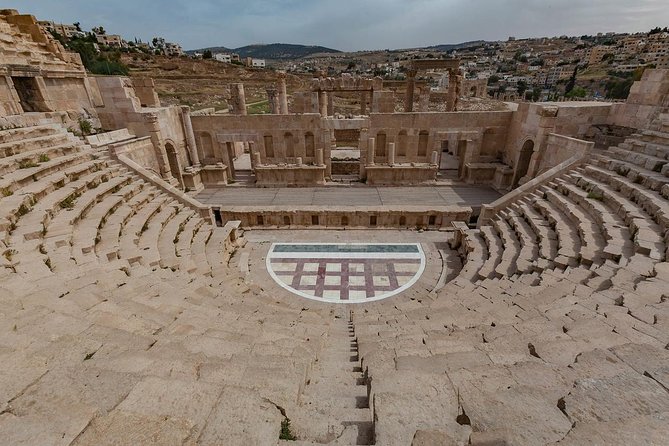
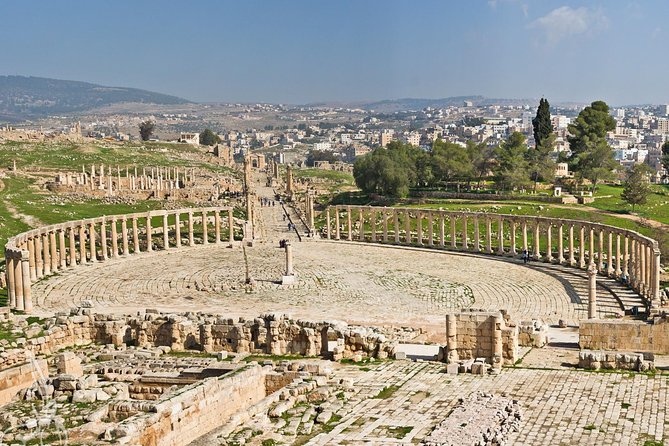
The site is large enough to reward a proper visit. You enter past Hadrian’s Arch, built in the second century, and can continue toward the Hippodrome, which once held about 15,000 people. The Oval Colonnade is one of the most memorable views, with columns curving around a broad open space.
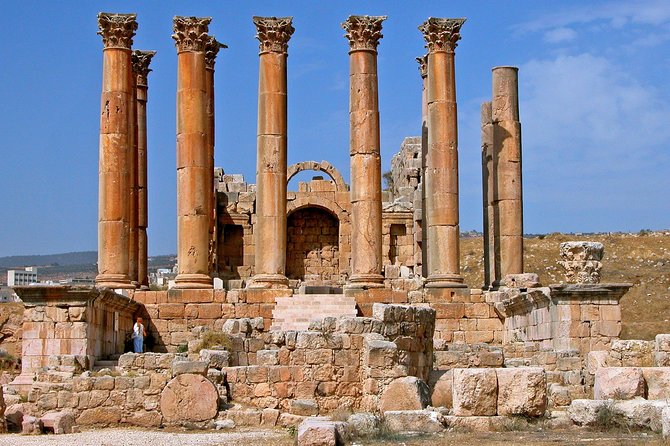
From there, the Colonnaded Street leads you through the heart of the ruins. You can see bathhouses, plazas, temples, and worn paving stones that make the city feel like a connected place rather than a collection of scattered walls. The Temple of Artemis is another major stop, especially for its tall Corinthian columns and sense of scale.
I would arrange a guide at Jerash if your budget allows. You can walk through the site alone, but the layout is extensive and the meaning of each area is not always obvious. A local guide can help you understand how the streets, public spaces, temples, and entertainment buildings fitted together. One particularly praised guide, Hakam Zatayma, was described as personable, clear in English, and deeply interested in the area.
Two hours is enough for a strong first look, but it may feel short if you enjoy archaeology or photography. One person who spent time here strongly advised allowing three hours and carrying plenty of water. That is sensible advice. The ruins are exposed, and you may be walking over uneven ground while stopping often for pictures.
The site has an archaeological museum with excavated objects, though the main attraction is the open-air city itself. I would not rush Jerash simply to gain a few extra minutes elsewhere. If the schedule begins to slip, ask your driver how much time remains and decide which areas matter most to you.
Ajloun Castle: a compact medieval fortress
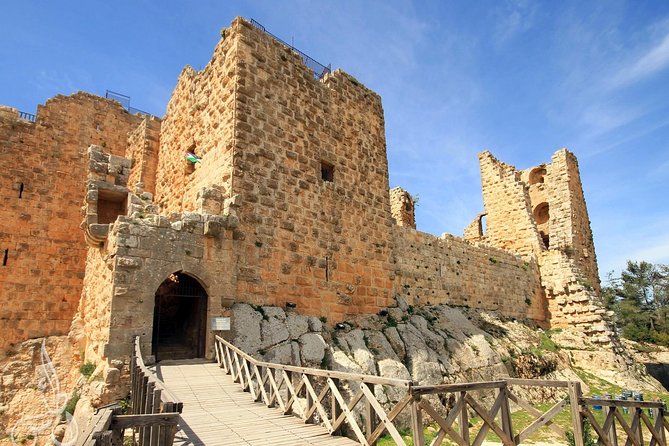
After Jerash, the route continues to Ajloun Castle, also called Qala’at ar-Rabad. The fortress was built in the 12th century by forces connected with Saladin to guard against Crusader attacks. Its hilltop position allowed it to watch three important passages into northwest Jordan.
Ajloun feels very different from Jerash. Instead of broad Roman streets and open plazas, you move through defensive architecture: towers, corridors, thick walls, and enclosed rooms. The castle is a good middle stop because it changes the pace and gives you a strong view over the surrounding area.
The visit is listed at about 45 minutes. That is enough for a concise walk through the fortress and its small museum, but not enough for a slow examination of every corner. You will want sturdy shoes and a little care on steps and uneven surfaces. The castle is worth seeing, but it is not the reason to book this tour if your main interest is classical archaeology.
I like Ajloun as the bridge between the two Roman sites. It reminds you that Jordan’s past did not stop with Rome. The region remained important because of its routes, hills, and position between larger powers.
Umm Qais: Roman ruins with an exceptional outlook
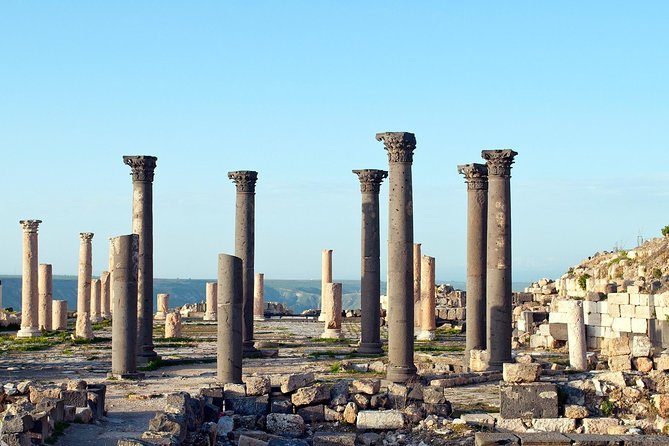
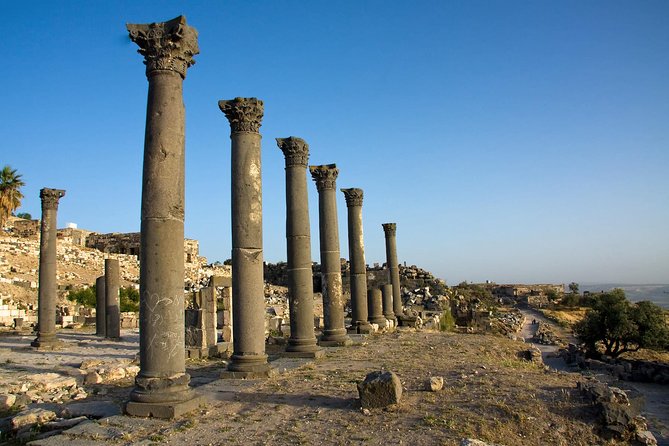
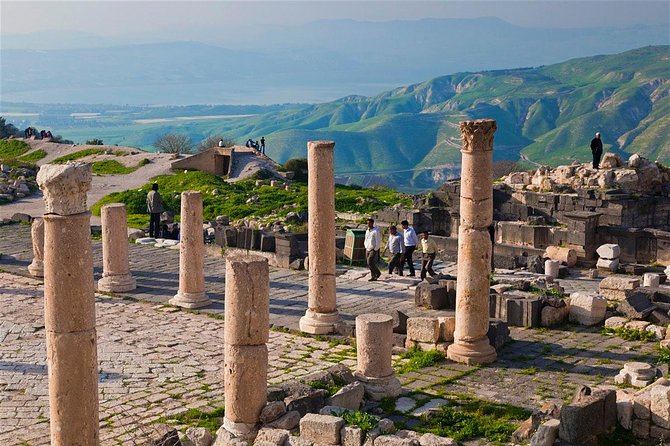
Umm Qais occupies the site of ancient Gadara, another Decapolis city. The remains cover a hillside, and the setting is as important as the stones. From here, you can look toward the Golan Heights, Lake Tiberius, and the Jordan Valley.
The stop includes the Archaeological Museum of Umm Qais, and the ruins include a mausoleum, basilica terrace, theaters, plazas, and other Greco-Roman remains. The site has a different character from Jerash. Jerash gives you the grand urban plan; Umm Qais gives you a high position, wide views, and a quieter sense of a city spread across a slope.
The planned visit is about 45 minutes. That can work if you mainly want the viewpoint and key remains, but it is brief for the museum and the ruins together. If Umm Qais is especially important to you, ask at the start of the day how much time is realistic. One person on this route chose not to visit the final stop because time had run short. That is a useful warning, not a reason to reject the tour.
You can explore independently or arrange a local guide at your own cost. I would consider guiding here if you want help connecting the visible remains to Gadara’s place in the Decapolis. If you are mainly interested in photography and scenery, independent time may suit you better.
Same base, a different sort of day:
- From Amman: Petra and Wadi rum Full day Tour
★ 5.0 · 538 reviews - 2-Day Petra, Wadi Rum and Dead Sea Tour from Amman
★ 5.0 · 467 reviews - 3-Day Private Tour from Amman: Petra, Wadi Rum, Dana, Aqaba, and Dead Sea
★ 5.0 · 425 reviews - Petra Full-Day Private Tour from Amman
★ 4.9 · 392 reviews
Private transport makes the route practical
The main practical benefit is the private vehicle. You are not joining a large coach group, and only your party takes part. The stated maximum is three passengers, so the tour is best for a couple or a small group that values control over the day.
Hotel pickup and drop-off are included from Amman, with the option to finish at a central location of your choice. The package also lists fuel, bottled water, Wi-Fi onboard, private transportation, and an English-speaking driver.
The car quality may depend on the assigned driver and vehicle. Several people described clean, modern, spacious, or comfortable cars. Drivers were often praised for safe, calm driving and for helping with small problems, such as finding an ATM or arranging local food and coffee. Hassan, in particular, was appreciated for buying local snacks and suggesting ways to make the day more personal.
There is also one serious poor account describing unsafe driving, a dirty car, mechanical problems, speeding, and phone use behind the wheel. That is not consistent with the much more favorable experiences, but it is important. If your driver behaves unsafely, speak up at once and contact the provider. A private tour is valuable only when the ride feels secure.
Guides, entrance fees, and the real price
The listed price is $89. The details describe it as a price per vehicle for up to three passengers, while the summary also gives a per-person price. Because those descriptions do not fully match, check the booking screen carefully before paying, especially if you are booking for one, two, or three people.
Admission tickets are not included. Local guides at the sites are also generally at your own expense, although a Jerash guide may be included if you select that option. This matters because Jerash is the place where guiding adds the most value, and the extra costs can change the final budget.
For two or three people, private transport can be good value compared with arranging separate taxis or trying to connect several northern sites by public transport. You also gain hotel pickup, a dedicated driver, and the ability to adjust the order. For one person, the cost is harder to justify unless convenience and privacy matter more than keeping expenses low.
Ask these questions before departure:
- Is the quoted $89 charged per person or per vehicle?
- Is a Jerash guide included in your selected option?
- How much time will be allowed at each stop?
- Are entrance tickets paid directly at each site?
- Can you visit Umm Qais if the day is running late?
Those answers will help you compare the tour honestly with other options.
How to make the day work better
Start with a clear plan. The route may be listed in different orders, including Umm Qais, Ajloun, and Jerash or the reverse. The order can affect how much energy you have at the main archaeological site, so tell the driver if Jerash is your priority.
Wear comfortable shoes and bring sunscreen. One person specifically recommended sunscreen after spending time photographing the ruins. Carry water even though bottled water is included, especially if you want to take three hours at Jerash instead of two.
Do not assume that a private tour automatically means a slow tour. Private means your group controls the vehicle, but the route still covers a lot of ground. If you stop for lunch, coffee, shopping, or extra viewpoints, you may have less time at the last site.
The tour can also include personal touches. Drivers have helped with local food, coffee, restaurant suggestions, and questions about Jordanian life. An English-speaking driver is not necessarily a trained archaeological guide, so make a clear distinction between transport commentary and formal site interpretation.
Cancellation is free if you cancel at least 24 hours before the local start time. Changes or cancellations inside that window are not accepted for a refund.
Who will like this northern Jordan day trip
I would choose this tour if you are staying in Amman and want to see more than one northern site without arranging every transfer yourself. It suits couples, families, and small groups who value a private car and can accept a brisk schedule.
It is especially good for people who want variety. In one day, you get classical ruins, a medieval castle, hilltop views, and contact with local drivers who can add context between stops.
I would be more cautious if you want slow archaeology, long museum visits, or extended time at every viewpoint. Jerash alone can fill much of a day, and Umm Qais is too far north to treat as a casual extra. If you want all three sites, begin early if possible and keep meal stops efficient.
Should you book it?
Book this tour if you want a convenient private route from Amman and your priority is seeing the main northern highlights in one day. Jerash is the strongest reason to go, while Ajloun and Umm Qais give the day useful variety.
Before booking, confirm the pricing structure, entrance fees, guide costs, vehicle capacity, and realistic time at each stop. If you can accept a long day and protect enough time for Jerash, this is a strong introduction to northern Jordan. If you prefer a slower pace, choose Jerash and Ajloun alone, or arrange a longer private itinerary that does not force Umm Qais into the final hour.
FAQ
How long does the tour last?
The estimated duration is six to eight hours.
Where does the tour begin and end?
Pickup and drop-off are offered at your hotel or another central location in Amman. The tour ends at a central location of your choice in Amman.
Is the tour private?
Yes. Only your group takes part, and the vehicle is listed for a maximum of three passengers.
What is included?
Fuel, bottled water, an English-speaking driver, hotel pickup and drop-off, onboard Wi-Fi, and private transportation are included. A Jerash local guide is included only if that option is selected.
Are entrance tickets included?
No. Admission fees at the archaeological sites are not included.
Are local guides included?
Local guides are generally at your own expense. A local guide at Jerash may be included if you choose that option when booking.
How much time is planned at each stop?
The itinerary lists about 45 minutes at the Archaeological Museum of Umm Qais, 45 minutes at Ajloun Castle, and two hours at the Jerash ruins.
What can I see at Jerash?
You can see Hadrian’s Arch, the Hippodrome, the Oval Colonnade, the Temple of Artemis, the Colonnaded Street, bathhouses, plazas, and other remains of the ancient city.
What views are available at Umm Qais?
From Umm Qais, you can see toward the Golan Heights, Lake Tiberius, and the Jordan Valley.
What is the cancellation policy?
You can cancel for a full refund up to 24 hours before the experience start time. Cancellations and changes made less than 24 hours before the start time are not accepted for a refund.
Just added in Amman
- Wadi Mujib Siq Trail with Amman Panoramic&Optional Dead Sea Visit★ 4.5 · 46 reviews
- Half Day Tour to Dead Sea From Amman★ 5.0 · 93 reviews
- 2 Days Tour | Petra, Wadi Rum & Dead Sea | Accommodation included★ 5.0 · 28 reviews
- Wadi Al Mujib Adventures From Amman, QAI Airport, Deadsea or Madaba★ 4.0 · 38 reviews
- Private Tour to Visit the Dead Sea★ 5.0 · 33 reviews
- Airport pickup or drop off transfer from or to Amman city★ 5.0 · 59 reviews
- 2-Day Private Tour from Amman: Petra, Wadi Rum Camp & Dead Sea.★ 5.0 · 47 reviews
- Amman Airport Shuttle Service to Multi Destinations★ 5.0 · 30 reviews
Tours in Amman, compared.

3-Day Private Tour from Amman: Petra, Wadi Rum, Dana, Aqaba, and Dead Sea
Read our review →
Browse the lists this tour appears in