
Reviewed · JERUSALEM & BETHLEHEM TOURS
From Jerusalem: Caesarea, Haifa, Acre & Rosh Hanikra Tour
Caesarea’s Roman amphitheater, Haifa’s terraced Baha’i Gardens, and Rosh Hanikra’s wave-cut caves give this day a wide sweep of northern Israel. You move from ancient port to mountain shrine to sea grotto, then finish in Acre, a living old city with Crusader walls and busy streets.
I like the range of sights and the fact that entrance fees and Jerusalem hotel pickup are included. I also like the chance to ride the cable car at Rosh Hanikra, a small but memorable break from the coach. Guides such as Omri have earned warm praise for bringing the historical stops to life.
The tradeoff is clear: this is a long day with an early 5:40 AM pickup, a great deal of road time, and no food or drinks included. One rating specifically found the price very high for the amount of driving, so you should book it for convenience and coverage, not for a slow, relaxed visit.
Key points to know before booking
- Four major stops in one day: Caesarea, Haifa, Rosh Hanikra, and Acre.
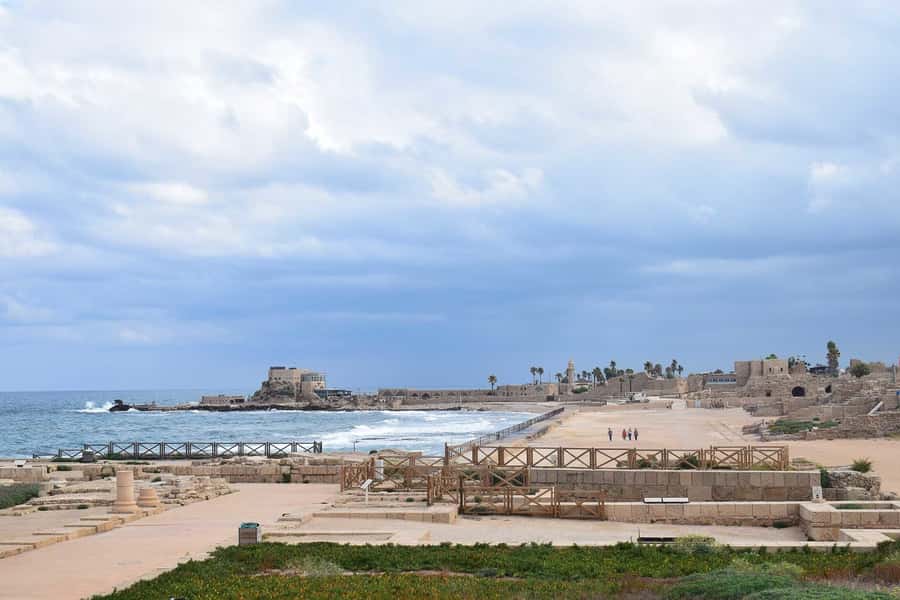
- Roman Caesarea comes first: See the amphitheater, Hippodrome, temple remains, moat, walls, gates, and old rooms.
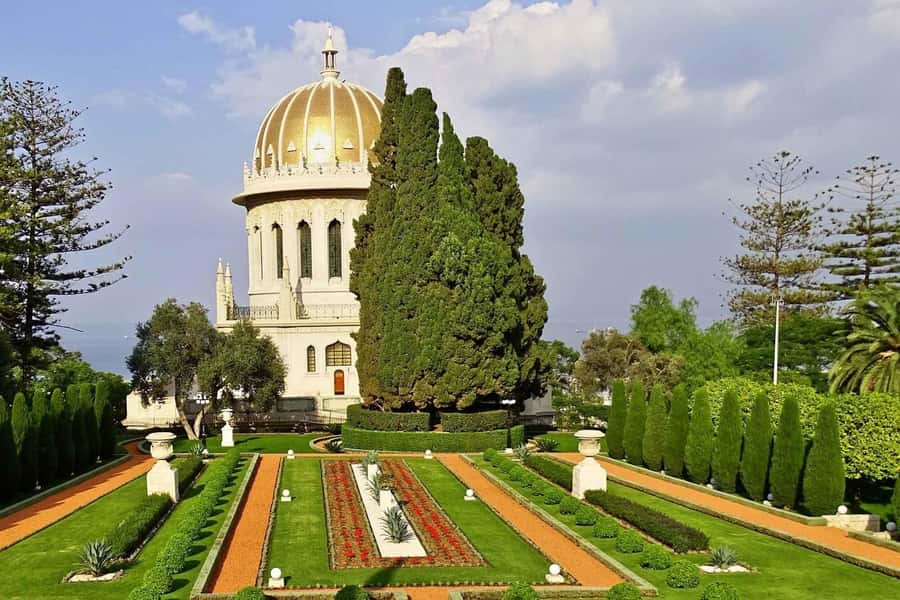
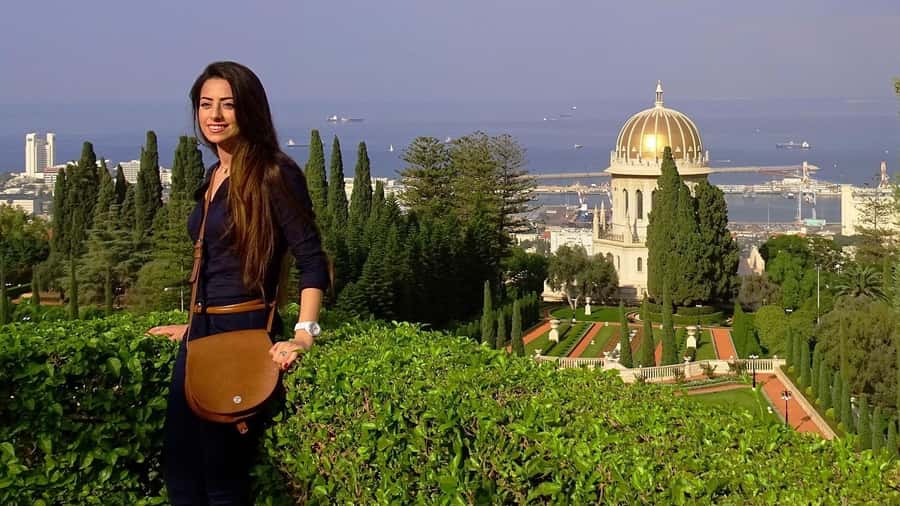
- Haifa’s Baha’i Gardens are viewed from Mount Carmel: The 19 terraces run down toward the city.
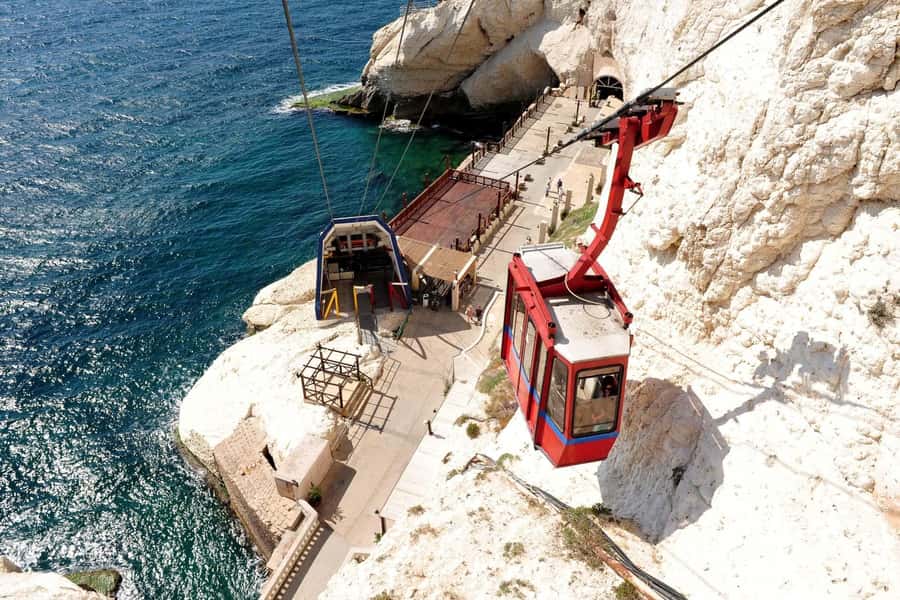
- Rosh Hanikra includes a cable-car ride: Descend into limestone caves shaped by the sea.
- Acre adds Crusader and modern history: See the old walls, moat, underground remains, prison, and British Mandate gallows.
- The schedule is demanding: Pickup is at 5:40 AM from Jerusalem main hotels, and meals are not included.
Why this northern coast day works
This tour is designed for you if you have only one free day and want to cover northern Israel without arranging several separate trips. The route links sites that feel very different from one another, which keeps the day from becoming a blur of similar ruins.
You start on the Mediterranean coast and pass through the areas around Herzliya and Netanya before reaching Caesarea. From there, the route continues north to Haifa and Rosh Hanikra, then turns south to Acre before returning to Jerusalem.
That routing makes geographic sense, but it also creates a packed schedule. You are not getting a deep visit to any one city. Instead, you get a carefully selected first look at four important places, with a guide handling the driving, entrances, and historical background.
The air-conditioned coach matters here. Northern Israel is far from Jerusalem, and the day involves enough road time that independent driving would add planning and navigation work. The included guide also helps connect the stops, especially when you move from Roman history to the Crusades, Ottoman rule, and the British Mandate.
More old-city days from Jerusalem:
- From Jerusalem: Masada & Dead Sea Full Day Tour with Pick Up
★ 4.5 · 815 reviews - Masada and the Dead Sea Day Trip from Jerusalem
★ 4.5 · 757 reviews - From Jerusalem: Nazareth and Sea of Galilee Tour
★ 4.5 · 588 reviews
Caesarea, where Herod built a Roman port
Caesarea is the first major stop, and it gives the day its strongest Roman setting. Herod constructed the city and named it for Caesar, turning it into a major port linked to trade across the eastern Mediterranean.
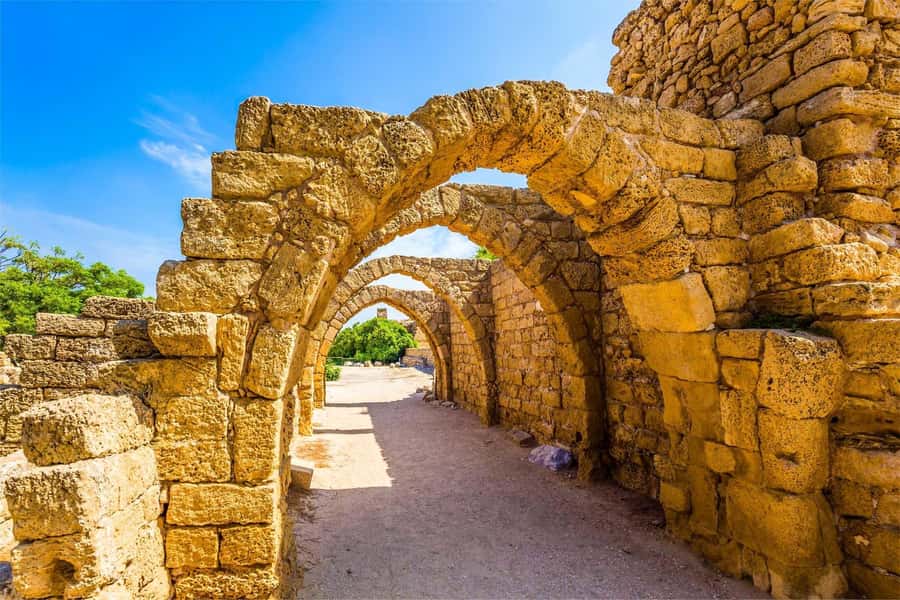
You can expect to see archaeological remains spread through the old city. The site includes gateways, a moat, thick walls, and preserved rooms. These are not isolated stones with little context. Together, they help you picture a planned city built to serve commerce, government, and military power.
The Roman amphitheater is the clear star. Its curved seating and open performance space remain easy to understand, even if you are not an archaeology enthusiast. It is still used for performances by Israeli and international artists, which gives the structure a living connection to the modern country.
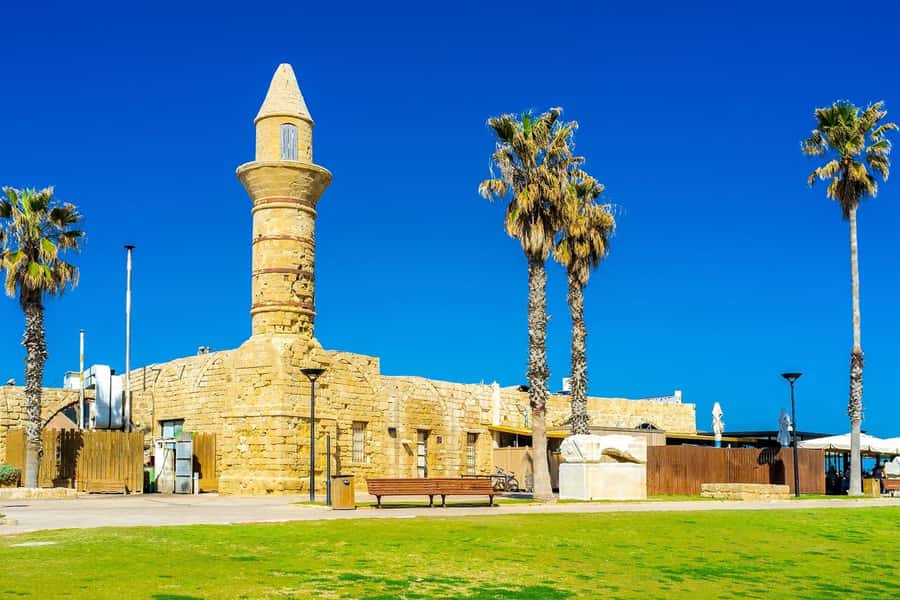
Near the amphitheater are the remains of the Hippodrome and Roman Temple. The Hippodrome was built for public spectacles and racing, while the temple once formed part of the formal Roman setting above the port. Your guide can help explain how these buildings related to the busy harbor below.
The port handled commercial ships carrying goods from the east. Nabatean caravans also traveled toward Rome, giving Caesarea a role in a much wider trade system. That detail helps turn the ruins from a collection of old walls into evidence of a city plugged into imperial commerce.
There is also a striking change in the city’s fortunes. Caesarea was once prosperous, but after the Crusader period it faded from importance and slipped into obscurity. You can feel that contrast as you walk through a place built for power and wealth that later became a ruin.
Allow yourself to look beyond the most famous structure. The walls, rooms, moat, and port setting add meaning to the amphitheater. If you rush straight to the seating area and ignore the surrounding remains, you will miss much of what makes Caesarea special.
Haifa and the 19 terraces of the Baha’i Gardens

The next major view comes in Haifa, where the Baha’i Shrine and gardens climb and descend the slopes of Mount Carmel. The gardens are arranged in 19 terraces, with flowers and carefully planned designs running down toward the city.
This is one of the day’s best visual changes. Caesarea gives you low stone ruins and a Roman port. Haifa gives you a formal garden stretching across a mountain, with the city and coast below. You will want a moment simply to take in the symmetry and scale.
The stop is focused on seeing the shrine and gardens rather than spending a long period wandering every terrace. That distinction matters. If you imagine a full garden visit with extensive walking, you may find this portion brief. If you want a strong viewpoint and a chance to understand why the site is important, the stop works well.
The Baha’i holy places in Haifa and Acre are recognized as UNESCO World Heritage Sites. The gardens are maintained with great care, and their design is meant to create a calm, ordered setting on the mountain. Your guide can provide the basic cultural context while you take in the view.
Bring comfortable shoes even though this is not the most physically demanding stop. The full day includes uneven historical sites, outdoor walking, and the cable-car area at Rosh Hanikra. A pair of shoes that can handle stone surfaces will serve you better than stylish but thin footwear.
Rosh Hanikra and the cable car to the caves

Rosh Hanikra is the northernmost point on Israel’s Mediterranean coast included in this route. Here, the main attraction is not a ruined city or a formal garden. It is the natural rock formation created by waves striking the limestone over time.
The cable car takes you down to a network of sea caves and grottoes. The ride itself is short, but it gives you a sudden change in height and scenery. From the caves, you can see how constant water movement cut openings into the rock.
This is often the most playful part of the day. After several historical explanations, you get a direct encounter with the sea. The sound of the water and the shape of the grottoes offer a welcome change from looking at masonry and archaeological foundations.
The cable car is also one reason to keep the site in your plans even if you are mainly interested in history. You do not simply stop for a distant coastal view. You descend into the rocks and see the formations from close range.
Still, keep your expectations practical. The visit is a stop within a much larger day, not a long coastal walk or an extended nature outing. The experience depends on the cable-car access and the time allowed by the group schedule. You should also expect surfaces that may be wet or uneven, which is another reason to wear comfortable shoes.
Same base, a different sort of day:
- From Jerusalem: Half-Day Bethlehem Guided Tour
★ 4.7 · 568 reviews - Jerusalem/Tel Aviv: Bethlehem, Jericho and Jordan River Tour
★ 4.6 · 526 reviews - From Jerusalem/Tel Aviv: Bethlehem and Dead Sea Day Tour
★ 4.7 · 484 reviews - Nazareth and the Sea of Galilee Day Trip from Jerusalem
★ 4.5 · 446 reviews
Acre, a Crusader city that still functions
Acre, also called Akko, is the final major stop before the return south. It is described as the largest Crusader city in the country, and its appeal comes from the way old structures remain part of an active city rather than sitting apart as a silent archaeological park.
You will see surviving Crusader architecture, old walls, and a moat. The fortifications were reconstructed and repaired by El Jazzar near the end of the 1900s, preserving the defensive character of the city for modern visitors.
The walls also carry a military story. They helped stop Napoleon from conquering Acre, a useful reminder that the city was not merely decorative. Its position and defenses mattered to armies as well as merchants.
Acre’s old streets add texture to the visit. Markets and everyday life continue among ancient buildings, so you can see how a historic center changes when people keep living and working inside it. That is a different experience from Caesarea, where the archaeological remains dominate the setting.
The tour also covers later layers of history. You can visit Crusader remains, a prison used under Turkish rule, and gallows connected with the British Mandate. The gallows relate to the British policy limiting Jewish immigration to Palestine after World War II, and the site offers a sobering reminder that Acre’s history did not end with the Crusaders.
This mix of periods is one of Acre’s strengths, but it can also feel like a lot to absorb near the end of a long day. Listen for the connections between the Crusader city, Ottoman rule, and the British Mandate. Without that framework, the separate buildings can blur together.
The early start and long road time
Pickup from Jerusalem main hotels is scheduled for 5:40 AM. That is early, especially if you are still adjusting to a new time zone or have spent the previous day sightseeing on foot. Plan for a quick morning and have your essentials ready before pickup.
The exact end time is not provided, but the route itself explains why this is a full-day outing. Jerusalem is far south of the northern coastal sites, and you are visiting four separate destinations. One French-language rating described the day as involving a lot of driving, which is a fair warning even for people who enjoy road trips.
You should think of the coach as part of the experience rather than dead time. The road links several major places that would be difficult to combine independently in one day. The price is easier to justify if you value that convenience, the included transport, the guide, and the entrance fees.
The value is less convincing if you prefer slow travel. You may want more time in Acre, a longer stop at Caesarea, or a quieter visit to Haifa. A private or multi-day plan would offer more flexibility, but this group day is simpler and likely more efficient for a first overview.
Food and drinks are not included. Bring water and something to eat, especially because the first pickup is early and the schedule covers a lot of ground. The supplied information does not promise a restaurant stop, so do not assume that lunch will be arranged for you.
Guide quality and what the commentary adds
The guide is important on this route because every stop depends on context. Caesarea’s walls, Acre’s prison, and the Baha’i Gardens are more rewarding when you understand what you are seeing and how each site fits into the region’s past.
The tour is conducted in English. One guide named in the feedback is Omri, who received especially warm praise for the historical explanations. Other ratings also singled out the guide’s ability to explain the places clearly and kindly, so the human side of the tour appears to be one of its better features.
The commentary is not promised to be lengthy at every stop. One French-language rating found the explanations brief. That is worth keeping in mind if you want a lecture-style archaeological tour. You may get a clear overview rather than a detailed discussion of every stone and dynasty.
I would treat the guide’s role as orientation and connection. Use the walking time to ask focused questions about the amphitheater, the Crusader defenses, or the Baha’i site. A good question can make a short stop much more useful.
The overall rating is 4.2 out of 5 from 25 ratings, with strong marks for the guide and the scenery, but also criticism about cost and road time. That fits the nature of the tour: the content is appealing, yet the schedule asks a lot from you.
Who will get the most from this tour

This outing suits you best if you are staying in Jerusalem and want to see the northern coast without changing hotels. It is also a good fit if you enjoy history but want natural scenery and city views mixed into the day.
You will probably appreciate it if you:
- Have only one available day for northern Israel
- Want transport and entrance fees handled in one booking
- Prefer a guided overview to planning several connections yourself
- Enjoy Roman, Crusader, Ottoman, and British Mandate history
- Want to see the Rosh Hanikra caves without arranging a separate trip
- Can handle an early start and a long day on the road
You may want another plan if you dislike coach travel, need a late morning start, or want substantial free time in each city. The tour gives you breadth, not an unhurried local visit.
The route also demands some walking at archaeological sites. No accessibility details are provided, so you should ask the operator directly if you need specific mobility arrangements. The cable car is included, but the information does not explain the exact access conditions at each stop.
Practical value, cancellation, and VAT notes
All entrance fees, air-conditioned coach transport, professional guide service, and pickup and drop-off from Jerusalem main hotels are included. Food, drinks, and insurance are not included.
The tour allows free cancellation up to 24 hours before departure for a full refund. You can also reserve now and pay later, which helps if your plans are still changing.
Diplomatic or foreign passport holders with three-month entry permits are exempt from VAT under Israeli law, but you must provide valid passport details. If that applies to you, check the requirement before booking so there are no surprises.
Since no tour price is provided here, I would judge the cost by what you are buying: one very full day, long-distance transport, a live English-speaking guide, four major stops, the Rosh Hanikra cable car, and entrance fees. If the quoted price feels high, remember that you are paying for coverage and convenience. If you want slow exploration, the same price may feel less satisfying.
Should you book this northern Israel day?
Book it if you want a broad, efficient introduction to the coast and northern historic sites from Jerusalem. Caesarea supplies the Roman drama, Haifa brings the gardens and city view, Rosh Hanikra adds the sea caves, and Acre finishes with layers of military and political history.
Skip it if road time frustrates you or if you already plan to spend several days in Haifa, Acre, or the Galilee. You will not get a deep visit at every stop.
For most first-time visitors with limited time, the route is worthwhile, provided you accept the early pickup and packed schedule. Bring food, wear sturdy shoes, listen closely to the guide, and see the day as a grand overview rather than a leisurely tour.
FAQ
Where does the tour depart from?
Pickup is included from main hotels in Jerusalem.
What time is pickup?
Pickup from Jerusalem main hotels is scheduled for 5:40 AM.
How long does the tour last?
The activity lasts one day.
Which places does the tour visit?
The route visits Caesarea, Haifa, Rosh Hanikra, and Acre, also known as Akko.
Is transportation included?
Yes. Air-conditioned coach transportation, as well as hotel pickup and drop-off from Jerusalem, is included.
Are entrance fees included?
Yes. All entrance fees are included.
Is a guide provided?
Yes. A professional, live English-speaking guide leads the tour.
Is food included?
No. Food and drinks are not included, so you should plan to bring or buy your own refreshments.
What should I bring?
Comfortable shoes are specifically recommended. You should also plan for the early start and the long day of sightseeing.
Just added in Jerusalem
- From Jlm : Masada Dead Sea Small Group Tour INCL. ENTRY FEES★ 4.0 · 42 reviews
- From Jerusalem: Petra and Wadi Rum 3-Day Tour★ 4.7 · 53 reviews
- From Jerusalem/Tel Aviv: Bethlehem Half-Day Private Tour★ 5.0 · 23 reviews
- From Jerusalem Small group tour Old&New City ENTRY FEES INCL★ 4.0 · 135 reviews
- From Jerusalem: Dead Sea Chill Out Half-Day Trip★ 4.7 · 165 reviews
- From Jerusalem: Masada at Sunrise, Ein Gedi & Dead Sea Tour★ 4.6 · 245 reviews
- From Jerusalem: Petra 2-Day Tour★ 4.8 · 55 reviews
- Jerusalem: Bethlehem, Jericho, and Jordan River Day Tour★ 3.7 · 69 reviews
Jerusalem & Bethlehem Tours, compared.
Masada and the Dead Sea Day Trip from Jerusalem
Read our review →
Day Tour to Jerusalem and Bethlehem from Tel Aviv
Read our review →
Browse the lists this tour appears in